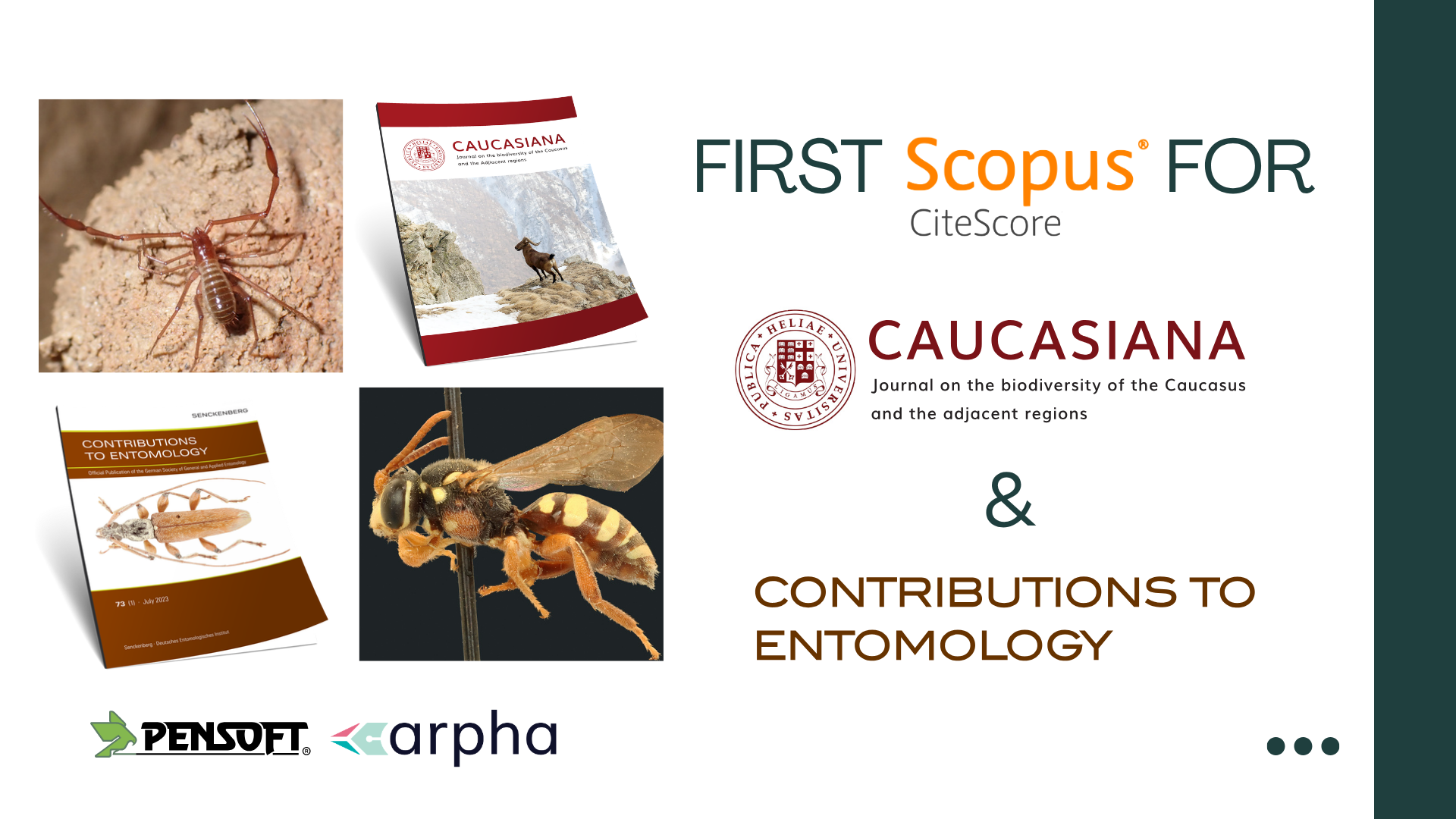
Two ARPHA-powered have each received their first ever Scopus CiteScore, a milestone that reflects not only their growing scholarly impact, but also the role that robust, modern publishing infrastructure can play in helping journals gain visibility and recognition in the global academic community.
The Scopus CiteScore, traditionally announced in June, reflects citation rates over the past four full calendar years; the 2025 score draws on data from 2022 to 2025. Scopus also maintains the CiteScoreTracker, offering a monthly update incorporating citation data from the ongoing year.
Caucasiana
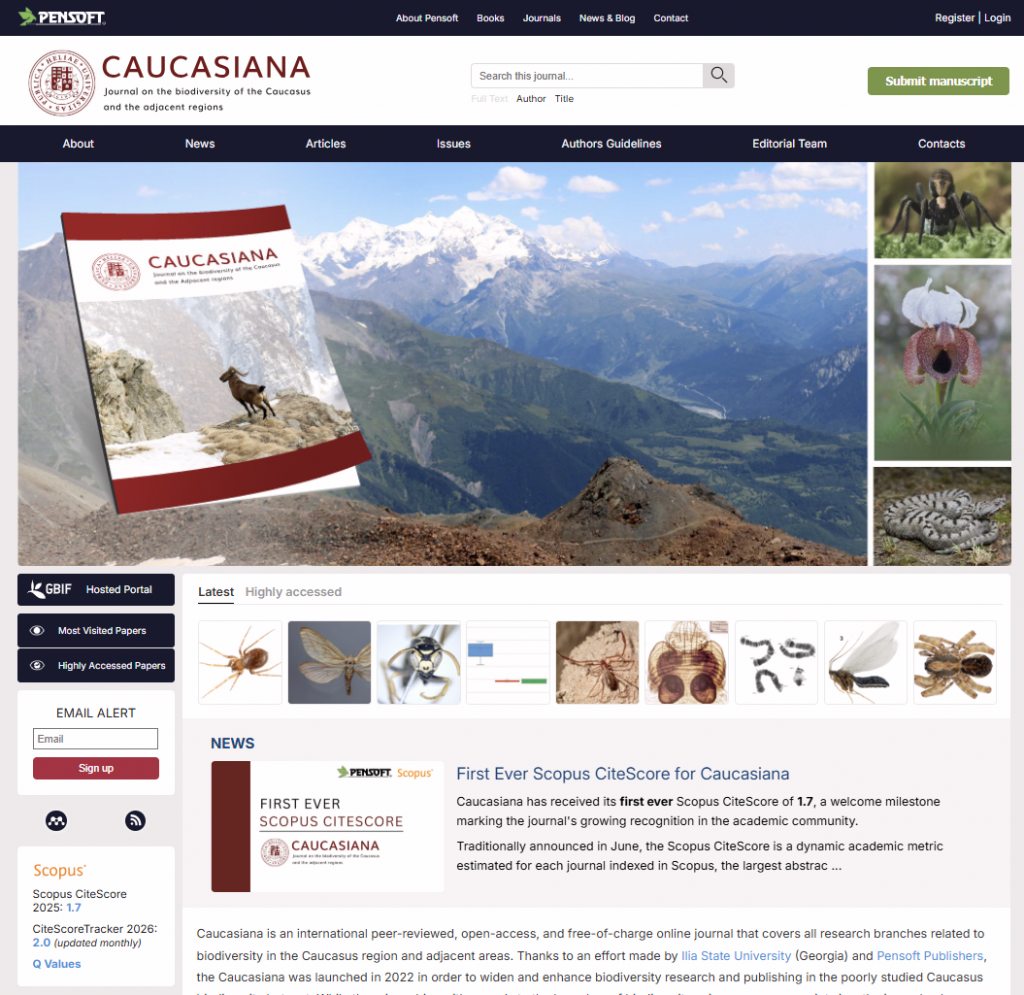
Caucasiana has received an inaugural Scopus CiteScore of 1.7, marking a welcome milestone for this recently established journal.
Launched in 2022 through a collaboration between Ilia State University (Georgia) and Pensoft Publishers, Caucasiana is an international peer-reviewed, open-access, and free-of-charge online journal covering all research branches related to biodiversity in the Caucasus region and adjacent areas. The journal was established to widen and enhance biodiversity research and publishing in this poorly studied but richly biodiverse hotspot.
From its inception, the journal was built on the ARPHA Platform, giving it immediate access to a streamlined editorial workflow, wide indexation, and the infrastructure needed to grow its academic presence rapidly.
Reflecting on the milestone, Founder and Editor-in-Chief of the journal, Dr. Levan Mumladze shares:
This is a remarkable achievement, and I was genuinely surprised that we managed to accomplish it in such a short time. Receiving our first Scopus metric has certainly boosted my motivation and confidence as Editor-in-Chief. This kind of recognition affirms that what we are doing is being done right – and that is a powerful motivator to press forward with even greater energy. I am confident that the progress we have made will translate into even stronger results.
Contributions to Entomology
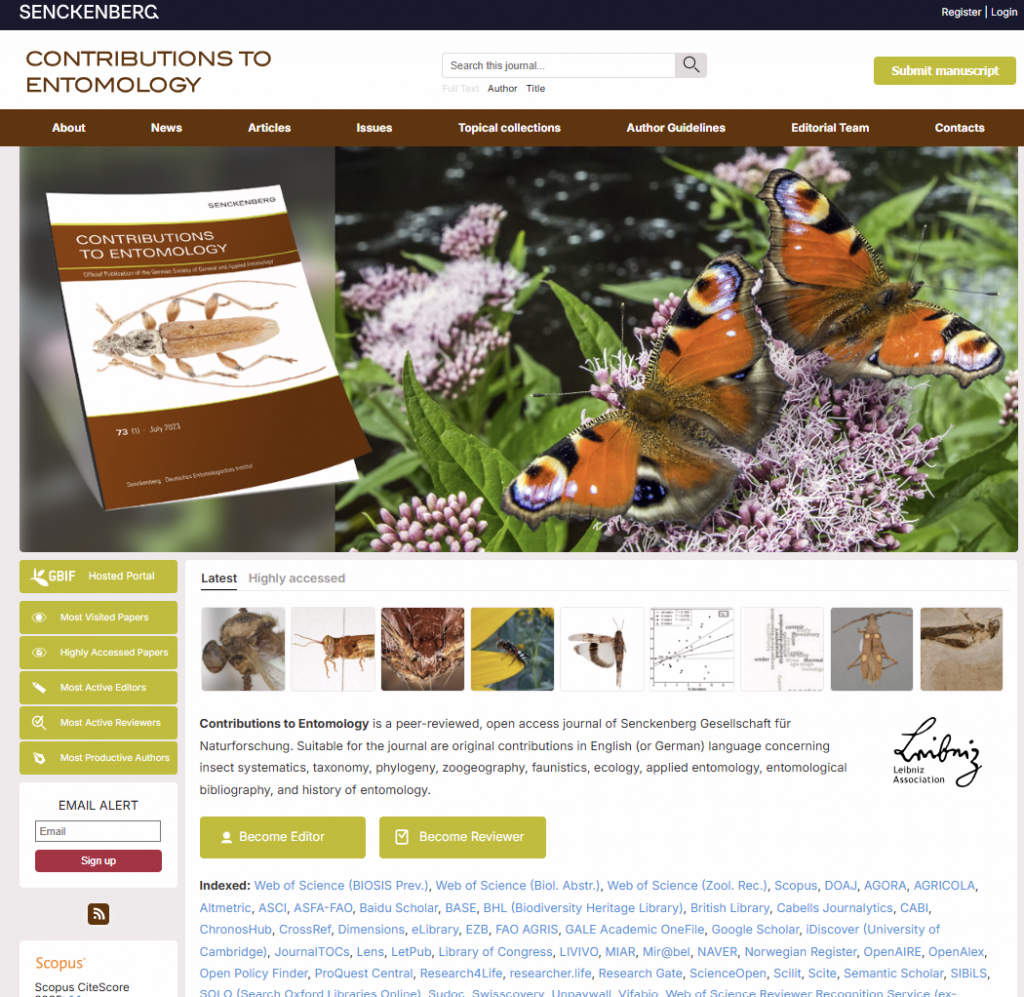
Contributions to Entomology has received its first Scopus CiteScore of 1.1, ranking in Q2 for History and Philosophy of Science, placing it in the upper 60th percentile for that category.
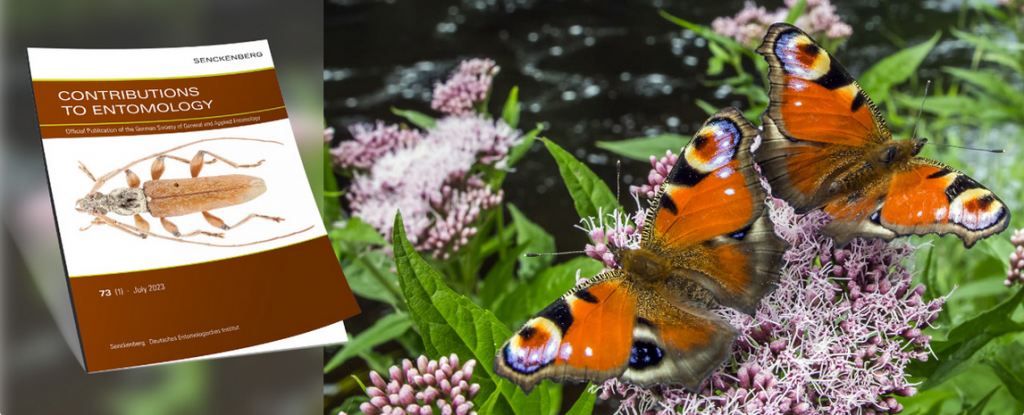
With roots going back to 1951, when it was founded as Beiträge zur Entomologie by the Deutsches Entomologisches Institut, Contributions to Entomology has a long and distinguished history in entomological publishing.
A peer-reviewed, open access journal of Senckenberg Gesellschaft für Naturforschung and an official publication of the Deutsche Gesellschaft für allgemeine und angewandte Entomologie (DGaaE), the journal has over the years published around 1,850 articles by 950 authors across six languages, covering insect systematics, taxonomy, phylogeny, zoogeography, faunistics, ecology, applied entomology, and the history of entomology.
Publishing on ARPHA has brought this wealth of entomological knowledge into a modern, fully integrated publishing environment, maximising its discoverability and reach across more than 40 indexing services.
Powered by ARPHA

Both journals are published on the ARPHA Platform, Pensoft’s self-developed end-to-end publishing solution that streamlines the entire editorial workflow – from manuscript submission and peer review through to editing, publication, and archiving – ultimately making research easy for both people and machines to access, cite, and reuse.
ARPHA’s publishing services also include human-provided support and integrations with third-party providers, designed to maximise the reach and usability of scholarly knowledge. Both journals are archived in CLOCKSS, Zenodo, Portico, and Zendy, and indexed in more than 40 services, including Scopus, CrossRef, DOAJ, and ResearchGate.
The latest Scopus CiteScore and CiteScoreTracker are automatically displayed on each journal’s homepage and in its newsletter.