Scholarly publisher and technology provider Pensoft Publishers announces the beta launch of ORPHO, a revolutionary online platform designed to streamline collaborative scientific writing and produce AI-ready, future-proof scholarly literature.
ORPHO presents a significant advancement in scholarly publishing technology, combining intuitive writing features with sophisticated semantic enrichment capabilities. The new platform builds upon Pensoft’s fifteen years of experience as a developer of semantic publishing infrastructure.
Key Features
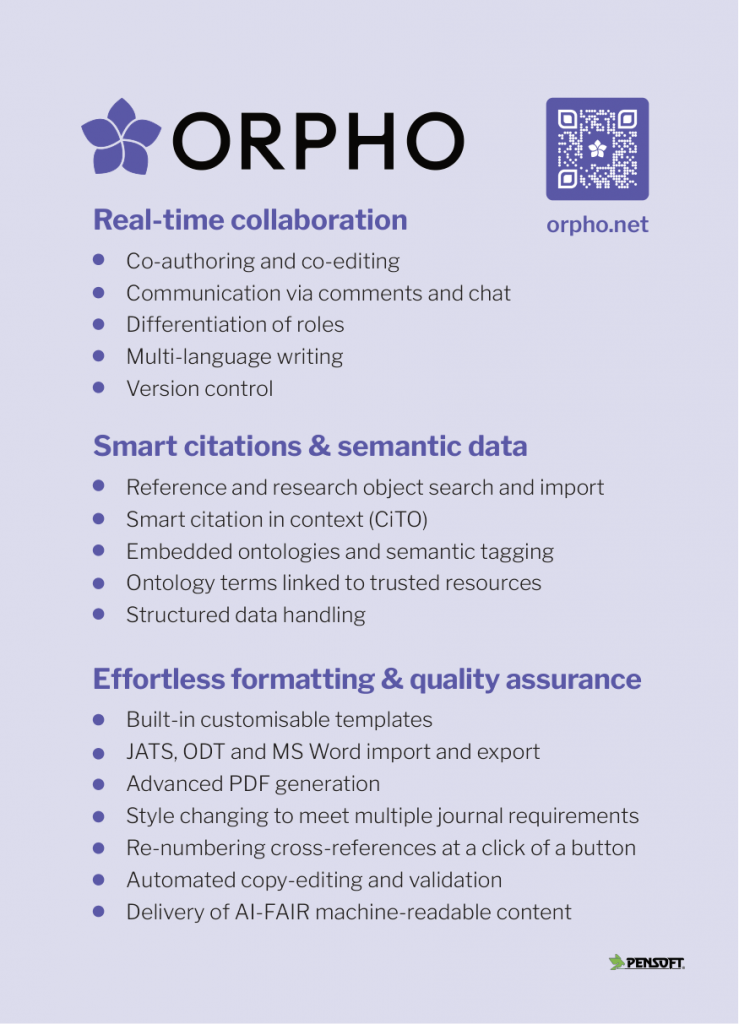
Within a shared online workspace, researchers can start with built-in customisable templates, create their own or import an existing file. They can then team up with collaborators in real time using track changes, role-based user rights, inline comments, and document-level chat. More significantly, ORPHO automatically structures scientific content according to international publishing standards, making research outputs findable, discoverable, interoperable and reusable (FAIR) once published.
Unlike its predecessor, the ARPHA Writing Tool, ORPHO is available as a standalone real-time collaborative workspace decoupled from journals hosted on Pensoft’s ARPHA Publishing Platform. Once a manuscript is ready, authors receive AI-FAIR machine-readable content that can be formatted to meet multiple journal requirements at the click of a button.
The platform’s adaptability to domain-specific workflows is currently being piloted in biodiversity science. ORPHO integrates seamlessly with leading biodiversity data aggregators, including the Global Biodiversity Information Facility (GBIF), Barcode of Life Data Systems (BOLD) and PlutoF, via import and export facilities for structured data, making ORPHO particularly valuable for researchers handling taxonomic, ecological and biodiversity data.
The name draws inspiration from multiple sources which reflect the tool’s philosophy and heritage. Named after Orphium: a unique plant genus endemic to South Africa whose sole species (Orphium frutescens) is known as the sea rose, ORPHO reflects the platform’s distinctive nature, heritage, and core philosophy.
It also evokes Orpheus, the legendary musician of ancient Thrace whose home region, the Rhodopi Mountains, lies in present-day Bulgaria, where ORPHO’s developer, Pensoft, is headquartered. The name thus honours the tool’s origins whilst embodying the exceptional creative performance it enables.
***
Prof. Dr. Lyubomir Penev, founder and CEO of Pensoft, comments:
“We are well aware that researchers today face an overwhelming list of formatting requirements and technical demands in an AI-driven landscape. It is true that rapid technological advancement presents both immense opportunities and mounting complexities for researchers.
We built ORPHO to remove that friction by offering an intuitive, collaborative workspace that lets scientists focus on their research. As a scientific publisher, our mission is to make scholarly publishing a seamless, rewarding experience fit for the modern age.”
The beta release invites researchers, institutions and publishing platforms to trial ORPHO and provide feedback. Access is available at orpho.net.
Every September since 2015, the scholarly publishing world has paused to examine the process that quietly underwrites the integrity of scientific knowledge. This year, Peer Review Week runs from 14 to 18 September, bringing together publishers, societies, funders, libraries and researchers to talk about the often unglamorous but essential job of reviewing each other’s work.
The 2026 theme was chosen by community vote – 2,115 votes in total, the highest participation in Peer Review Week’s history. “Peer Review Capacity: Volume, Speed, and Quality“ emerged as the winner, taking 40% of the vote. The result reflects a strain the whole system is experiencing: submissions are rising faster than the pool of willing, qualified reviewers, while authors and funders expect faster decisions than ever. While editors are being asked to hold the line on rigour with the same volunteer hours they always had – or less.
So, to celebrate the essential work that reviewers do, highlight some of the strains the current system is under, and show how we at Pensoftare trying to support our reviewers, we wanted to spotlight our editors-in-chief, the people who see the submission pipeline every single day, by asking them what “capacity” really means to them, and what would need to change for peer review to become more sustainable.
Capacity starts with people
Person working on a laptop. Credit to poungsaed_eco via Envato.
We asked our editors how they would describe “peer review capacity“. Almost every answer was rooted in the same place: people, and whether enough of them are still willing to do the work.
It’s about people – their willingness to give the best scientific thought to review and evaluate a fellow scientist’s work.
Tammy Robinson, Editor-in-Chief of NeoBiota, described the day-to-day challenge of finding those people:
NeoBiota editors try to avoid repeatedly asking the same people to review, but it’s very difficult to get people to accept a review invitation these days.
While for Florian Leese, Editor-in-Chief of Metabarcoding and Metagenomics, the strain of growing submissions without letting quality or turnaround times slip is a daily balancing act he’s refreshingly candid about:
Submissions in MBMG are growing faster than the time I and our editors can give them – and I think it’s worth saying that openly.
Open Laptop Displaying a Blue Network of Data. Credit to GoldenDayz via Envato.
This is precisely the problem Pensoft set out to address earlier this year, when ARPHA – our end-to-end publishing platform – integrated with Prophy, an AI-driven reviewer-discovery tool that matches manuscripts to qualified researchers from a database of millions. Across more than 90 ARPHA-powered journals, editorial teams can now reach well beyond the small circle of familiar names, surfacing reviewers by expertise and research focus rather than by who comes to mind first – directly widening the pool editors like Robinson are struggling to tap.
Freeing up expertise for what matters most
Pensoft designed the ARPHA Publishing Platform to carry every manuscript through review, editing, publication, dissemination and archiving within a single collaborative environment – precisely so that the whole publishing process is made straightforward.
ARPHA homepage
As Leese reflects:
The workflow side is not the problem; ARPHA handles editor assignment, plagiarism checks and the mechanics of the process efficiently, and the Pensoft team is quick to spot where things are piling up and need fixes.
Where he sees the next opportunity is in the technical, time-consuming checks that sit just beneath editorial judgment:
What no workflow tool currently helps with is the part that actually defines quality in our field: are the sequence data and metadata deposited and usable, are the bioinformatic steps reproducible, do the results actually support the conclusions? Those checks take time that has to be carved out of an already full working day, for editors as much as for reviewers.
As numbers rise, the honest answer is that editors will need support – trained data auditors, or validated AI-based tools from the publisher that pre-screen the technical parts – or the model of the volunteer editor/reviewer will not scale. We are not there yet, but we are at the point where that has to be said.
Making reviewing sustainable
“Recognition” was the word the editors returned to most often when the conversation turned to sustainability, and this is an area in which Pensoft has been investing for a decade and continues to develop.
Since 2016, ARPHA has been integrated with Publons (now part of Web of Science’s Reviewer Recognition Service), so every review logged through the platform becomes part of a reviewer’s visible professional record rather than disappearing into an inbox.
Hauber shared his vision for sustainability in five years:
A broad reviewer base, with folks at all stages of their academic and industry careers, still willing to review and evaluate peer-workers’ studies.
Robinson sees growth coming from investing in the next generation:
Training courses for early career researchers so that they are upskilled and can be drawn in as skilled reviewers. This will be good for them and the system.
Leese proposes fewer publications and a bit more visibility for reviewers’ input:
Stop rewarding the number of papers. My proposal: publish less, and treat reviewing as an obligation to the community that scales with your own output. Review roughly twice as many papers as you publish, and make that visible as a metric. ‘Are you paying back?’ should be a question that counts in evaluations.
He also laid out what he sees as the two changes that would help most, and what’s at stake if the field doesn’t act on them:
Two things would help in parallel. First, better recognition or (even monetary) rewards for reviewers, as long as it does not end up inflating article processing charges. Second, and specifically for a data-heavy field like in our journal: the publishing field should take the necessary but tedious checks – data and metadata availability, code, reproducibility – away from reviewers and automate them, so that human expertise is spent where it is really needed: study design, context, whether the data support the claims, and whether something essential is missing that only an expert would notice. Classical peer review is at a turning point. It can be reformed, and I think it should be; the alternative is that it slowly gets replaced by AI-generated reviews that may often not do the job as we had hoped for.
Building toward that future
Past or future sign. Credit to fotodestock via Envato.
Having been around for 34 years, Pensoft treats Peer Review Week as more than a thank-you. Rather, it reflects a continued effort to build a publishing environment that makes reviewing sustainable, from AI-assisted reviewer matching to permanent recognition to the tools that take tedious checks off editors’ plates.
The record turnout in this year’s theme vote shows the community itself has named capacity as the defining challenge of this moment. As we look at insights from editors like Mark Hauber, Tammy Robinson and Florian Leese, the message is clear:the field can only be sustainable if reviewing is treated as seriously as publishing.
Our in-house indexing team works tirelessly to maintain the highest standards and to secure indexing for Pensoft-published journals across a growing range of indexing services. Our team works closely with journal editors and leverages the automated and manual workflows of the ARPHA Publishing Platform to export rich XML metadata, submit content to global databases, and maintain long-term digital preservation.
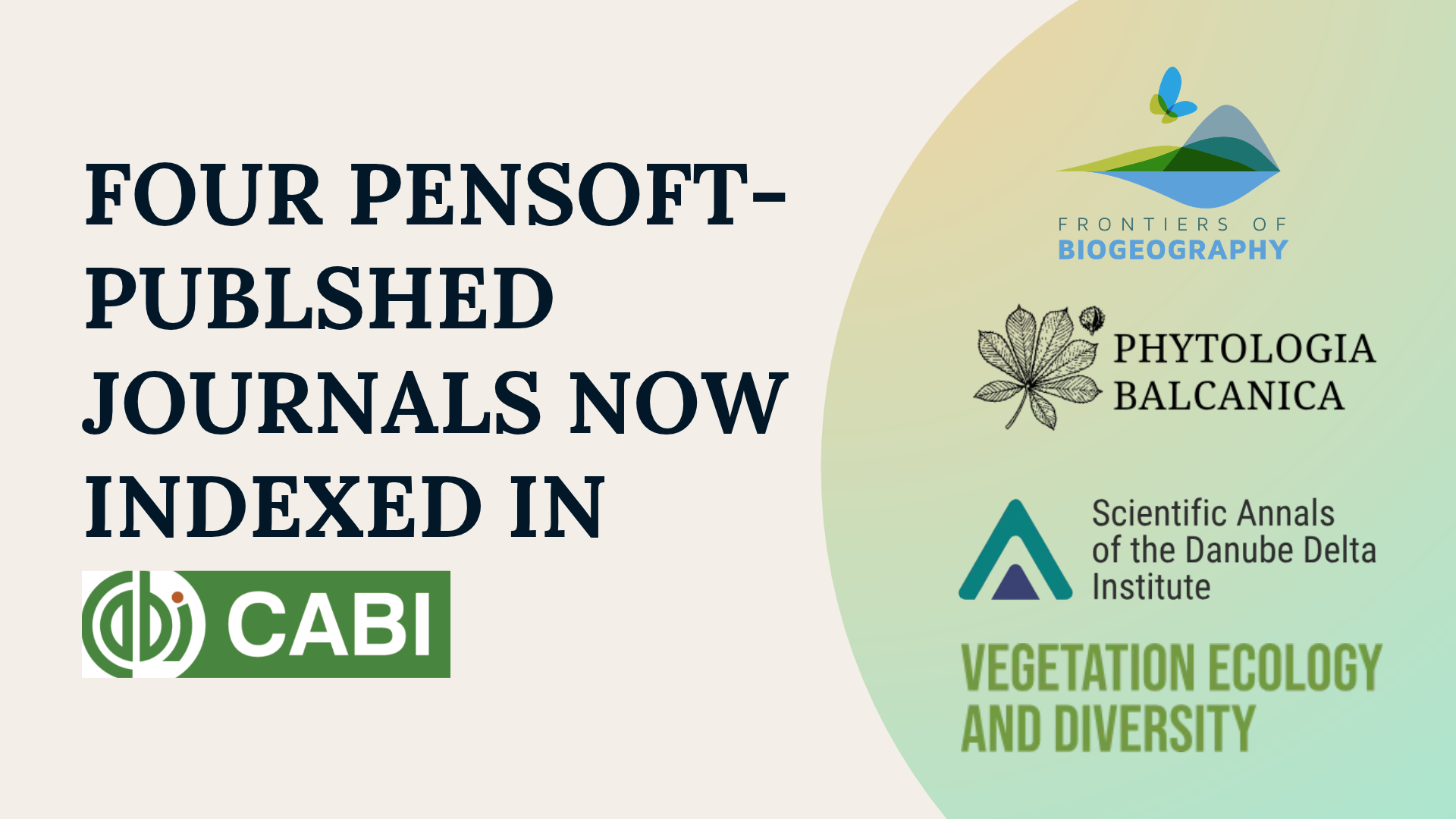
As of August 2026, these four Pensoft-published, open-access, peer-reviewed journals are now indexed in CABI.
Frontiers of Biogeography publishes research on the geographic distribution of organisms and the processes shaping biodiversity patterns across space and time.
Phytologia Balcanica focuses on the flora, vegetation, and plant diversity of the Balkan Peninsula and surrounding regions.
Vegetation Ecology and Diversity publishes studies on plant community ecology, vegetation classification, and biodiversity patterns worldwide.
Indexing will begin with the latest volume, covering articles published from the start of 2026.
CABI’s full-text repository, as of May 2026, spans over 1,003,300 documents and continues to grow, fully integrated into CABI’s databases – including CAB Abstracts, Global Health, Subject Collections, and Database Subsets. Furthermore, readers with a CABI subscription gain instant, automatic access to all corresponding full-text material.
This marks a step forward in ensuring that research published in these journals reaches an even wider audience of researchers, policymakers, and practitioners worldwide.
Pensoft has been awarded the Seal of Recognition for the FAO AGRIS Active Data Provider of the Year for 2027. The seal is granted by the Food and Agriculture Organisation of the United Nations through its AGRIS initiative, and it recognises institutions that consistently share open-access agricultural research with the global community.
Notably, Pensoft joined the FAO AGRIS network back in 2024, and the organisation has renewed our seal every year since, a recognition we’re proud to have kept.
What has changed is the scale of our contribution. In 2024, Pensoft’s records on AGRIS numbered just under 15,000. Today, that figure has doubled to nearly 30,000, drawn from all 51 of our journals that fall within the scope of FAO AGRIS. The subjects covered are wide-ranging, spanning taxonomy, biodiversity, conservation and biogeography – these are all areas that feed directly into sustainable agriculture and natural resource management.
Through AGRIS, this research travels well beyond our own journals to researchers, policymakers and practitioners worldwide, adding to the shared pool of open knowledge that supports global food security and environmental sustainability. We’re glad to keep contributing to that effort, and look forward to continuing our work with FAO AGRIS in the years to come.
About FAO
The Food and Agriculture Organisation (FAO) is a specialised agency of the United Nations that leads international efforts to defeat hunger. Its goal is to achieve food security for all, ensuring that people have regular access to enough high-quality food to lead active, healthy lives. With 194 members, 193 countries and the European Union, FAO works in over 130 countries worldwide.
About Pensoft
Founded in 1992 “by scientists, for scientists,” Pensoft is an academic open-access publishing company well known worldwide for its cutting-edge publishing tools, workflows and methods for text and data publishing of journals, books and conference materials. In 2010, Pensoft became the first scientific publisher to introduce semantic enrichments in scholarly publications. Through its Research and Technical Development department, the company is involved in a range of research and technology projects.
Immunology in Medicine, the official journal of the Bulgarian Association of Clinical Immunology (BACI), has joined Pensoft’s open-access publishing platform ARPHA. The journal was first launched in 2007 as BACI’s annual publication, and from 2020 until early 2026 it was published as the Bulgarian Journal of Clinical Immunology. With its recent move to ARPHA, the journal is now titled Immunology in Medicine and has a refreshed look and streamlined publishing workflow.
The journal’s core mission is to bridge basic immunological science with its clinical applications, fostering interdisciplinary dialogue on immune-mediated mechanisms in human health and disease. It welcomes research that translates immunological knowledge into diagnostic, prognostic, and therapeutic strategies, with a particular focus on innovative diagnostics, biomarkers, and immunotherapies.
The new homepage of Immunology in Medicine
Its scope spans the full breadth of immunology, including research on fundamental immunology such as cellular and molecular mechanisms of innate and adaptive immunity. As well as clinical immunology pathogenesis, diagnosis, and management of immune-mediated diseases, autoimmunity and autoinflammatory disorders and more, transplantation immunology, tumor immunology and immunotherapy and many more.
Thanks to the generous support of BACI, publishing in the journal remains entirely free for authors.
As an ARPHA-hosted journal, Immunology in Medicine benefits from the platform’s fast-track, end-to-end publishing system, which carries every manuscript through review, editing, publication, dissemination, and archiving within a single collaborative online environment. Articles are freely available in PDF, indexed in CrossRef, and archived in CLOCKSS and Zenodo for long-term preservation.
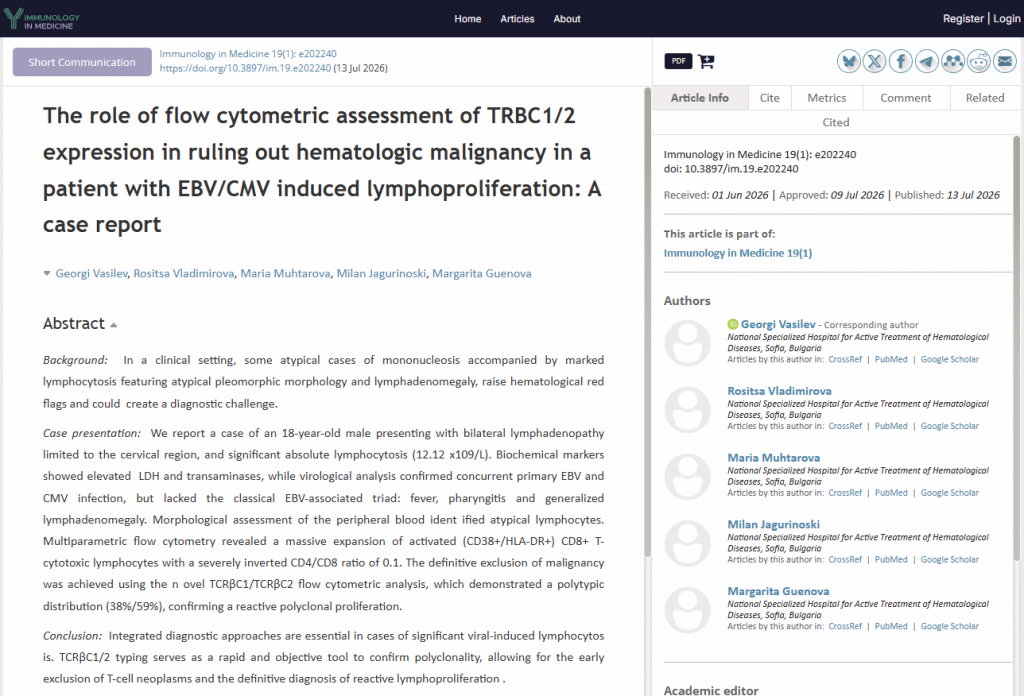
Since its move to ARPHA, the journal has already published two studies. The first, by Vasilev et al. (2026), presents a case of an 18-year-old male whose mononucleosis triggered an atypical immune response mimicking a T-cell malignancy, until a novel flow cytometry technique, TCRβC1/C2 typing, confirmed it was a harmless, reactive expansion of immune cells rather than cancer, helping clinicians reach an accurate diagnosis faster.
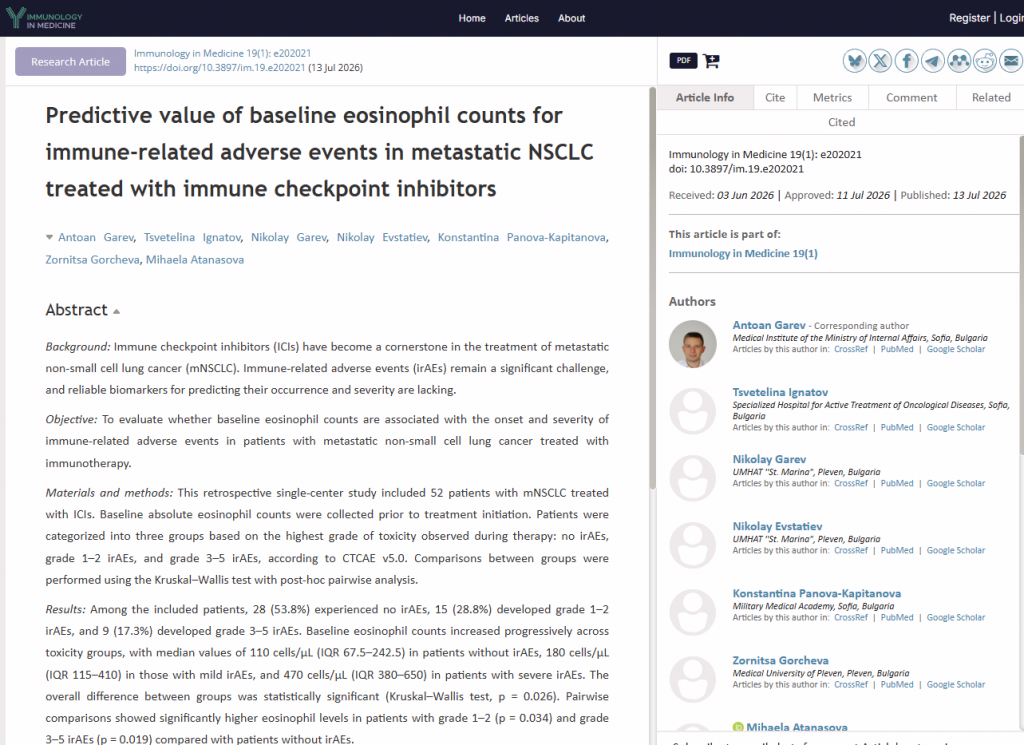
The second, by Garev et al. (2026), analyzed 52 patients with metastatic non-small cell lung cancer and found that a simple, routine blood marker, baseline eosinophil counts, could help predict which patients face the highest risk of severe side effects from immunotherapy, offering a low-cost tool for early risk stratification.
Further to this, the journal invites researchers and clinicians from Bulgaria and around the world to submit their work and to take part in its editorial and peer-review processes.
Our vision for Immunology in Medicine is to establish the journal as a trusted international platform for high-quality translational and clinical immunology research. By joining the Pensoft publishing family, we hope to increase the visibility, accessibility, and scientific impact of the work published in the journal, while fostering collaboration across disciplines and countries. I believe this transition will help build a vibrant community of researchers and clinicians dedicated to advancing immunology and translating scientific discoveries into better patient care.
– Dr. Emiliana Konova, Editor-in-Chief of Immunology in Medicine
We are very pleased to welcome another journal in the field of medical sciences to our growing portfolio of open-access journals, and we look forward to supporting the journal’s important research through our modern publishing platform.
– commented Prof. Lyubomir Penev, CEO of Pensoft and ARPHA
About the Bulgarian Association of Clinical Immunology (BACI) Founded in 2005, BACI is Bulgaria’s primary professional and scientific organization for immunologists. It unites specialists, promotes research, hosts national congresses, and publishes Immunology in Medicine (formerly the Bulgarian Journal of Clinical Immunology).
About ARPHA ARPHA is a full-featured, end-to-end publishing platform for journals, books, conference materials, and preprints, offering flexible business models and a wide range of automated and human-provided services designed to boost the visibility and impact of academic output.
About Pensoft Publishers Founded in 1992 “by scientists, for scientists,” Pensoft is known worldwide for its cutting-edge publishing tools and workflows for text and data publishing. In 2010, it became the first scientific publisher to introduce semantic enrichments into scholarly publications, and its Research and Technical Development department continues to drive innovation through numerous research and technology projects.
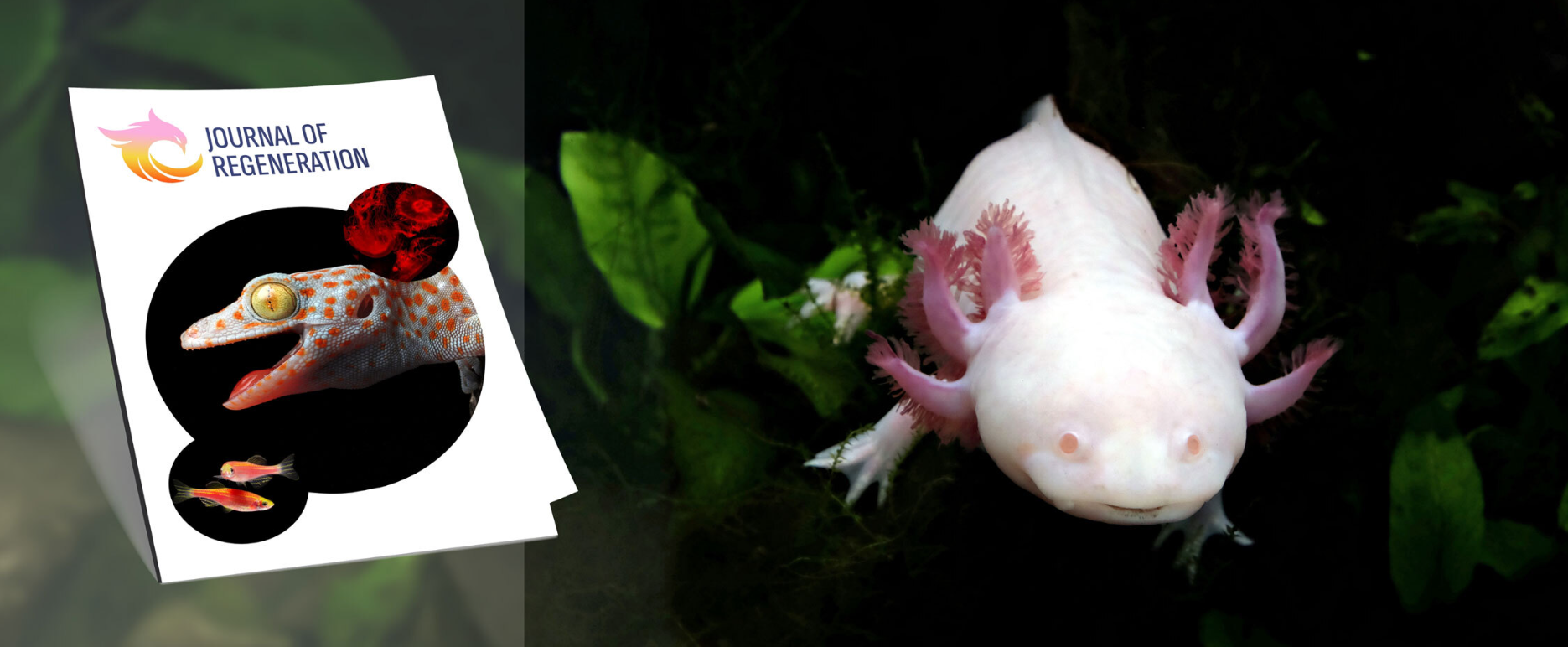
Scholarly publisher and technology provider Pensoft teamed up with senior research fellows in the field to launch Journal of Regeneration (JoR), a new open-access peer-reviewed journal established to promote a transversal biological perspective connecting developmental biology, evolution, ecology, agriculture, and medicine. JoR aims to explore regeneration – the ability to restore lost or damaged tissues, organs, or entire body structures, across diverse disciplines and kingdoms of life.
The journal intends to cover research ranging from fundamental molecular genetics to clinical translation. Specifically, it seeks to examine recurring principles shared between animals and plants, including cellular plasticity, injury-triggered signalling cascades, and epigenetic remodelling.
“Regeneration research stands at a historic moment. What began as curiosity-driven observation has matured into a multidisciplinary field with profound implications for biology and medicine.”
The Editorial Board
Its scope encompasses a wide variety of animal and plant models rather than limiting focus to a few standard species. JoR covers research leveraging modern analytical tools, such as single-cell transcriptomics, CRISPR/Cas9 genome editing, transgenesis, and mass spectrometry. Key areas of long-term support outlined by the journal include systems-level understanding, evolutionary regeneration biology, bioengineering, and the intersection of ageing and regeneration.
“I am super excited to be part of building the Journal of Regeneration. I envisage it to become a wonderful platform for regeneration researchers, a way to not only share ideas and resources but perhaps in the future to be integrated in taking an active role in our scientific community.”
Anna Czarkwiani
“I am fully convinced of the goodness of launching the Journal of Regeneration: the future of regeneration science requires dialogue among scientists working on different aspects of the discipline and the JoR is a good tool to foster communication.”
Loriano Ballarin
“I see the Journal of Regeneration as a place where renewal and discovery align, where living systems learn to rebuild and redefine. It gathers voices across biology’s widening frame, to understand how life restores itself again and again.”
Baruch Rinkevich
Powered by Pensoft’s ARPHA platform, the journal will notably offer a fully integrated experience that smoothly coordinates everything from submission and peer review to publication, indexing, sharing, and archiving. Notably, publication in the journal is free during its launching phase.
The founding premise of the journal highlights that understanding regeneration requires exploration across the entire spectrum of life. Thus, JoR aims to serve as a convergence point for traditionally separated fields. Fostering this collaborative dialogue will help accelerate the important shift from studying regenerative mechanisms to actively harnessing them for therapeutic innovation.
Read more about the rationale and aims of the Journal of Regeneration (JoR) in the newly published Editorial Letter.
For more information on the journal’s focus, scope, and guidelines for authors, visit the Journal of Regeneration website and follow us on Bluesky and LinkedIn.
***
About Pensoft:
Founded in 1992 “by scientists, for scientists”, the academic open-access publishing company is well known worldwide for its novel cutting-edge publishing tools, workflows and methods for text and data publishing of journals, books and conference materials. Back in 2010, Pensoft became the first scientific publisher to introduce semantic enrichments in scholarly publications. Through its Research and Technical Development department, the company is involved in various research and technology projects.
About ARPHA Platform:
ARPHA is a full-featured, end-to-end publishing platform for journals, books, conference materials and preprints. ARPHA offers flexible operating and business models, and a wide-range of automated and human-provided services. The ARPHA team places a special focus on its scholarly communication solutions designed to leverage the visibility and outreach of academic output, while promoting inclusivity and engagement.
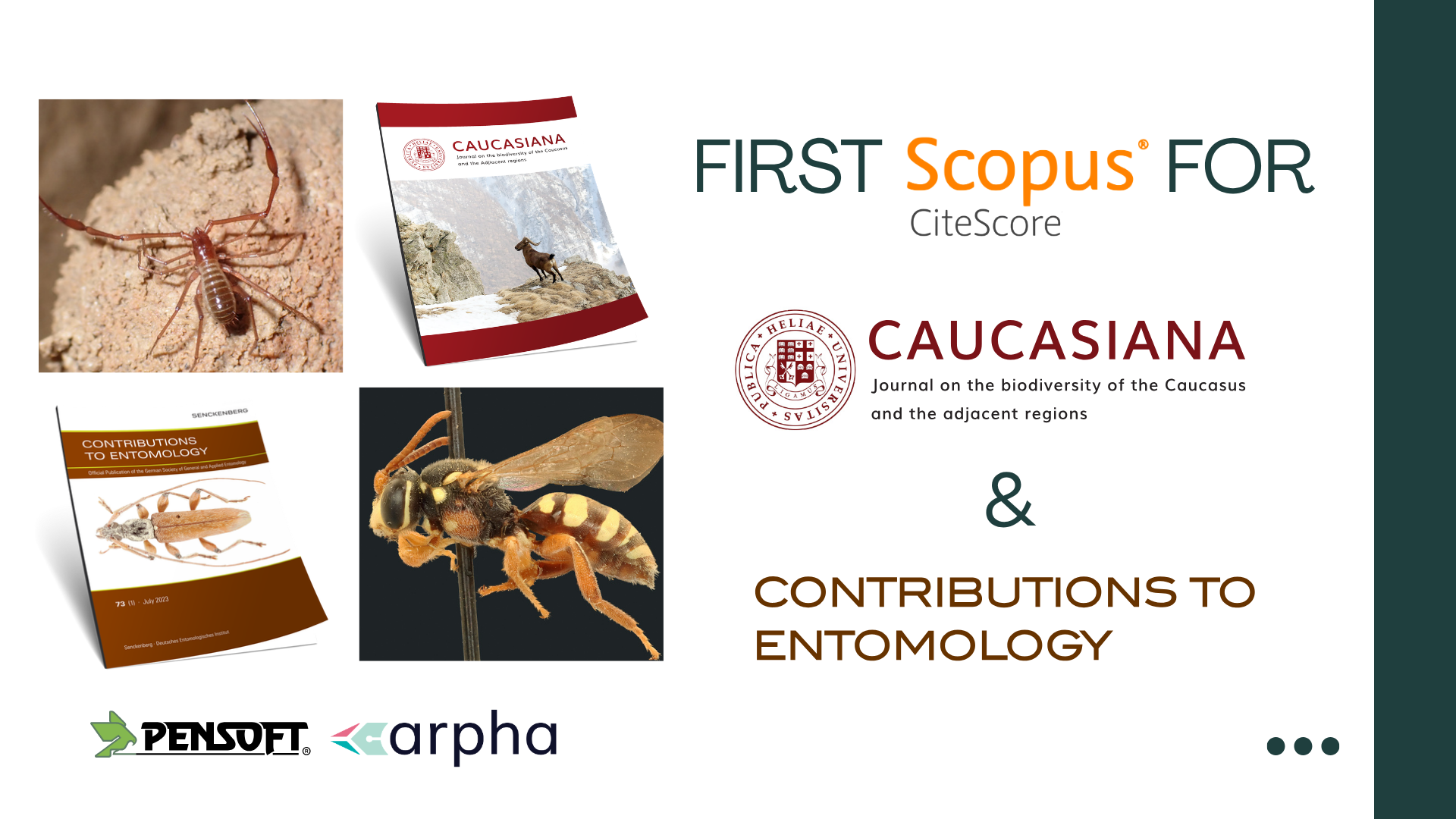
Two ARPHA-powered have each received their first ever Scopus CiteScore, a milestone that reflects not only their growing scholarly impact, but also the role that robust, modern publishing infrastructure can play in helping journals gain visibility and recognition in the global academic community.
The Scopus CiteScore, traditionally announced in June, reflects citation rates over the past four full calendar years; the 2025 score draws on data from 2022 to 2025. Scopus also maintains the CiteScoreTracker, offering a monthly update incorporating citation data from the ongoing year.
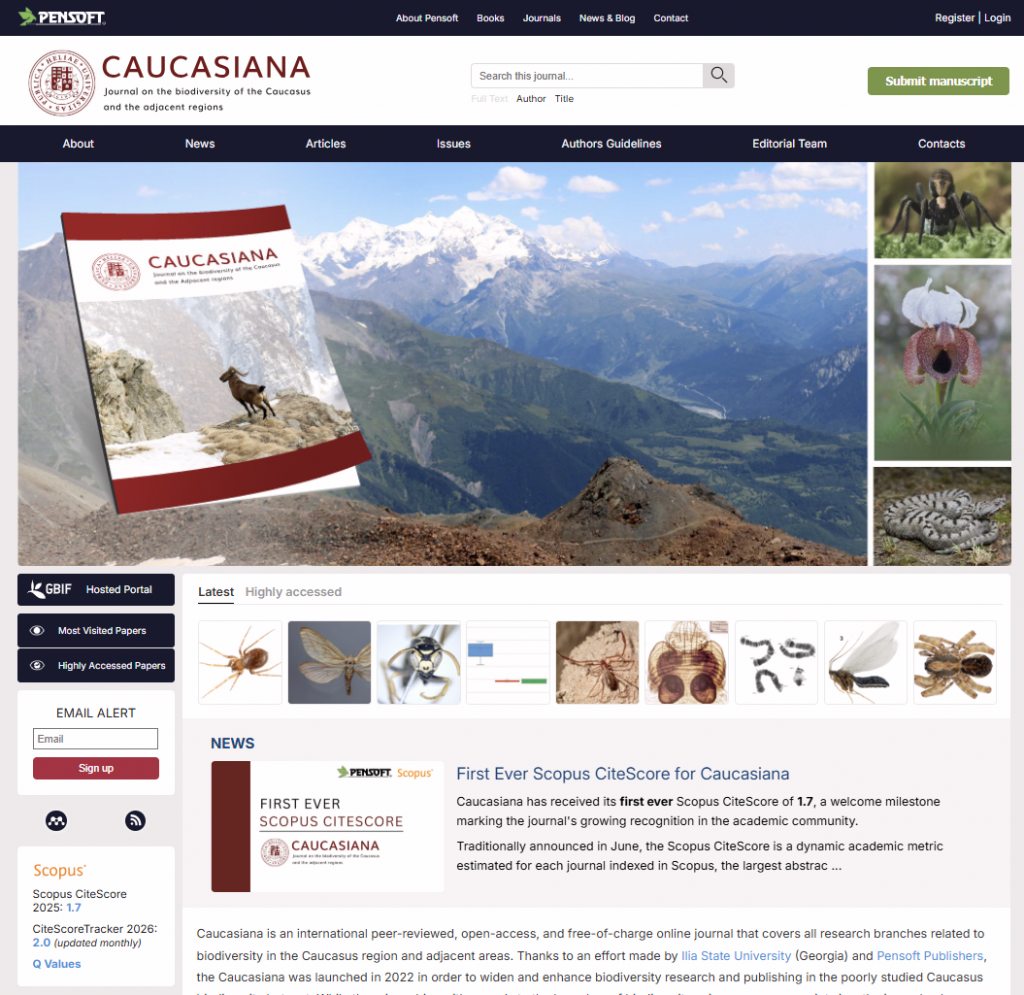
Caucasiana has received an inaugural Scopus CiteScore of 1.7, marking a welcome milestone for this recently established journal.
Launched in 2022 through a collaboration between Ilia State University (Georgia) and Pensoft Publishers, Caucasiana is an international peer-reviewed, open-access, and free-of-charge online journal covering all research branches related to biodiversity in the Caucasus region and adjacent areas. The journal was established to widen and enhance biodiversity research and publishing in this poorly studied but richly biodiverse hotspot.
From its inception, the journal was built on the ARPHA Platform, giving it immediate access to a streamlined editorial workflow, wide indexation, and the infrastructure needed to grow its academic presence rapidly.
Reflecting on the milestone, Founder and Editor-in-Chief of the journal, Dr. Levan Mumladze shares:
This is a remarkable achievement, and I was genuinely surprised that we managed to accomplish it in such a short time. Receiving our first Scopus metric has certainly boosted my motivation and confidence as Editor-in-Chief. This kind of recognition affirms that what we are doing is being done right – and that is a powerful motivator to press forward with even greater energy. I am confident that the progress we have made will translate into even stronger results.
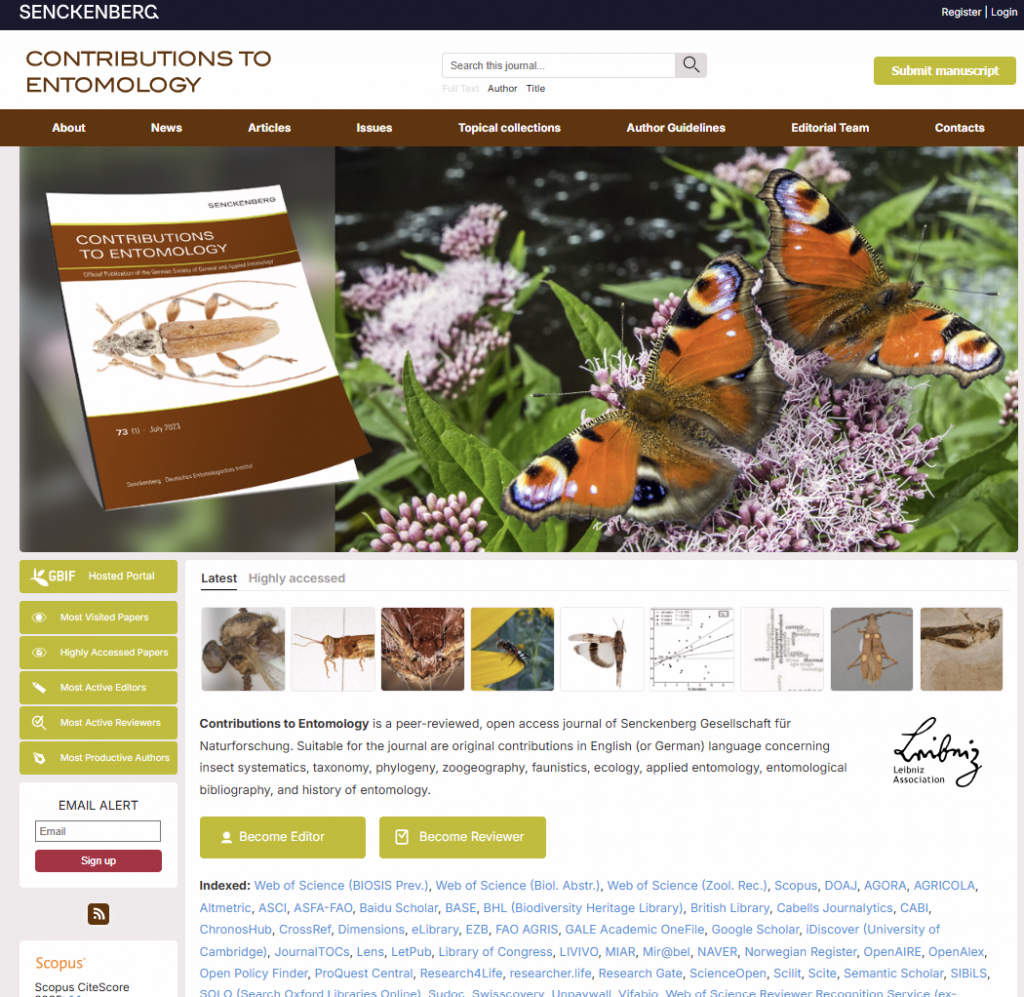
Contributions to Entomology has received its first Scopus CiteScore of 1.1, ranking in Q2 for History and Philosophy of Science, placing it in the upper 60th percentile for that category.
With roots going back to 1951, when it was founded as Beiträge zur Entomologie by the Deutsches Entomologisches Institut, Contributions to Entomology has a long and distinguished history in entomological publishing.
Publishing on ARPHA has brought this wealth of entomological knowledge into a modern, fully integrated publishing environment, maximising its discoverability and reach across more than 40 indexing services.
Both journals are published on theARPHA Platform, Pensoft’s self-developed end-to-end publishing solution that streamlines the entire editorial workflow – from manuscript submission and peer review through to editing, publication, and archiving – ultimately making research easy for both people and machines to access, cite, and reuse.
ARPHA’s publishing services also include human-provided support and integrations with third-party providers, designed to maximise the reach and usability of scholarly knowledge. Both journals are archived in CLOCKSS, Zenodo, Portico, and Zendy, and indexed in more than 40 services, including Scopus, CrossRef, DOAJ, and ResearchGate.
The latest Scopus CiteScore and CiteScoreTracker are automatically displayed on each journal’s homepage and in its newsletter.
Focusing on research in basic and clinical endocrinology and metabolic disorders, the journal publishes review articles in Bulgarian, alongside original papers and case reports available in both English and Bulgarian. The paper issues of the journal are published quarterly while the electronic online versions of the papers are published as soon as final approval is granted and formatting is completed.
Due to the generous support of the Bulgarian Society of Endocrinology, publication in the journal is free to all authors.
Homepage of the Endocrinologia Journal.
In addition to a refreshed, user-friendly design, the Pensoft-developed publishing platform ARPHA provides its signature fast-track, end-to-end publishing system to the benefit of its users: authors, reviewers and editors alike.
Each submitted manuscript is carried through the review, editing, publication, dissemination and archiving stages without leaving ARPHA’s collaboration-focused online environment. The articles are available in PDF and machine-readable XML formats, so that they are easy to discover, access, cite and reuse. Endocrinologia Journal is indexed in Scopus, CrossRef, EMBASE, and the Bulgarian Citation Index, and archived through CLOCKSS and Zenodo.
Endocrinologia Journal.
The introduction of an online platform for submitting manuscripts will contribute to improved management of the publishing activities of the journal Endocrinology and will help the journal, as the official publication of the Bulgarian Society of Endocrinology, meet current standards for full integration into international scientific databases,
– commented Prof. Maria Orbetzova, the journal’s Editor-in-Chief.
Endocrinologia Journal brings a rich legacy of peer-reviewed endocrinology research to our portfolio, and we are excited to support its next chapter. Through ARPHA, we hope to give the journal’s authors, reviewers and editors the tools they need to publish faster, reach further, and make a greater impact,
– added Prof. Lyubomir Penev, founder and CEO of Pensoft and ARPHA.
About the Bulgarian Society of Endocrinology:
Founded in 1958, the Bulgarian Society of Endocrinology (BSE) is a professional medical organization dedicated to advancing endocrinology in Bulgaria. Its core mission encompasses the continuous education of endocrinologists, trainees, GPs, and other specialists, alongside the development of national screening programmes for diabetes, obesity, hypertension, and dyslipidaemia, and the establishment of Bulgarian clinical guidelines on diabetes management. The BSE supports both healthcare professionals, through Schools of Endocrinology and specialist symposia, and patients, via public education courses and media outreach. It hosts annual scientific congresses and publishes the peer-reviewed journal Endocrinologia.
About ARPHA:
ARPHA is a full-featured, end-to-end publishing platform for journals, books, conference materials and preprints. ARPHA offers flexible operating and business models, and a wide-range of automated and human-provided services. The ARPHA team places a special focus on its scholarly communication solutions designed to leverage the visibility and outreach of academic output, while promoting inclusivity and engagement.
Founded in 1992 “by scientists, for scientists”, the academic open-access publishing company is well known worldwide for its novel cutting-edge publishing tools, workflows and methods for text and data publishing of journals, books and conference materials. Back in 2010, Pensoft became the first scientific publisher to introduce semantic enrichments in scholarly publications. Through its Research and Technical Development department, the company is involved in various research and technology projects.
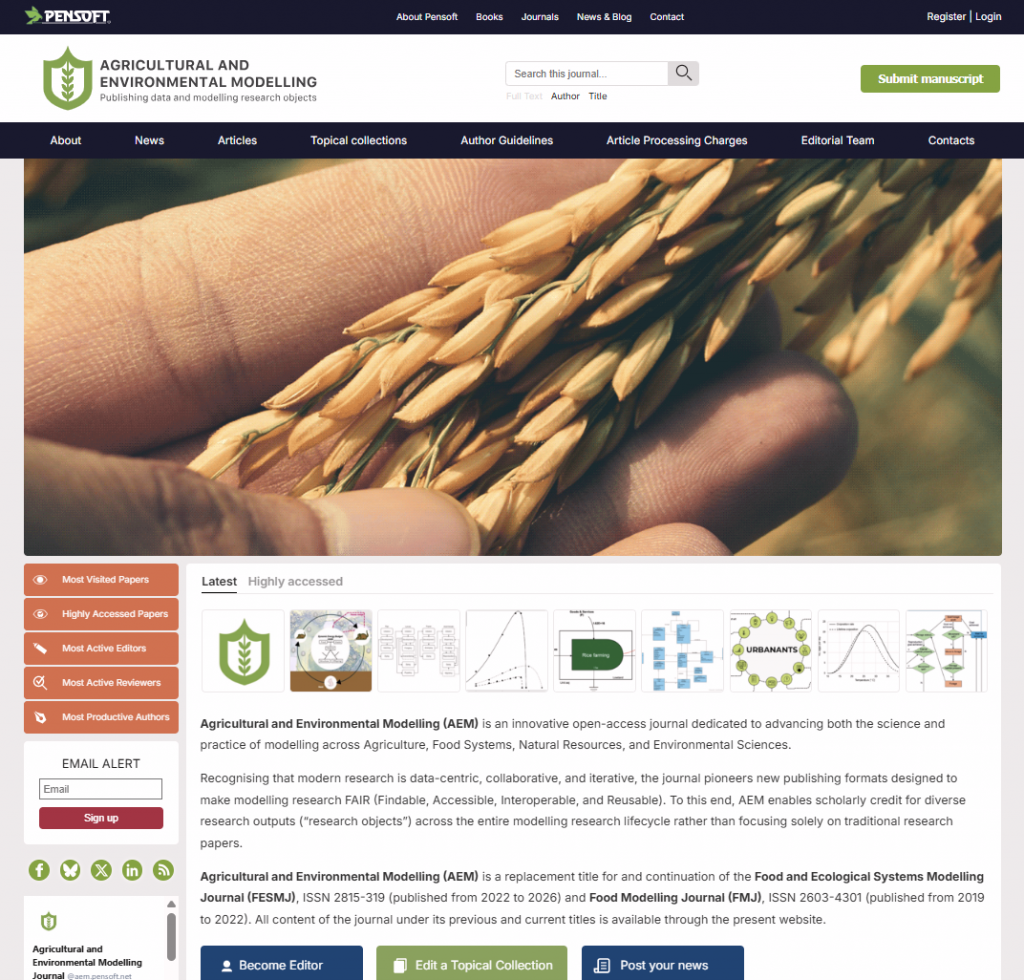
Today marks the official relaunch of the Food and Ecological Systems Modelling Journal (FESMJ) under a new name – Agricultural and Environmental Modelling (AEM), an open-access journal dedicated to advancing the science and practice of computational and mathematical modelling across agriculture, food systems, natural resources, and environmental sciences.
The first editorial published under the AEM name sets out the journal’s expanded vision, its new article types, and its call to the modelling community.
What Has Changed and What Has Not
AEM retains the founding mission of its predecessors: to make ‘modelling research objects citable, discoverable, and reusable’ and transparent. The journal’s commitment to open access, rigorous peer review, and the recognition of modelling as a first-class scientific endeavour remains unchanged. Publication in AEM remains entirely free for all authors.
What has changed is the scope and structure. The journal’s disciplinary scopenow spans the full breadth of modelling in the agricultural and environmental sciences, including management systems, production dynamics, agroecological modelling, as well as food safety, production, quality and supply-chain control, biotechnological research, socio-ecological systems, resource management and more.
Publishing the Full Modelling Lifecycle
A defining feature of AEM is its structured range of article types, designed to give formal, peer-reviewed recognition to each group of authors at every stage of a model’s development.
A complex model is not born in a single paper: it emerges through cycles of formal specification, software implementation, calibration, testing, and application, often carried out by different teams across different project phases. Each of those steps represents genuine scientific work; each deserves recognition.
– reads the editorial
Among the most distinctive publication types is the Formal Model, which offers a citable recognition for foundational mathematical and conceptual design. Alongside the more standard article types, such as Review Article; Research Article; and Short Communication, AEM also welcomes contributions framed as Model Testing and Calibration; Model Implementation and Documentation; Software Description; and Data Paper. For each article, the journal’s team has provided an article template to assist authors.
Commitment to Open Science and Reproducibility
AEM is built around the FAIR principles – Findability, Accessibility, Interoperability, and Reusability – these are applied to data, code, and models as peer-reviewed outputs. As such, the journal mandates that all underlying data and source code are made openly available; while machine-learning methods must follow the DOME-ML reproducibility guidelines.
Overview diagram of the conceptual population model for APODEMUS. The model simulates the wood mouse life cycle, growth and reproduction. Landscape composition is captured by habitat types (numbers) and influences the space use of the simulated wood mice. Exposures can be linked to the use of defined habitat patches and types. Credit to Singer et al., 2026
The most recent paper demonstrates how the Formal Model article type has been utilised to describe APODEMUS, a spatially-explicit simulation model designed to improve pesticide risk assessments for the wood mouse (Apodemus sylvaticus) in European agricultural landscapes. The model provides regulators with a rigorous, transparent blueprint for evaluating how agricultural pesticides affect wild animal populations at the landscape scale.
An Invitation: Submissions and Editorial Board Applications
AEM welcomes submissions from researchers across all disciplines within its scope – whether describing a formal mathematical framework, documenting the calibration of a long-standing model, sharing data, or presenting a new computational workflow. Authors are encouraged to contact the editors directly to discuss specific publication needs.
The journal also welcomes applications from editors worldwide who share AEM’s vision. Experts willing to actively contribute to this unique journal and its community are invited to get in touch via the journal website.
Agricultural and Environmental Modelling is the first journal designed around the full lifecycle of modelling research, from formal specification to calibration, implementation, and application. Every contribution is important; every contribution is citable; credit where credit is due.
– commented the Editor-in-Chief, Prof. Christopher Topping
The renaming reflects a natural evolution of the journal’s mission. Agricultural and Environmental Modelling better represents the breadth of work it publishes – spanning the full spectrum of modelling across agricultural, food, and environmental sciences – and reaffirms the journal’s founding commitment to Open Science and to recognising every stage of model development as rigorous scientific work in its own right.
– added Pensoft’s founder and CEO, Prof. Lyubomir Penev
Topping CJ, Nogoy N, Boyadzhieva I, Stoev P, Penev L (2026) A journal by modellers, for modellers: Introducing Agricultural and Environmental Modelling. Agricultural and Environmental Modelling 8: e194160. https://doi.org/10.3897/aem.8.194160
Singer A, Schmolke A, Becher MA, von Blanckenhagen F, van den Brink N, Grimm T, Ibrahim L, Imholt C, Jacob J, Jakoby O, Laucht S, Løvik AN, Martin T, Muñoz CC, Preuss TG, Galic N (2026) Concept for APODEMUS – a wood mouse population model for pesticide risk assessment. Food and Ecological Systems Modelling Journal 7: e175714. https://doi.org/10.3897/fmj.7.175714
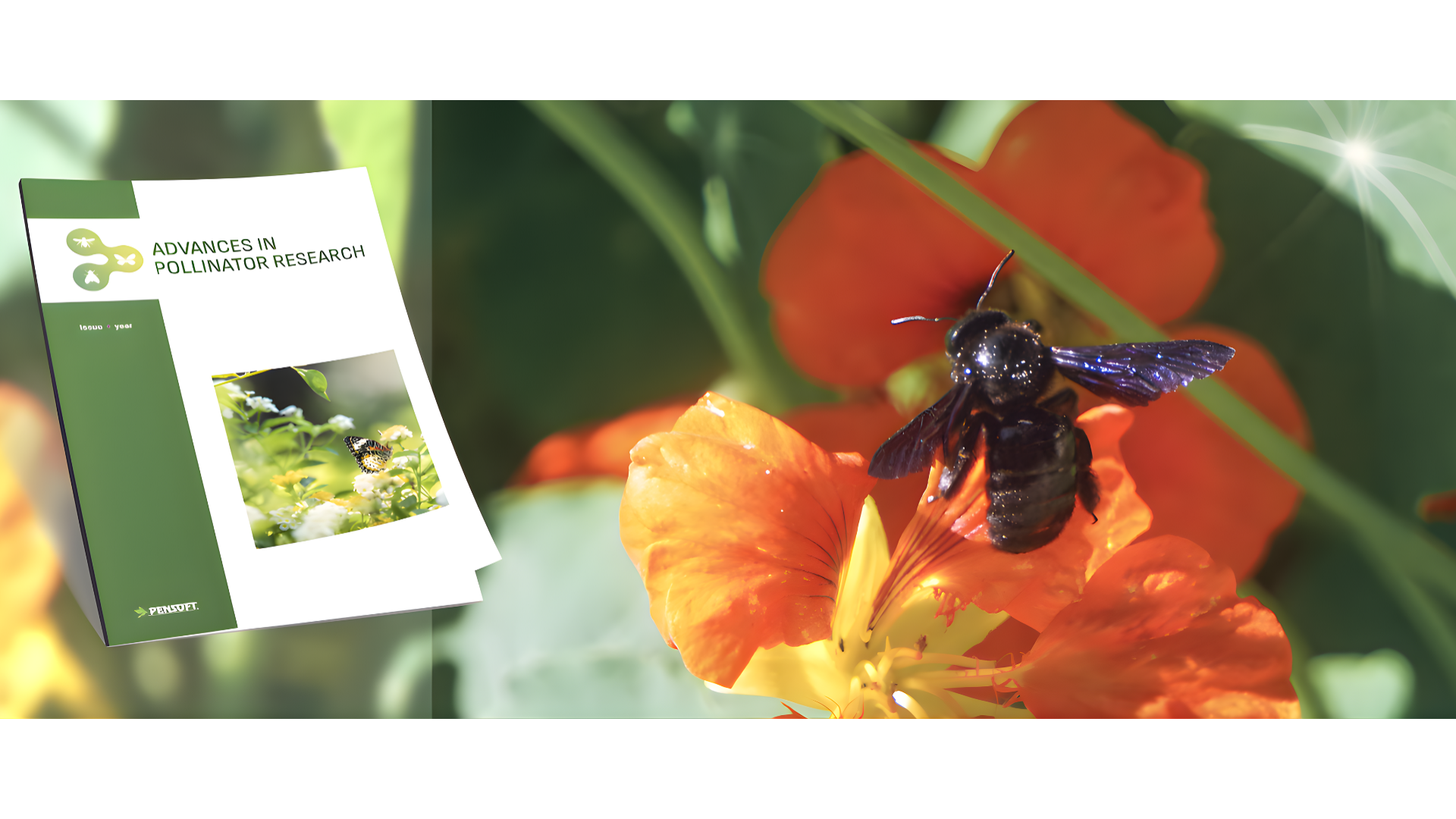
In collaboration with the European Union pollinator projects community, scholarly publisher and technology provider Pensoft launchedAdvances in Pollinator Research, a new multidisciplinary, community-driven peer-reviewed journal set to transform how pollinator science is shared and translated into real-world action.
Advances in Pollinator Research(APR) is designed as an innovative platform for the full spectrum of pollinator science, from pollination ecology and pollinator-plant interactions to molecular ecology, conservation and more. A core mission of the journal is to champion research from underrepresented regions, taxa, and ecological contexts.
As a diamond open-access journal, APR is currently free to publish and free to read, ensuring that all published research is openly accessible to the global community. The first editorial of the journal is available here.
In response to the global crisis of pollinator decline, APR moves beyond traditional data silos. It is the first comprehensive platform to unify the biological, environmental, socio-economic, and governance dimensions of pollinator health.
It embraces transdisciplinary collaboration and research between scientists, industry, and society with the aim of finding and amplifying solutions to real-world problems.
APR journal with key information.
Furthermore, the journal welcomes research on conventional approaches while highly encouraging publications that apply innovative methods, such as automated monitoring systems, AI-assisted analytics, molecular and genomic tools, as well as large-scale network initiatives and open databases that advance FAIR (Findable, Accessible, Interoperable, and Reusable) data dissemination across regions and taxa.
The journal will utilise Pensoft’s innovative ARPHA platform, known for its robust support of academic publishing and efficient dissemination of research. Thanks to this one-stop publishing solution, the new journal offers a seamless, end-to-end publishing experience, encompassing all stages between manuscript submission and article publication, indexation, dissemination and permanent archiving.
Figure illustrating the scope and publishing process of the APR journal, showing the diversity of pollinators, the multitude of stressors affecting them, and the various stakeholders interacting with them. Credit to Beaurepaire et al., 2026
The publishing services provided by ARPHA also include a variety of human-provided services and support and integrations with third-party providers, intended to maximise the reach and usability of scholarly knowledge published in Advances in Pollinator Research.
“We are excited to launch Advances in Pollinator Research. This ambitious journal is set to drive more innovative and interdisciplinary approaches within the field of pollinator science,”
– says Prof. Lyubomir Penev, founder and CEO of ARPHA and Pensoft
“With Advances in Pollinator Research, we aim to build an integrative and inclusive home for pollinator science that dissolves disciplinary and geographic silos and connects knowledge from genes to landscapes. Beyond a journal, APR is envisioned as a participatory forum where researchers, practitioners, and communities worldwide co-produce knowledge and accelerate solutions for pollinator health,”
– comments Dr. Straub
“We are truly delighted to launch this new transdisciplinary journal focusing on pollinators. Through this effort, we aim to bring our diverse research community together and provide a dynamic platform for scientists and stakeholders to exchange knowledge, ultimately deepening our understanding of and commitment to protecting these precious and fascinating species,”
– adds Dr. Beaurepaire
Advances in Pollinator Research joins a number of open-access entomology journals published by Pensoft.
For more information on the journal’s focus and scope and guidelines to authors, visit APR’s website, subscribe to the journal’s newsletter and follow it on BlueSky, Facebookand Linkedin.