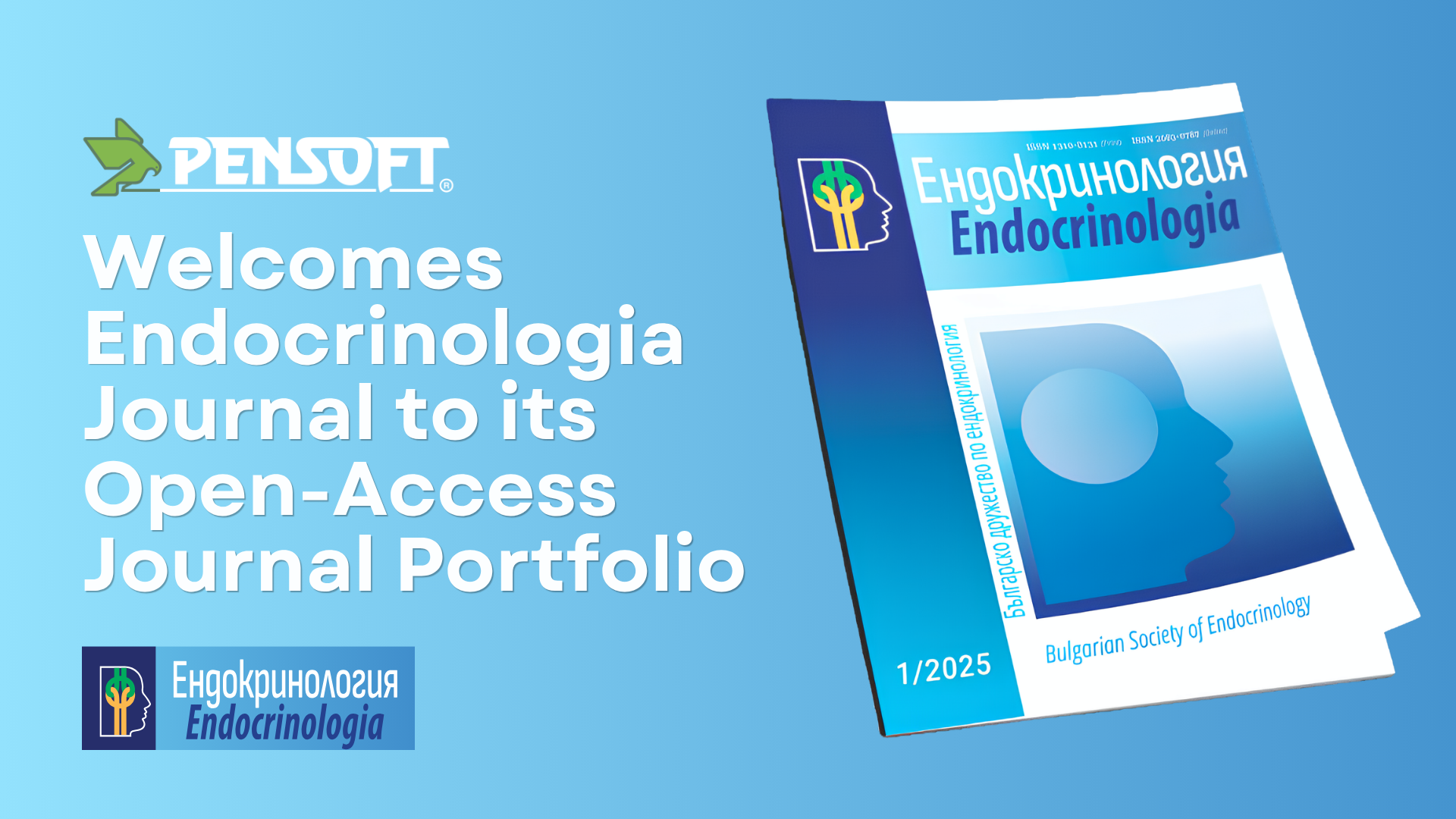
Pensoft Welcomes Endocrinologia Journal to its Open-Access Journal Portfolio

Launched by the Bulgarian Society of Endocrinology back in 1996, the open-access, peer-reviewed Endocrinologia Journal is now moving to the publishing platform ARPHA, developed by the scholarly publisher and technology provider Pensoft.

Focusing on research in basic and clinical endocrinology and metabolic disorders, the journal publishes review articles in Bulgarian, alongside original papers and case reports available in both English and Bulgarian. The paper issues of the journal are published quarterly while the electronic online versions of the papers are published as soon as final approval is granted and formatting is completed. 

Due to the generous support of the Bulgarian Society of Endocrinology, publication in the journal is free to all authors.

Homepage of the Endocrinologia Journal.

In addition to a refreshed, user-friendly design, the Pensoft-developed publishing platform ARPHA provides its signature fast-track, end-to-end publishing system to the benefit of its users: authors, reviewers and editors alike.

Each submitted manuscript is carried through the review, editing, publication, dissemination and archiving stages without leaving ARPHA’s collaboration-focused online environment. The articles are available in PDF and machine-readable XML formats, so that they are easy to discover, access, cite and reuse. Endocrinologia Journal is indexed in Scopus, CrossRef, EMBASE, and the Bulgarian Citation Index, and archived through CLOCKSS and Zenodo.


Endocrinologia Journal.

The introduction of an online platform for submitting manuscripts will contribute to improved management of the publishing activities of the journal Endocrinology and will help the journal, as the official publication of the Bulgarian Society of Endocrinology, meet current standards for full integration into international scientific databases,

– commented Prof. Maria Orbetzova, the journal’s Editor-in-Chief.

Endocrinologia Journal brings a rich legacy of peer-reviewed endocrinology research to our portfolio, and we are excited to support its next chapter. Through ARPHA, we hope to give the journal’s authors, reviewers and editors the tools they need to publish faster, reach further, and make a greater impact,

– added Prof. Lyubomir Penev, founder and CEO of Pensoft and ARPHA.

About the Bulgarian Society of Endocrinology:

Founded in 1958, the Bulgarian Society of Endocrinology (BSE) is a professional medical organization dedicated to advancing endocrinology in Bulgaria. Its core mission encompasses the continuous education of endocrinologists, trainees, GPs, and other specialists, alongside the development of national screening programmes for diabetes, obesity, hypertension, and dyslipidaemia, and the establishment of Bulgarian clinical guidelines on diabetes management. The BSE supports both healthcare professionals, through Schools of Endocrinology and specialist symposia, and patients, via public education courses and media outreach. It hosts annual scientific congresses and publishes the peer-reviewed journal Endocrinologia.

About ARPHA:

ARPHA is a full-featured, end-to-end publishing platform for journals, books, conference materials and preprints. ARPHA offers flexible operating and business models, and a wide-range of automated and human-provided services. The ARPHA team places a special focus on its scholarly communication solutions designed to leverage the visibility and outreach of academic output, while promoting inclusivity and engagement.

About Pensoft Publishers

Founded in 1992 “by scientists, for scientists”, the academic open-access publishing company is well known worldwide for its novel cutting-edge publishing tools, workflows and methods for text and data publishing of journals, books and conference materials. Back in 2010, Pensoft became the first scientific publisher to introduce semantic enrichments in scholarly publications. Through its Research and Technical Development department, the company is involved in various research and technology projects.

Pensoft launches a new journal: Advances in Pollinator Research

In collaboration with the European Union pollinator projects community, scholarly publisher and technology provider Pensoft launched Advances in Pollinator Research, a new multidisciplinary, community-driven peer-reviewed journal set to transform how pollinator science is shared and translated into real-world action.

Advances in Pollinator Research (APR) is designed as an innovative platform for the full spectrum of pollinator science, from pollination ecology and pollinator-plant interactions to molecular ecology, conservation and more. A core mission of the journal is to champion research from underrepresented regions, taxa, and ecological contexts.

APR will be led by two Editors-in-Chief: Dr. Alexis Beaurepaire (University of Bern and Agroscope) and PD Dr. Lars Straub (University of Bern).

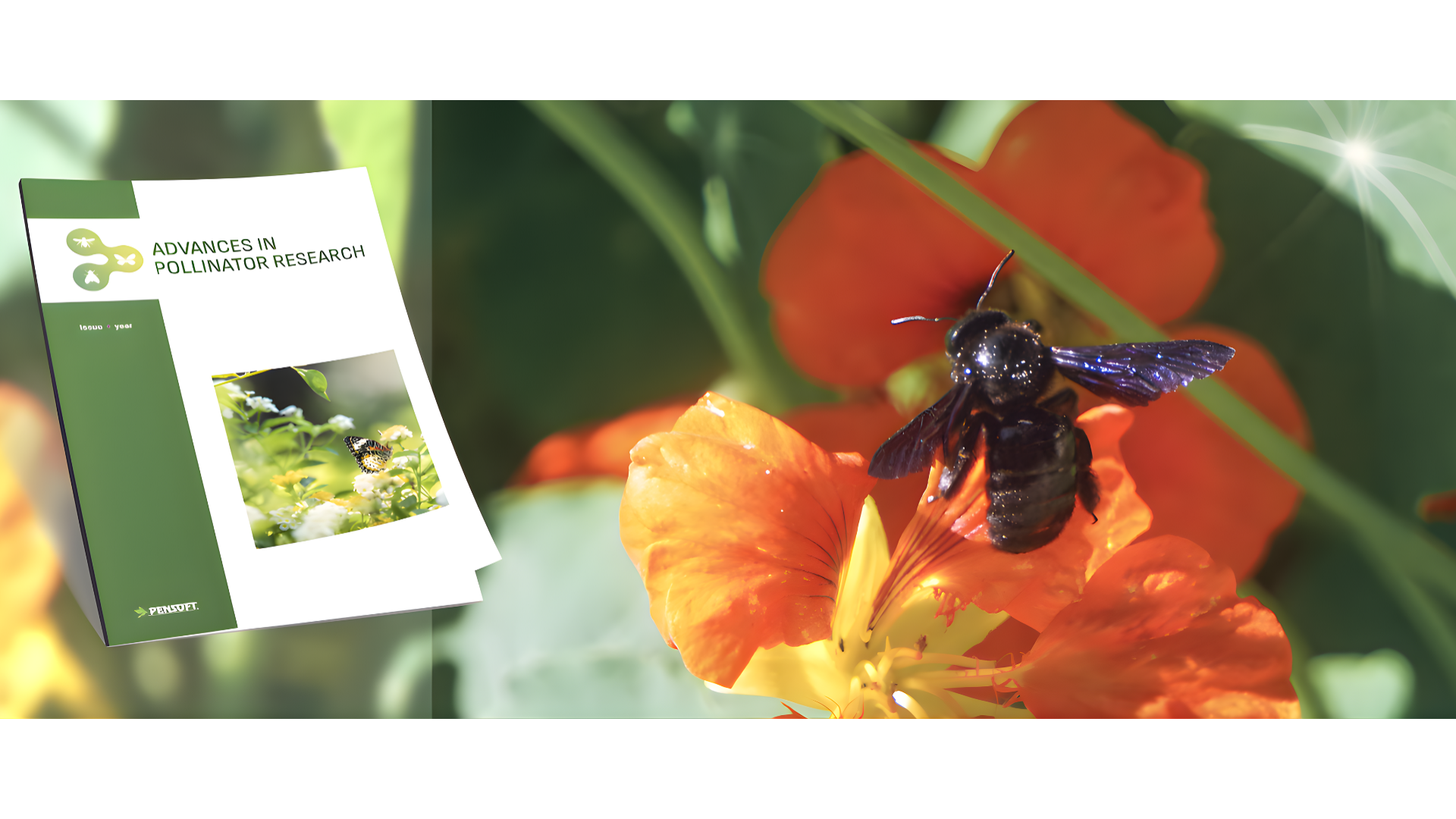
Mock-up cover of the APR journal.
Advances in Pollinator Research journal.

As a diamond open-access journal, APR is currently free to publish and free to read, ensuring that all published research is openly accessible to the global community. The first editorial of the journal is available here.

In response to the global crisis of pollinator decline, APR moves beyond traditional data silos. It is the first comprehensive platform to unify the biological, environmental, socio-economic, and governance dimensions of pollinator health.

It embraces transdisciplinary collaboration and research between scientists, industry, and society with the aim of finding and amplifying solutions to real-world problems.

Cover mock-up of the Advances in Pollinator Research journal with key information.
APR journal with key information.

Furthermore, the journal welcomes research on conventional approaches while highly encouraging publications that apply innovative methods, such as automated monitoring systems, AI-assisted analytics, molecular and genomic tools, as well as large-scale network initiatives and open databases that advance FAIR (Findable, Accessible, Interoperable, and Reusable) data dissemination across regions and taxa.

The journal will utilise Pensoft’s innovative ARPHA platform, known for its robust support of academic publishing and efficient dissemination of research. Thanks to this one-stop publishing solution, the new journal offers a seamless, end-to-end publishing experience, encompassing all stages between manuscript submission and article publication, indexation, dissemination and permanent archiving.

Pensoft launches Advances in Pollinator Research, a diamond open-access journal unifying diverse pollinator science efforts.
Figure illustrating the scope and publishing process of the APR journal, showing the diversity of pollinators, the multitude of stressors affecting them, and the various stakeholders interacting with them. Credit to Beaurepaire et al., 2026

The publishing services provided by ARPHA also include a variety of human-provided services and support and integrations with third-party providers, intended to maximise the reach and usability of scholarly knowledge published in Advances in Pollinator Research.

“We are excited to launch Advances in Pollinator Research. This ambitious journal is set to drive more innovative and interdisciplinary approaches within the field of pollinator science,”

– says Prof. Lyubomir Penev, founder and CEO of ARPHA and Pensoft 

“With Advances in Pollinator Research, we aim to build an integrative and inclusive home for pollinator science that dissolves disciplinary and geographic silos and connects knowledge from genes to landscapes. Beyond a journal, APR is envisioned as a participatory forum where researchers, practitioners, and communities worldwide co-produce knowledge and accelerate solutions for pollinator health,”

– comments Dr. Straub

“We are truly delighted to launch this new transdisciplinary journal focusing on pollinators. Through this effort, we aim to bring our diverse research community together and provide a dynamic platform for scientists and stakeholders to exchange knowledge, ultimately deepening our understanding of and commitment to protecting these precious and fascinating species,”

– adds Dr. Beaurepaire

Advances in Pollinator Research joins a number of open-access entomology journals published by Pensoft. 

For more information on the journal’s focus and scope and guidelines to authors, visit APR’s website, subscribe to the journal’s newsletter and follow it on BlueSky, Facebook and Linkedin.

ResearchGate and Pensoft Publishers announce expansion of their Journal Home partnership

Berlin (Germany) and Sofia (Bulgaria), 10th February, 2026ResearchGate, the professional network for researchers, and Pensoft Publishers, an independent open access publisher and provider of high-quality scholarly publishing services, today announced an expansion of their Journal Home partnership. Building on an earlier collaboration announced in 2023, the list now expands to 40 journals, covering the majority of Pensoft’s and partners’ journals using the publisher’s ARPHA Publishing Platform

Amongst the journals now enjoying increased visibility across the ResearchGate’s community of 25+ million researcher members are well-renowned scholarly titles affiliated with the Natural History Museum in Berlin, Swiss Academy of Sciences, International Association for Vegetation Science and The International Biogeography Society, as well as recently launched Pensoft journals, such as Individual-based Ecology, Natural History Collections and Museomics, and Food and Ecological Systems Modelling Journal.

With most of Pensoft’s eligible partner journals choosing to participate, the expansion reflects strong demand for greater exposure and engagement opportunities, particularly among smaller and developing journals in niche research areas. Through Journal Home, partner publishers can reach more relevant audiences, improve discoverability, and connect more effectively with researchers worldwide.

Participating Pensoft journals will also benefit from:

  • Increased usage and readership, with full-text open access journal content seamlessly surfaced to highly relevant researcher communities across the ResearchGate platform.
  • Stronger engagement from new and returning authors, connecting partner journals, including specialist and emerging titles, with targeted researchers and potential authors throughout the research lifecycle.
  • Dedicated Journal Profiles and prominent placement of Pensoft journals to enhance visibility and branding, boosting recognition of partner journals with researcher communities around the world.
  • Improved author experience, with the automatic addition of published articles to author profiles, clearer insight into reader engagement, and greater opportunities for meaningful collaboration.

“Journal Home allows us to provide our partner journals with improved visibility and stronger connections with global researcher communities. Many of these journals serve highly specialised fields, and Journal Home helps make sure their articles reach the right researchers, who will benefit from them most.”

– Lyubomir Penev, CEO and founder of Pensoft Publishers

“We’re pleased to expand our Journal Home partnership with Pensoft to support an increasing number of partner journals. By bringing these journals onto the platform, smaller and emerging titles can expand their reach, attract high-quality submissions, and connect with the most relevant researcher communities at key moments in their research journey.”

– Robyn Mugridge, Head of Partnership Development at ResearchGate

For more information about Journal Home, please visit www.researchgate.net/journal-home.

For more information about ResearchGate, please visit www.researchgate.net.

For more information about Pensoft Publishers, please visit www.pensoft.net.

About ResearchGate

ResearchGate is the professional network for researchers. Over 25 million researchers use researchgate.net to share and discover research, build their networks, and advance their careers. Based in Berlin, ResearchGate was founded in 2008. Its mission is to connect the world of science and make research open to all.

About Pensoft Publishers

Pensoft is an independent, open-access scholarly publisher and technology provider, best known for its 40+ biodiversity journals, including ZooKeys, Biodiversity Data Journal, PhytoKeys, MycoKeys, One Ecosystem, and Metabarcoding and Metagenomics. Ever since becoming the first to introduce semantic enrichments and hyperlinks within a scientific article in the field of biodiversity in 2010, Pensoft has been working on various tools and workflows designed to facilitate data findability, accessibility, discoverability and interoperability.

Pensoft and ARPHA integrate with Prophy to speed up reviewer discovery across 90+ scholarly journals

In a new partnership between open-access scholarly publisher Pensoft and the AI-driven reviewer discovery system provider Prophy, the editorial teams at all journals hosted on the publisher’s ARPHA Platform receive access to a broader and more diverse global pool of researchers. 

The integration connects ARPHA’s editorial and peer review workflows with Prophy’s continuously updated database of millions of active, qualified researchers. As a result, editorial teams across more than 90 open-access peer-reviewed journals powered by ARPHA can now opt to enjoy data-driven reviewer recommendations based on structured analysis of researcher expertise and publication history, with matches based on each manuscript’s topic, field, and research focus.

This development responds to a growing challenge in scholarly publishing. As submission volumes rise, the pressure on a relatively small pool of frequently invited reviewers increases, which eventually leads to delays and reviewer fatigue. By expanding the pool of potential experts and improving how they are identified with the help of semantic analysis, the integration supports a more sustainable and balanced approach to peer review.

“By working with Prophy, we’re helping editors discover expertise that might otherwise be overlooked, opening the door to a more inclusive, well-distributed, and resilient peer review ecosystem. This is about using technology not to replace human judgment, but to support it in a smarter and more responsible way.”

– Prof. Dr. Lyubomir Penev, founder and CEO of Pensoft and ARPHA

“We’re excited to work with Pensoft and ARPHA to bring smarter reviewer discovery to their editorial teams. Peer review should be efficient and fair, and this partnership helps with both. Editors can find the right expertise faster, which means less time searching and fewer delays. This integration helps editorial teams manage growing submission volumes without burning out their reviewer networks.”

– Oleg Ruchayskiy, CEO of Prophy

To further support editorial teams and client journals’ owners, Pensoft and ARPHA are offering the Prophy integration free of charge to all journals on the platform until the end of 2026

The partnership reflects Pensoft and ARPHA’s continued focus on equipping journals with practical, forward-looking tools that strengthen peer review, support editors, and help ensure the long-term sustainability of scholarly publishing.


Stay up to date with the latest from Pensoft and ARPHA by subscribing to our blogs and following us on social media, including BlueSky, Facebook and Linkedin.

A New Chapter for Swiss Geosciences and Palaeontology: Pensoft Welcomes Two New Journals to its Portfolio

Scholarly publisher and technology provider Pensoft welcomes the two latest additions to its diverse portfolio of scholarly outlets: the open-access, peer-reviewed journals Swiss Journal of Palaeontology (SJP) and Swiss Journal of Geosciences (SJG). Both journals are affiliated with the Swiss Geological Society and the Swiss Academy of Sciences (SCNAT).

With deep historical roots and a commitment to high-quality peer-reviewed research, the two journals have officially transitioned to Pensoft’s advanced publishing platform, ARPHA, marking a new chapter in their Open Access journey.

Dr. Daniel Marty, associate lecturer at the University of Basel, will continue to lead both SJP and SJG as the Chief Editor.

Swiss Journal of Palaeontology (SJP) 

Swiss journal of Palaeontology mockup

The Swiss Journal of Palaeontology (SJP), published on behalf of the Swiss Academy of Sciences (SCNAT), dates back to 1874. The journal launched under the name “Schweizerische Paläontologische Abhandlungen (Mémoires Suisses de Paléontologie)”, focusing primarily on the publication of palaeontological monographs.

Subsequently, the journal’s stewardship transitioned formally to the SCNAT in 1940, leading to the establishment of the Kommission für die Schweizerischen Paläontologischen Abhandlungen (KSPA), which has since managed the journal’s dedicated funds. After decades of irregular publication with “Birkhäuser” (obtained by Springer in 1985), the journal was rebranded to its current name in 2011 and established as a scientific peer-reviewed journal.

More recently, in response to a 2020 decision, made by the Swiss National Science Foundation (SNSF) to cease supporting traditional ‘subscription model’ journals, the SJP transitioned to a fully Open Access model. In 2025, the SJP became officially affiliated with the Swiss Geological Society (SGS). With the previous publishing contract concluding in late 2025, KSPA and SGS have partnered with Pensoft Publishers “where processes are more streamlined to the needs of the SJP.”

The SJP continues to be a vital home for research spanning alpha taxonomy, systematics, palaeobiology, biostratigraphy, and conservation palaeontology, among many other specialized fields.

The first three publications from SJP are now available on the journal’s new website along with an editorial by the Editor-in-Chief. Additionally, you can use the email alert button on the homepage of SJP to subscribe for the journal newsletter.

Swiss Journal of Geosciences (SJG)

Swiss journal of Geosciences mockup

The Swiss Journal of Geosciences (SJG) is the other journal with a rich history, published on behalf of the Swiss Geological Society and is a member of the Swiss Academy of Sciences. It was first published in 1888 as “Eclogae Geologicae Helvetiae”. From the 1920s until 2006, it was published in collaboration with Birkhäuser, eventually merging in 2006 with the Schweizerische Mineralogische und Petrographische Mitteilungen (SMPM, first published in 1921) and was then renamed to Swiss Journal of Geosciences. After the Swiss National Science Foundation (SNSF) decided to stop supporting traditional ‘subscription model’ journals, SJG transitioned to a fully Open Access format in 2020.

As of the beginning of 2026, the journal will be published by Pensoft “where processes are more streamlined to the needs of the SJG”. The journal continues to focus on original research of international interest regarding the evolution of the Tethys realm and the Alpine/Himalayan orogen, covering disciplines such as Tectonics, Geochemistry, and Orogenesis and many more.

The first three publications of SJG under this new partnership, along with an editorial by the Editor-in-Chief, are now available on the journal’s new website.

Now powered by Pensoft’s open-access scholarly publishing platfor

In joining Pensoft, both SJP and SJG will get access to improved publishing infrastructure and benefit from increased visibility and discoverability for their published research. The journal will use Pensoft’s self-developed platform, ARPHA – an end-to-end publishing solution that makes it easy for both people and machines to access, cite, and reuse research. With its design, ARPHA streamlines publishing workflows, providing a single online ecosystem for the entire editorial process, from manuscript submission to peer review, editing, publication, and archiving.

Use the email notification button on the home page to subscribe to the journal’s newsletter.

“The migration of SJG and SJP to Pensoft Publishers will permit both journals to grow in a sustainable way and that it will considerably increase their visibility and quality as they will benefit from streamlined and professional processes and services offered by Pensoft. This will be a big advantage for our authors.”

– Said the Swiss Geological Society and Dr. Daniel Marty, Editor-in-Chief of both Swiss journals.

“We are thrilled to welcome both the Swiss Journal of Palaeontology and Swiss Journal of Geosciences to the Pensoft family of next-generation scientific journals. We appreciate this new partnership and look forward to seeing the journal thrive using our advanced publishing services.”

– Said Prof Lyubomir Penev, CEO and Founder of Pensoft

Review of Clinical Pharmacology and Pharmacokinetics joins the ARPHA Platform

Review of Clinical Pharmacology and Pharmacokinetics (RCPP), an open-access, peer-reviewed journal dedicated to clinical and applied pharmacology, medicine, and therapeutics, has moved to Pensoft’s ARPHA publishing platform, in an effort to streamline its editorial workflow and enhance the visibility of its outputs.

Published by PHARMAKON-Press under ARPHA’s white-label model, its primary mission is to promote optimum drug therapy and serve as a platform for relevant research. Aiming to provide essential knowledge on drugs based on updated developments and contemporary perceptions, the journal maintains a wide scope of article types accepted for publication.

RCPP was established in Athens, Greece, in 1987 by Prof. Stavros T. Plessas MD and Dr Charalampos T. Plessas. 

journal mockup

“Four decades later, the journal continues to publish high-quality, peer-reviewed articles and hosts the proceedings of international conferences serving the scientific community in both Greece and abroad,” its team says on its webpage.

In September 2023, RCPP transitioned to an open-access model, with all its published content since then available on its new website provided by ARPHA. It is led by Editor-in-Chief Dr. Eleni Plessa.

By joining ARPHA, the journal can benefit from the platform’s one-stop, end-to-end publishing solution, high-level integrations, semantical enhancements, and advanced metrics.

“Our move to the ARPHA Platform marks a decisive step in the journal’s evolution, strengthening our commitment to transparency, innovation, and global visibility while modernising our publishing practices and expanding our international reach. Through advanced workflows, semantic enrichment, and robust metrics, this collaboration enables Review of Clinical Pharmacology and Pharmacokinetics to attract high-quality submissions, meet international standards, and ensure long-term visibility and competitiveness in open-access scientific publishing.” said the Editor-in-Chief,  Dr. Eleni Plessa.

“We’re very excited to partner with Review of Clinical Pharmacology and Pharmacokinetics, adding one more title to our growing portfolio of open-access journals in medical sciences, and look forward to supporting the journal in this next chapter,” said Prof. Lyubomir Penev, CEO of ARPHA.

About ARPHA: 

ARPHA is the first end-to-end, narrative- and data-integrated publishing solution that supports the full life cycle of a manuscript, from authoring to reviewing, publishing and dissemination. ARPHA provides accomplished and streamlined production workflows that can be customised according to the journal’s needs. The platform enables a variety of publishing models through a number of options for branding, production and revenue models to choose from.

Pensoft and ARPHA join forces with Reviewer Credits to enhance peer review transparency and recognition

Pensoft, the independent academic publishing company known for its innovative open access publishing tools, workflows, and technologically advanced platforms for text and data publishing, is pleased to announce a new partnership with Reviewer Credits, the Berlin-based network for peer reviewers and publishing integrity hub. The collaboration also encompasses ARPHA, Pensoft’s publishing platform that supports the entire scholarly publishing workflow with cutting-edge semantic tagging, collaborative manuscript authoring, and transparent peer review.

Reviewers who create a free account on Reviewer Credits will automatically record their peer review contributions, which will be certified via the platform and earn rewards and recognition within the scholarly community. While a reviewer can register any of their peer reviews on the platform, reviews for journals partnering with Reviewer Credits earn additional redeemable credits.

“Our partnership with Reviewer Credits is important for recognising and rewarding the contribution of our reviewers,” said Prof. Lyubomir Penev, Founder and CEO of Pensoft. “Good reviewers are essential for ensuring the publication of quality science. In the past, their role has been overlooked, and collaborations like this are important steps towards changing that.”

“This partnership between Reviewer Credits and Pensoft/ARPHA represents a significant step forward in recognizing and rewarding the vital contributions of peer reviewers, enhancing transparency, and strengthening the integrity of scholarly publishing for the entire research community” said Sven Fund, Managing Director at Reviewer Credits, “This collaborative approach not only incentivizes reviewers by formally documenting their efforts and providing tangible recognition, but also democratizes participation in peer review—empowering researchers at every career stage to contribute meaningfully, build networks, and advance standards of transparency and accountability within the global research community.”

About Reviewer Credits: Reviewer Credits is the global network that recognizes and rewards the vital contribution peer reviewers make to scientific publishing. The Berlin-based sciencetech company collaborates with more than 220 international publishing houses and around 1,800 academic journals and is home to over 43,000 reviewers. Around 300,000 reviews have already been uploaded to the Reviewer Credits platform. For more details, see www.reviewercredits.com.

Pensoft and the Vietnam Academy of Science and Technology forge new scholarly partnership

In August, Pensoft had the honour of welcoming colleagues from the Vietnam Academy of Science and Technology (VAST) to the headquarters of the open-access scholarly publisher and technology provider in Sofia, Bulgaria. The visit was marked by engaging discussions on scholarly publishing, future innovations, current challenges in academia and potential collaborations.

The highlight of the meeting was the formal signing of a Memorandum of Understanding (MoU) between Prof. Dr. Lyubomir Penev, Pensoft’s CEO and founder, and Prof. Dr. Thai Hoang, Vice Chairman of the Scientific Council of Materials Science at VAST and the Editor‑in‑Chief of the Vietnam Journal of Science and Technology.

“This Memorandum of Understanding marks an important step towards fostering international collaboration in scholarly publishing. By combining the expertise and know-how of Pensoft and VAST, we aim to make research more accessible and innovative for communities worldwide,”

commented Prof. Dr. Lyubomir Penev.

“I am very happy to visit Bulgaria and collaborate with Pensoft Publishers. Here, we know Pensoft and the ARPHA publishing platform for their diverse publishing solutions designed for scientific papers, monographs, academic books and more, as well as their professional and efficient work. All this makes them quite prestigious for us. Starting from this Memorandum of Understanding, next, we will explore ways to use the ARPHA publishing platform for the publication of Vietnam’s scientific journals, books and other research outputs.”

Prof. Dr. Thai Hoang said.

Over the course of the visit, the group engaged in an enriching dialogue. Guests from VAST offered an in-depth look at their publication outlets and shared insights into the Vietnamese scholarly publishing landscape, as well as the nation’s rich cultural heritage and natural wonders. 

In turn, Pensoft offered a comprehensive overview of the company’s journey of over three decades, starting from the launch of the first Pensoft journals and proceeding to the continuous development of several innovative publication platforms and solutions, including the full-featured end-to-end publishing platform ARPHA. Today, there are over 80 open-access peer-reviewed journals, including both Pensoft-launched titles, and many owned and run by research institutions, universities and learned societies from around the globe.

The visit continued beyond the office with the publisher’s management inviting their guests to a several-day trip around the country that covered the cultural and historic hubs of Plovdiv and Koprivshtitsa.

By the end of the visit, both parties agreed that their meeting in Bulgaria underscores their shared vision: to advance open, innovative, and accessible scholarly communication. With the MoU in place, both sides look forward to transforming this mutual understanding into concrete collaborative initiatives.

*

With perfect timing, shortly after the visit, one of the VAST delegates: biologist Prof. Dr. Quang Manh Vu (also affiliated with the Hoa Binh University, Hanoi, Vietnam), in collaboration with his Bulgarian and Vietnamese colleagues: Dr. Ivailo Dedov (Bulgarian Academy of Sciences) and Dr. Tuan Trieu Anh (Hung Vuong University, Viet Tri City, Vietnam) published a study in Pensoft’s inaugural and flagship journal in zoological systematics: ZooKeys. The research paper lists species of slugs and semi-slugs of the superfamily Helicarionoidea the team collected in North Vietnam in 2023. Amongst the collected specimens, the scientists discovered a new-to-science species of semi-slug they named after Pensoft’s Prof. Dr. Lyubomir Penev, who is himself a biologist and taxonomist by background. 

“When I found out I had a new species, I had no hesitation on the name: Ostracolethe penevi. I had been looking forward to naming a curious species after my friend Prof. Lyubomir Penev, a man who made the world look up to Bulgarian science, and someone who has helped me a lot through the years,”

comments Dr. Ivailo Dedov in a news announcement.

“This newly described species deserves a name that reflects the generosity of nature, the advancement of science, and the enduring friendship between Vietnam and Bulgaria,”

added Prof. Dr. Quang Manh Vu.

***

Additional information:

Vietnam Academy of Science and Technology (VAST)

Founded on 20 May 1975, VAST is Vietnam’s largest multidisciplinary research organization, with branches in Hanoi, Ho Chi Minh City, Haiphong, Nha Trang, Dalat, and Hue. Its mission spans basic and applied research, the development of high technology, human resource training, and providing scientific advice to the government on pressing national issues. 

VAST is known for achieving high output in international peer-reviewed journals; in 2023, more than 2,200 works were published, with nearly 80% in international outlets. The Academy is responsible for several cutting-edge initiatives, including satellite R&D through the Vietnam National Space Center, strategic technology fields aligned with the Fourth Industrial Revolution (e.g. AI, new materials, semiconductors), and large-scale environmental and biodiversity monitoring across the country. Looking forward, VAST has set ambitious goals, including mastering key advanced technologies, increasing technology transfer, enhancing publication impact, strengthening partnerships at home and abroad, and cultivating world-class scientific talent.

Pensoft

Founded in 1992 “by scientists, for scientists”, the academic open-access publishing company is well known worldwide for its novel cutting-edge publishing tools, workflows and methods for text and data publishing of journals, books and conference materials. Back in 2010, Pensoft became the first scientific publisher to introduce semantic enrichments in scholarly publications. Through its Research and Technical Development department, the company is involved in various research and technology projects.

ARPHA Publishing Platform

ARPHA is a full-featured, end-to-end publishing platform for open-access journals, books, conference materials and preprints. ARPHA offers flexible operating and business models, and a wide-range of automated and human-provided services. The ARPHA team places a special focus on its scholarly communication solutions designed to leverage the visibility and outreach of academic output, while prompting inclusivity and engagement.

First Impact Factors for three ARPHA-hosted journals

The latest Journal Citation Reports, released by Clarivate in June 2025, have granted three ARPHA-hosted, open-access journals their first Journal Impact Factors (JIF).

Metabarcoding and Metagenomics (MBMG), Vegetation Classification and Survey (VCS), and Frontiers of Biogeography (FoB) achieved impressive scores of 3.1, 3.0, and 2.5, respectively, highlighting their growing impact and relevance to the academic community.

The metric reflects the number of times a journal’s content from 2022 and 2023 was cited in 2024. This total citation count is then divided by the number of “citable” articles (i.e., research and review articles) to estimate the JIF.

This achievement reflects the hard work of the editorial teams and authors at each of the journals, as well as the efforts of ARPHA’s dedicated, in-house indexing team, who help journals apply for important academic indexing databases, including Web of Science and Scopus. Indexation in such databases allows journals to become eligible for metrics like the JIF and CiteScore, which are often considered by researchers deciding where to publish their work.

ARPHA’s indexing service includes evaluation of a given journal’s current status against the requirements of prestigious databases, advice on how to meet these requirements, and overall assistance in the application process. 

Want to know more? Learn about indexing and numerous other services, both automated and human-provided, offered by ARPHA here.

“The Impact Factor is an important metric for scientific metrics. And we know that not having one hinders especially early career researchers to submit their research to us earlier. Therefore, we are very happy that MBMG has received this important metric, and with a value of 3.1 we’re even more happy that this is a very competitive one.”

Florian Leese, MBMG Editor-in-Chief.

“We are delighted to see the journal receive its first Impact Factor. We expect that both Journal Impact Factor and CiteScore will further increase in 2026.
“Thanks to all our editors, reviewers and authors who made this success possible and to IAVS for subsidizing the APCs of VCS during the first few years. We look forward to receiving more high-quality submissions in the fields of vegetation classification and ecoinformatics, the two strongholds of VCS.”

Jürgen Dengler, Idoia Biurrun and Wolfgang Willner, VCS Chief Editors.

“When The International Biogeography Society launched Frontiers of Biogeography under the editorship of Joaquín Hortal in 2009, we had a vision of it becoming an adaptable, independent, society-owned journal with a distinctive place in the journal publishing landscape. The attainment of our first Clarivate Journal Impact Factor is testimony to the hard work by our past and present editors and reviewers, and to the quality and interest level of the work that our community has entrusted to the journal for publication.
“Working together with the team at Pensoft we are confident that we can continue to grow the journal as a favoured venue for Open Access publication of cutting-edge biogeographical research.”

Robert J. Whittaker, Frontiers of Biogeography Editor-in-Chief.

Vegetation Ecology and Diversity: more than a new name

A VED journal issues overlaid on a picture of a forest.

The journal of the Italian Society of Vegetation Science (SISV), known as Plant Sociology from 2012 to 2024, has changed its name to Vegetation Ecology and Diversity and launched a new website.

This change, approved by the SIVS plenary assembly in November 2024, reflects the journal’s mission to encompass a broader spectrum of research articles and better represent the dynamic and interdisciplinary field of vegetation science. 

In addition to the name change, the journal has implemented a refreshed Editorial Board, new Topical Collections, and initiatives to support young researchers. Gianmaria Bonari is welcomed as the journal’s new Editor-in-Chief, succeeding the esteemed Daniela Gigante, who served in the role from January 2019 to February 2024.

The new journal name.

For members of the SISV, new publication fee discounts have been introduced. These initiatives aim to foster inclusive participation in vegetation science, particularly for students and researchers with limited financial resources. 

A complete publication fee waiver is now available for young member researchers who have conducted their research without external funding, while those with partial external funding can benefit from a 10% APC discount. 

Acronym of the new journal name.

Finally, a new social media team of Giovanni Rivieccio and Michele Mugnai will be managing the journal’s Facebook and Bluesky pages, bringing fresh ideas and dynamic content.

An Editorial published on the new journal website provides more information on the changes made, including short bios of the new Editorial Board members and descriptions of the new Topical Collections.

Statement from the Editor-in-Chief Gianmaria Bonari:

“It is a privilege to lead Vegetation Ecology and Diversity as we embark on this transformative journey. Our new name signifies our dedication to embracing the full breadth of vegetation science. With the introduction of new Topical Collections and initiatives to support young researchers, we aim to foster a collaborative and inclusive environment for vegetation scientists. I encourage researchers to engage with our journal and contribute to advancing the open-access society-owned journal Vegetation Ecology and Diversity.”

Statement from the President of the Italian Society of Vegetation Science (SISV), Simonetta Bagella:

“The rebranding of our journal to Vegetation Ecology and Diversity marks a significant milestone for the SISV. This change, approved by our members, aligns with our mission to expand the journal’s scope and enhance its international impact. We are particularly proud of the new initiatives to support young researchers, including publication fee waivers and discounts, which underscore our dedication to inclusivity and the advancement of emerging scientists in vegetation science. We also express our gratitude to Daniela Gigante for her leadership and warmly welcome Gianmaria Bonari as he guides the journal into this exciting new era.”