Journals published on ARPHA now archived in the Biodiversity Heritage Library

A vibrant orange butterfly on yellow flowers, with text announcing archiving of journals in the Biodiversity Heritage Library.

Content from more than 30 biodiversity journals published on the ARPHA Platform will now be archived in the Biodiversity Heritage Library (BHL), the world’s largest open-access digital library for biodiversity literature and archives.

A global consortium of natural history, botanical, research, and national libraries, BHL digitises and freely shares essential biodiversity materials. A critical resource for researchers, it provides vital access to material that might otherwise be difficult to obtain.

Under the agreement, over 16,000 articles published on Pensoft’s self-developed ARPHA Platform are now available on BHL. Both legacy content and new articles are made available on the platform, complete with full-text PDFs and all relevant metadata.

Thanks to this integration, content in our journals will become even more accessible and readily discoverable, helping researchers find the biodiversity information they need.

Prof. Lyubomir Penev

More content published on ARPHA will gradually be added to the BHL archive.

The publications will be included in the Library’s full-text search, allowing researchers to easily locate relevant biodiversity literature. Crucially, the scientific names within the articles will be indexed using the Global Names Architecture, enabling seamless discovery of information about specific taxa across the BHL collection.

This automated workflow is facilitated by the ARPHA platform and uses the Open Archives Initiative Protocol for Metadata Harvesting (OAI-PMH) to enable exposure and harvesting of repository metadata. 

“Pensoft is pleased to collaborate with BHL in our joint mission to support global biodiversity research through free access to knowledge. Thanks to this integration, content in our journals will become even more accessible and readily discoverable, helping researchers find the biodiversity information they need,” said Prof. Lyubomir Penev, CEO and founder of Pensoft and ARPHA.The news comes soon after BHL announced it is about to face a major shift in its operation. From 2026, the Smithsonian Institution – one of BHL’s 10 founding members – will cease to host the administrative and technical components of BHL. As the consortium explores a range of options, the BHL team is confident that “the transition opens the door to a reimagined and more sustainable future for BHL.”
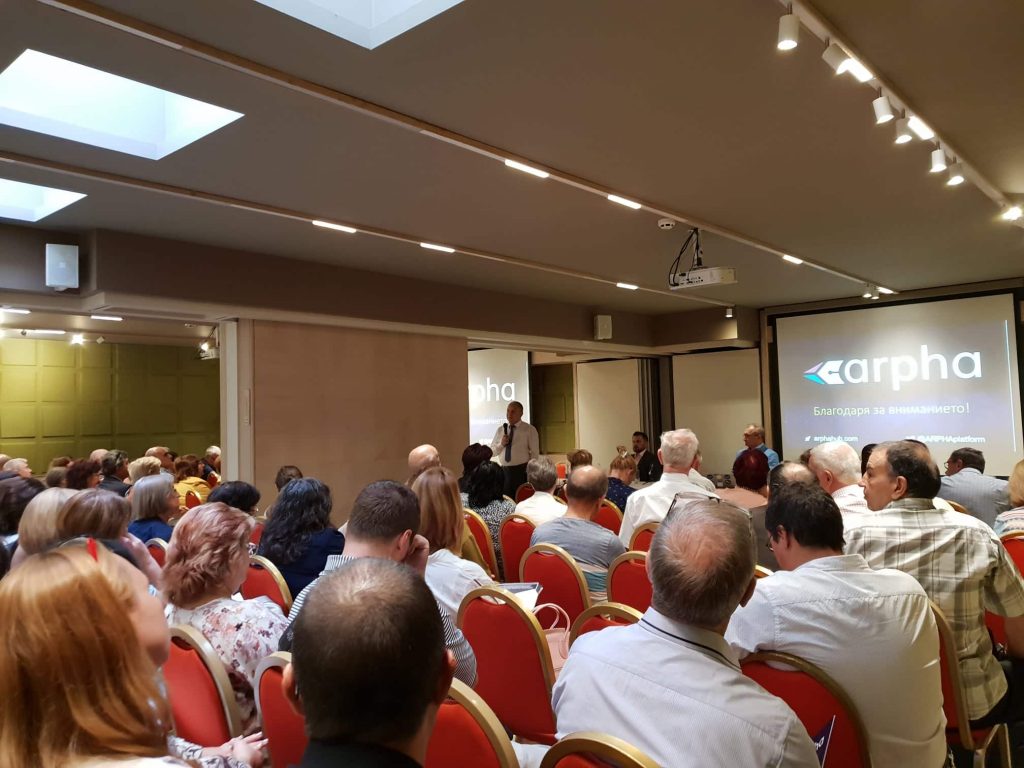
Bulgaria’s publishers and scholars gathered to discuss the move of the national scientific journals to the global scene

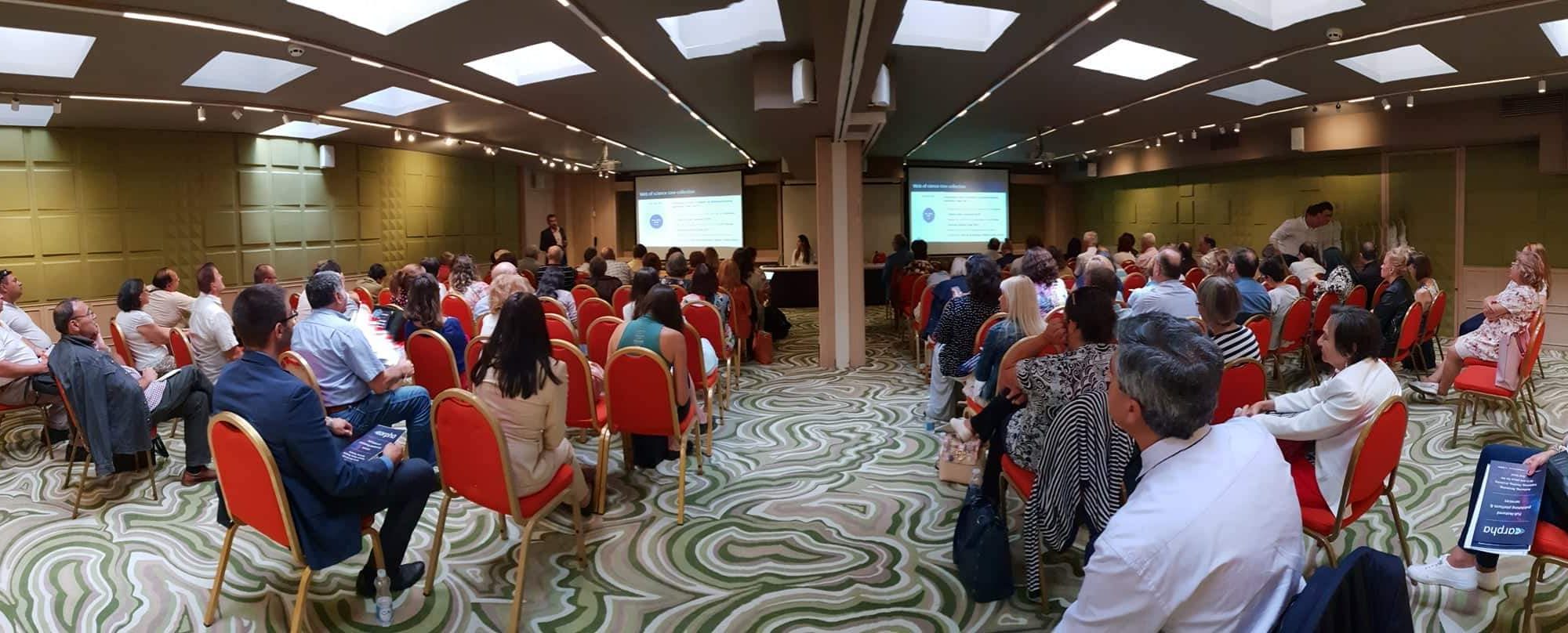
The event was co-organised by Pensoft and the Bulgarian National Science Fund (BNSF) at the Ministry of Education and Science

Over one hundred representatives of Bulgarian scholarly journals and academic institutions attended a seminar, organised by the scientific publisher and technology provider Pensoft and the Bulgarian National Science Fund (BNSF) at the Ministry of Education and Science of Bulgaria. The meeting, themed “The Bulgarian scholarly journals in the global scientific environment – advancements in the publishing model, technological modernisation, indexing, dissemination and promotion,” took place in Sofia in September. 

In his speech, Prof. George Vaysilov, Director of the BNSF, highlighted the crucial role of scholarly publishing reformation in Bulgaria. He also answered various questions concerning the funding available to scientific journals.

“These events are useful for the Bulgarian scientific journals and the Bulgarian National Science Fund” will continue to participate in their organisation,” he said.

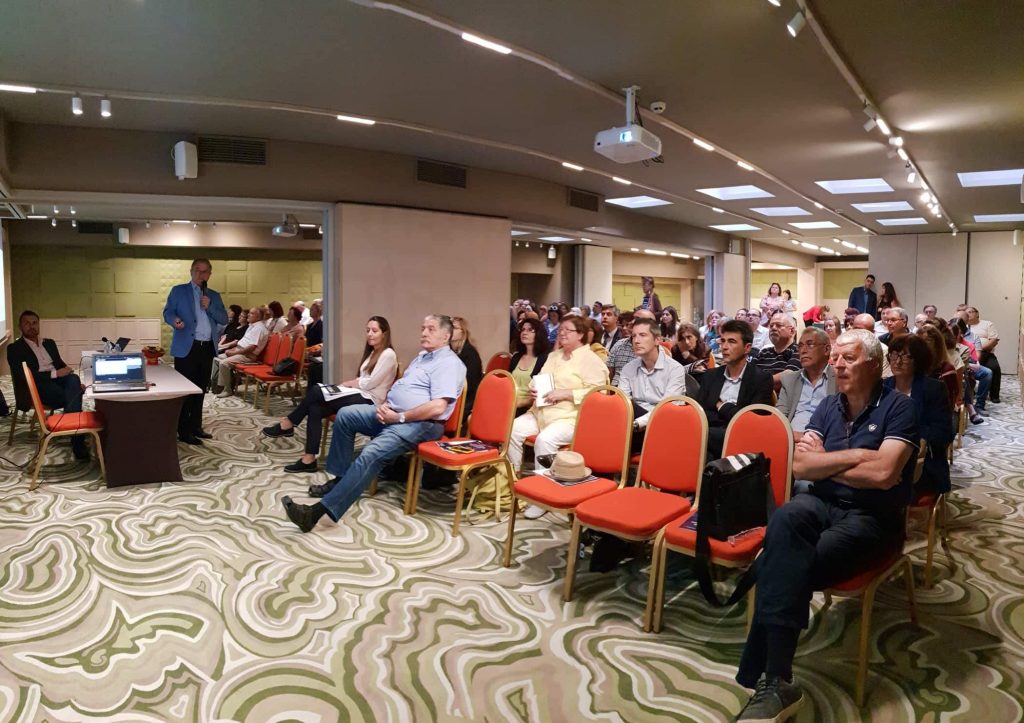
Prof. George Vaysilov gave a welcome speech before answering various questions from the attendees.
Photo by Pensoft.

In their talks, the Pensoft team addressed key topics and innovations related to journal publishing, management, dissemination and marketing in the digital era. They also showcased how these challenges are approached at the journals published via the scholarly Pensoft-developed ARPHA Platform. 

Main topics in the discussions were „Plan S”, the ongoing initiative for a global transition to immediate Open Access (Gold Open Access); exclusive digitisation; interoperability, findability and accessibility to online research items and data; traditional and alternative metrics for tracking journal impact; as well as the specifics about journal indexing. 


“Technological modernisation of the publishing process in an Open Access and Open Science environment” was the theme of Prof. Lyubomir Penev’s presentation. 
Photo by Pensoft.

Prof. Lyubomir Penev, Director and founder of Pensoft and ARPHA, added:

“In our own lifetimes, we’ve been the witnesses of a tremendous technological breakthrough on a global level. Not only does academia need not be left behind – its place is at the very forefront of such a revolution. This is exactly what we intend to do with ARPHA: to provide an all-rounded platform coupled with all the associated services, in order to provide the technological backbone needed by historical, as well as recently launched journals to make a stand on the international scene. Having listened to the questions and concerns of the Bulgarian publishers, I am able to confirm that the situation is not that different to what we see everywhere: there is the evident understanding of the situation and desire for a change. What is necessary is only a bit of practical know-how.”

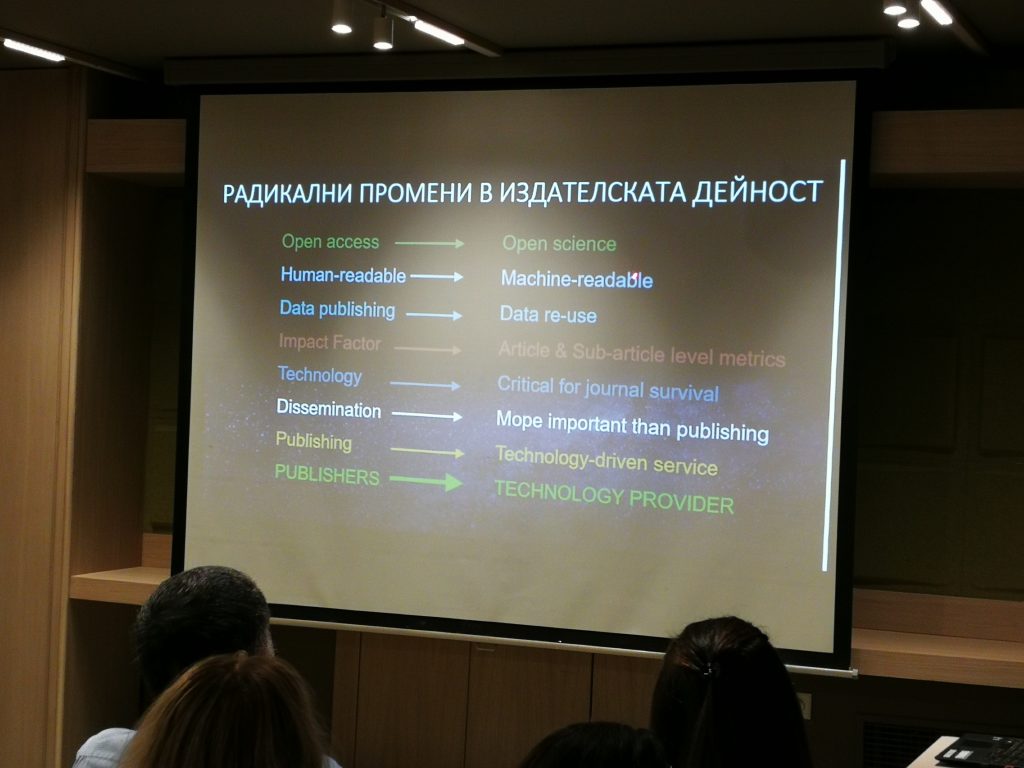
The revolution in scholarly publishing in recent years. A part of Prof. Lyubomir Penev’s presentation.
Photo by Pensoft.