Contributions to Entomology now indexed in Scopus

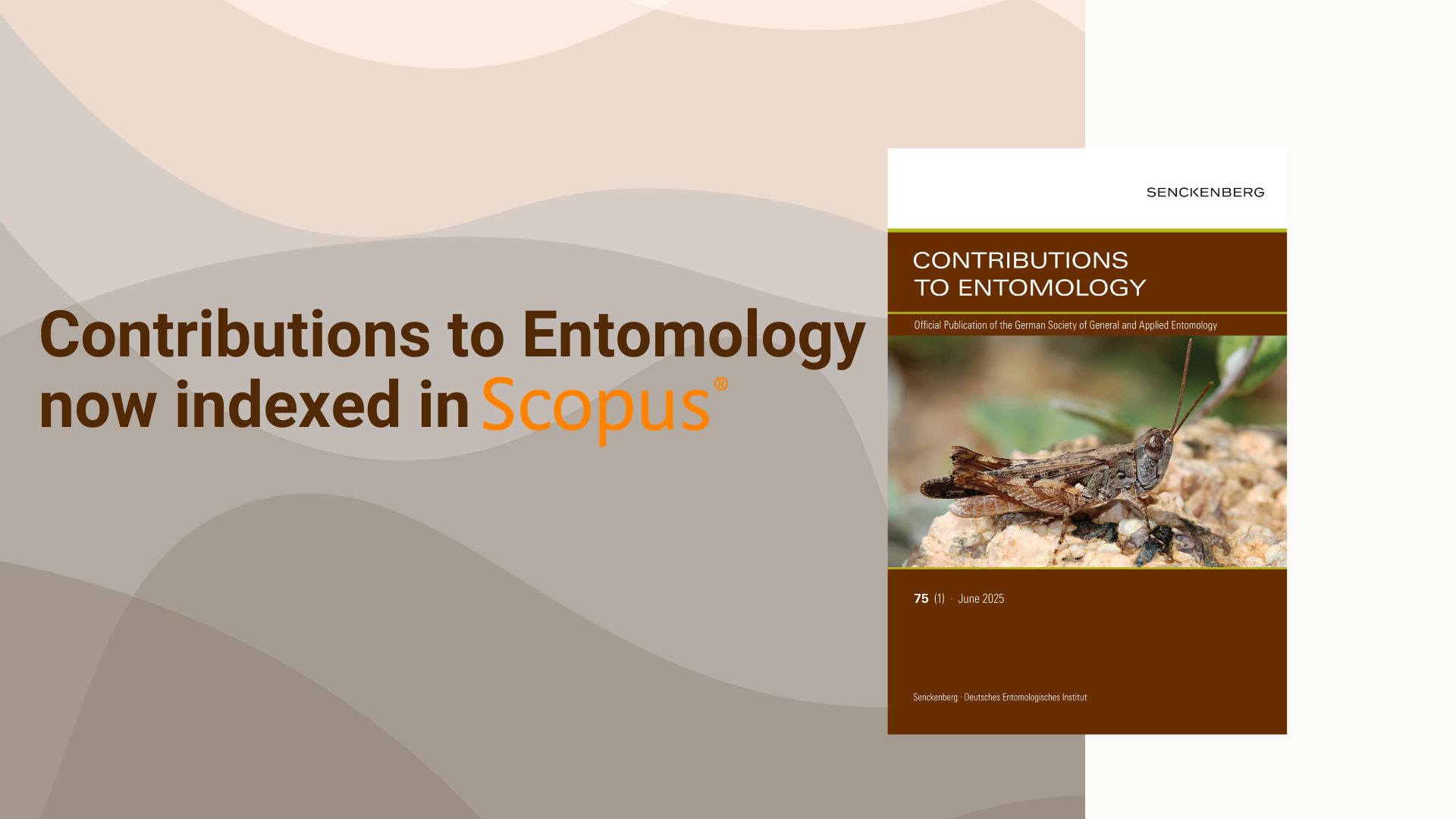
Contributions to Entomology, one of the open-access, peer-reviewed journals of the Senckenberg Society for Nature Research, has been officially indexed in Scopus, one of the world’s leading abstract and citation databases for scholarly literature. This achievement ensures broader visibility and discoverability of articles published in Contributions to Entomology.
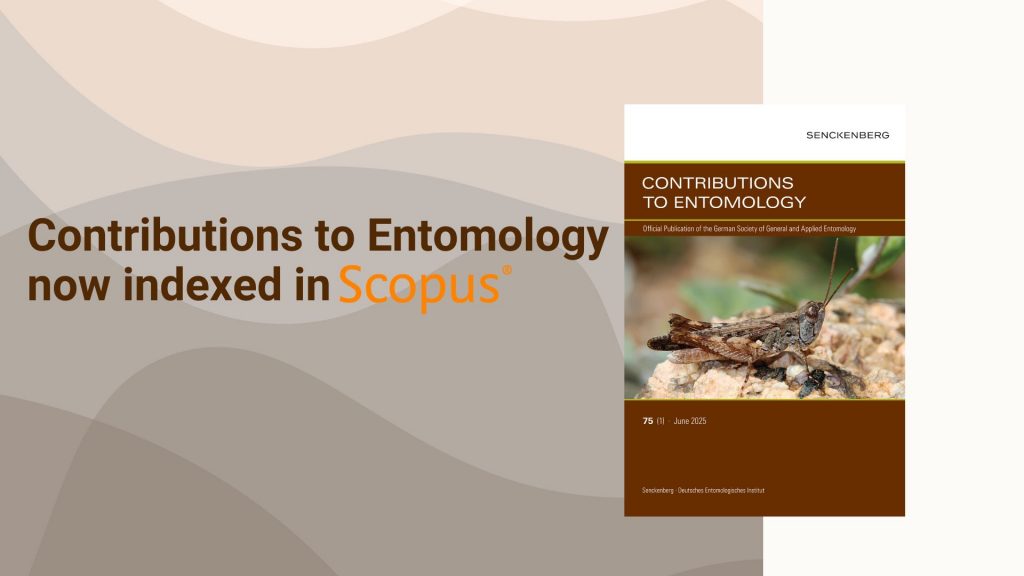
Cover of "Contributions to Entomology" journal, featuring a grasshopper and announcing its indexing in Scopus.

“Being indexed in Scopus is a great step forward for Contributions to Entomology. Scopus is one of the leading abstract and citation databases for peer-reviewed literature, and being included means the journal’s articles are now more visible, easier to discover, and better integrated into the global research landscape. It reflects the steady progress we’ve made since the beginning of the year—with stronger submissions, growing readership, and a clear focus on quality,” comments Co-Editor-in-Chief Jana Hoffmann of the Senckenberg German Entomological Institute (SDEI).

“Backed by SDEI, with a dedicated editorial team and an engaged community of authors and reviewers, the journal continues to evolve. We are particularly pleased to see this recognition of our collective efforts. This milestone is encouraging—and an important part of the journal’s continued development,” adds Co-Editor-in-Chief Thomas Schmitt.
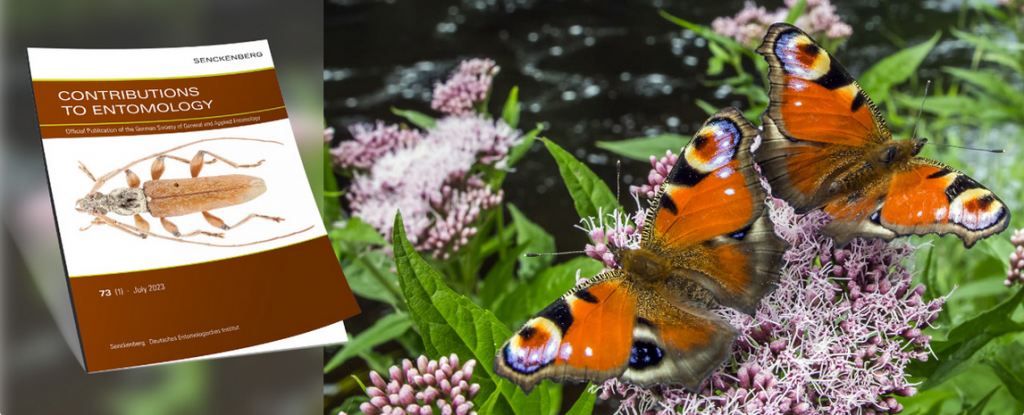
A journal cover titled "Contributions to Entomology" alongside two colorful butterflies on pink flowers.

The Scopus index has rigorous standards for editorial quality, academic contribution, and publishing ethics. Criteria include immaculate peer-review and editorial processes, a good and consistent yearly publication volume, high-quality and user-friendly website and infrastructure, well-pronounced internationality and inclusivity, and considerable readership and citation rates.

The journal is expected to receive its very first Scopus Citescore in June 2026.

Founded in 1951 as Beiträge zur Entomologie by the German Entomological Institute, the journal has evolved over more than seven decades to reflect the growing scope and sophistication of entomological research. Since 2017 (volume 67, issue 1), it has been published as an open-access journal under the title Contributions to Entomology. It is published by the Senckenberg German Entomological Institute in Müncheberg and serves as official publication of the German Society for General and Applied Entomology (DGaaE).

Contributions to Entomology publishes research covering all aspects of entomology, including insect systematics, taxonomy, phylogeny, zoogeography, faunistics, ecology, applied entomology, entomological bibliography, and the history of entomology. The journal operates under a diamond open-access model, ensuring its published content is free to publish and read.

“As a fully open-access journal, we’re committed to supporting accessible and transparent science,” Jana Hoffmann comments.

In 2021, Contributions to Entomology signed with Pensoft to move the journal to the scientific publisher’s ARPHA Platform, in a move to modernise the academic outlet and provide its authors, readers and editors with a user-friendly environment where they can submit, revise, publish and permanently archive their work.
ARPHA Platform reports 6 journals now indexed in ERIH PLUS

Following a thorough evaluation that has been going on for the last several months, the Indexing team at ARPHA Platform reports that the applications submitted on behalf of six journals have all been approved by ERIH PLUS – the European Reference Index for the Humanities and Social Sciences (HSS)

Four journals (co-)published by the scholarly publisher and technology provider Pensoft: Nature Conservation, NeoBiota, Neotropical Biology and Conservation and Fossil Record, and two journals using the white-label publishing solution of ARPHA Platform: the Journal of the Bulgarian Geographical Society and the Amsterdam University PressHeritage, Memory and Conflict (HMC) were recently accepted by the key index within the field of Humanities and Social Sciences (HSS): ERIH PLUS.

ERIH (European Reference Index for the Humanities or ERIH) was established by the European Science Foundation. In 2014, it was extended to also include social science disciplines and was renamed ERIH PLUS.

The aim of the index is to increase the visibility, searchability and availability of research published in the fields. It is widely used within the European academic community.

“We want to be a key player in the European work that is done to make HSS research available to the wider community, and we want to do this by providing an index which not only supplies metadata about journals, but also places the HSS research in a wider academic context,”

says the team behind ERIH PLUS.

The ERIH PLUS easily-searchable database includes journals that have proved to meet an extensive list of requirements in line with good academic practices and research integrity, such as: 

“explicit procedures for external peer review; an academic editorial board, with members affiliated with universities or other independent research organizations; a valid ISSN code, confirmed by the international ISSN register; abstracts in English and/or another international language relevant for the field for all published articles; information on author affiliations and addresses; a maximum two thirds of the authors published in the journal from the same institution”.

ERIH PLUS is a member of different key-organisations like COPE (Committee on Publication Ethics) and DOAJ (Directory of Open Access Journals).

***

The six journals mentioned here are not the first ones in the ARPHA portfolio to be accepted at ERIH Plus. Already in the database are a total of 15 scholarly outlets published on the platform: 

  1. BioRisk
  2. Check List
  3. European Science Editing
  4. Maandblad voor Accountancy en Bedrijfseconomie
  5. One Ecosystem
  6. Plant Ecology and Evolution
  7. Plant Sociology
  8. Research Ideas and Outcomes (RIO Journal)
  9. Rethinking Ecology
  10. Fossil Record
  11. Heritage, Memory and Conflict
  12. Nature Conservation
  13. NeoBiota
  14. Neotropical Biology and Conservation
  15. Journal of the Bulgarian Geographical Society

***

Support in indexing and archiving is only a part of the human-provided services offered by the ARPHA publishing platform to client journals regardless of their choice to be (co-)published by Pensoft or retain their own publishing brand. 

You can find more about the services offered by ARPHA on the platform’s website.

***

You can also follow ARPHA Platform on:

Bulgaria’s publishers and scholars gathered to discuss the move of the national scientific journals to the global scene

The event was co-organised by Pensoft and the Bulgarian National Science Fund (BNSF) at the Ministry of Education and Science

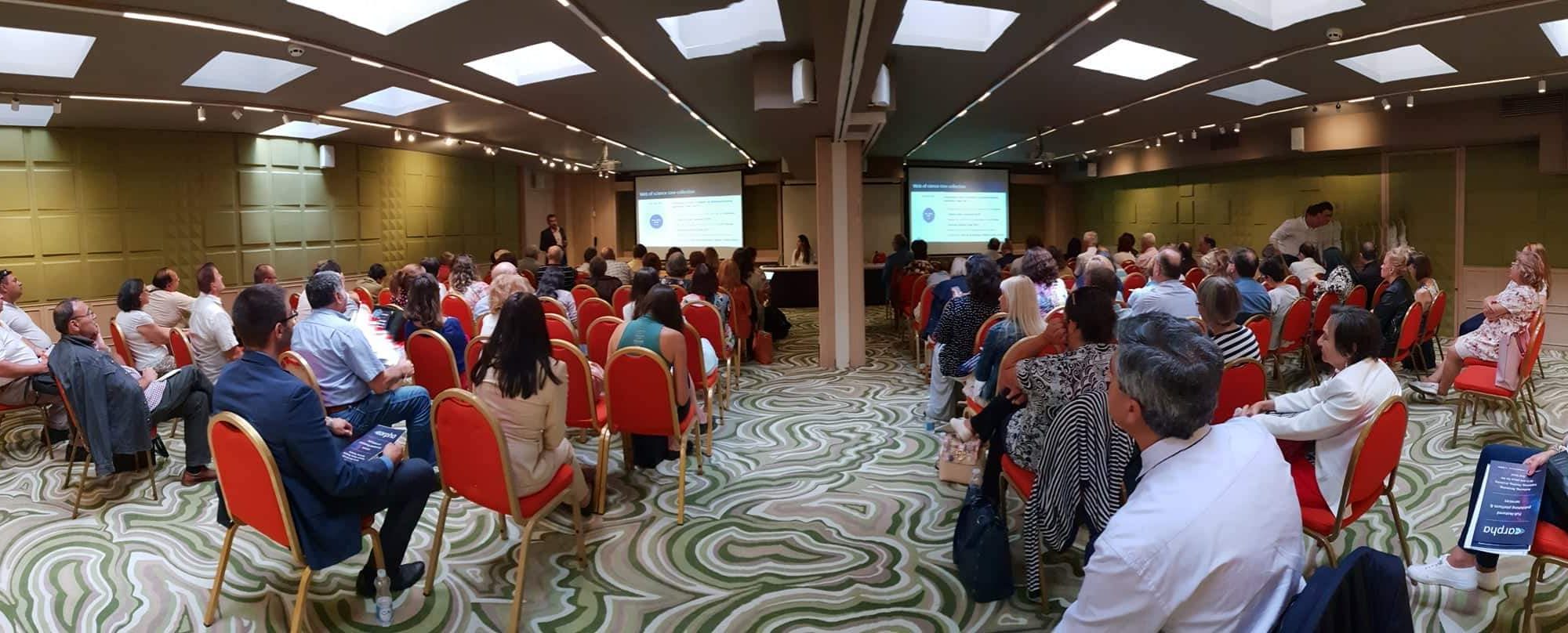
Over one hundred representatives of Bulgarian scholarly journals and academic institutions attended a seminar, organised by the scientific publisher and technology provider Pensoft and the Bulgarian National Science Fund (BNSF) at the Ministry of Education and Science of Bulgaria. The meeting, themed “The Bulgarian scholarly journals in the global scientific environment – advancements in the publishing model, technological modernisation, indexing, dissemination and promotion,” took place in Sofia in September. 

In his speech, Prof. George Vaysilov, Director of the BNSF, highlighted the crucial role of scholarly publishing reformation in Bulgaria. He also answered various questions concerning the funding available to scientific journals.

“These events are useful for the Bulgarian scientific journals and the Bulgarian National Science Fund” will continue to participate in their organisation,” he said.

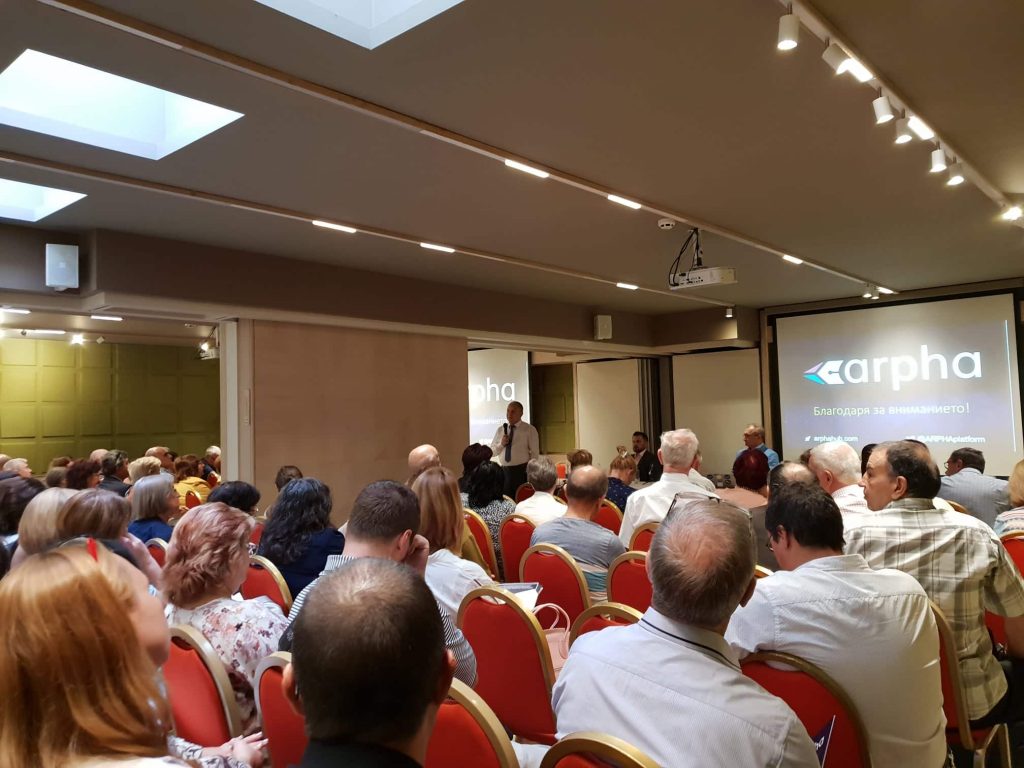
Prof. George Vaysilov gave a welcome speech before answering various questions from the attendees.
Photo by Pensoft.

In their talks, the Pensoft team addressed key topics and innovations related to journal publishing, management, dissemination and marketing in the digital era. They also showcased how these challenges are approached at the journals published via the scholarly Pensoft-developed ARPHA Platform. 

Main topics in the discussions were „Plan S”, the ongoing initiative for a global transition to immediate Open Access (Gold Open Access); exclusive digitisation; interoperability, findability and accessibility to online research items and data; traditional and alternative metrics for tracking journal impact; as well as the specifics about journal indexing. 


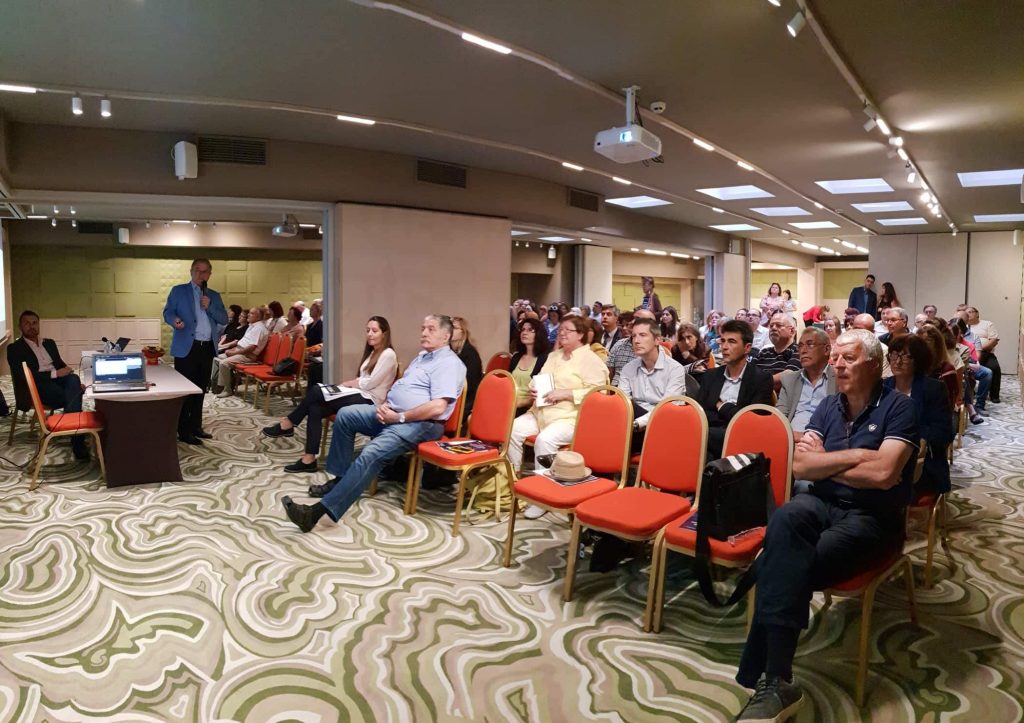
“Technological modernisation of the publishing process in an Open Access and Open Science environment” was the theme of Prof. Lyubomir Penev’s presentation. 
Photo by Pensoft.

Prof. Lyubomir Penev, Director and founder of Pensoft and ARPHA, added:

“In our own lifetimes, we’ve been the witnesses of a tremendous technological breakthrough on a global level. Not only does academia need not be left behind – its place is at the very forefront of such a revolution. This is exactly what we intend to do with ARPHA: to provide an all-rounded platform coupled with all the associated services, in order to provide the technological backbone needed by historical, as well as recently launched journals to make a stand on the international scene. Having listened to the questions and concerns of the Bulgarian publishers, I am able to confirm that the situation is not that different to what we see everywhere: there is the evident understanding of the situation and desire for a change. What is necessary is only a bit of practical know-how.”

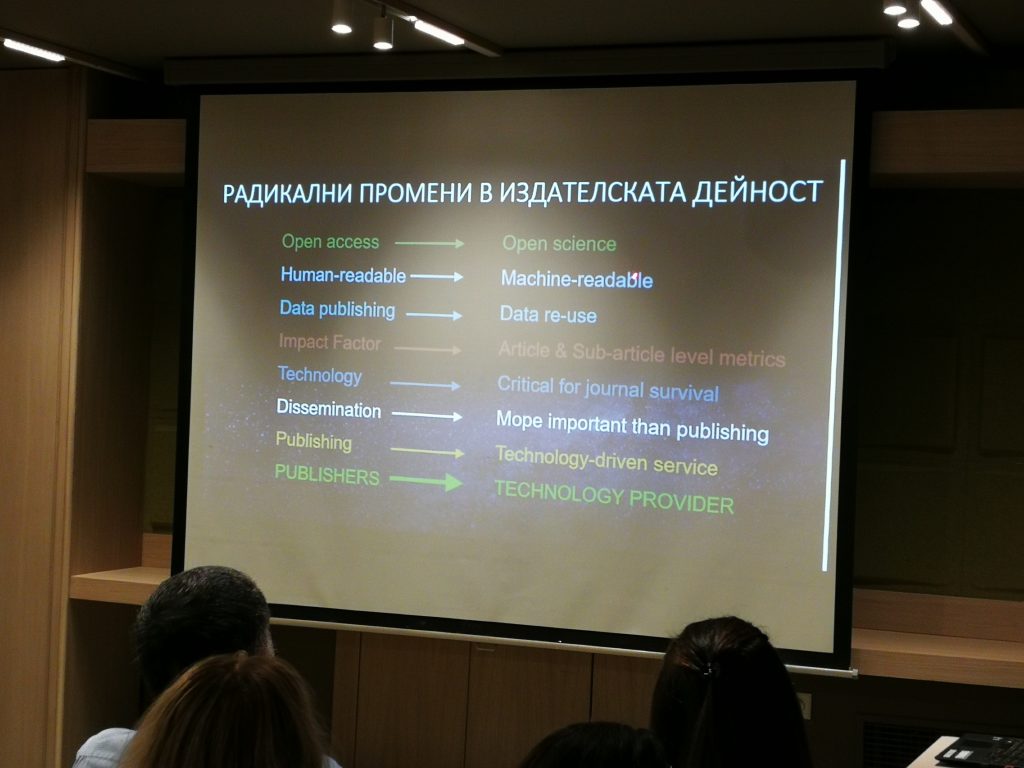
The revolution in scholarly publishing in recent years. A part of Prof. Lyubomir Penev’s presentation.
Photo by Pensoft.