
For millennia, people have gathered data and knowledge – about where to hunt, eat, trade, and live – and shared it through experiences, stories and songs. Today, we continue to do so by creating and sharing knowledge in order to “advance human understanding and the common good.”
This year’s International Open Access Week theme, “The Cost of Knowledge,” reminds us that sharing knowledge has a price: subscription fees and article processing charges, the time and expertise of authors, reviewers and editors, and the investment and know-how behind user-friendly digital infrastructures.
The themes echo the ones we looked at during Peer Review Week 2026, where we gave our Editors-in-Chief the chance to share the challenges they face in sustaining the peer review process, from the influx of papers and data to the shortage of researchers willing to review – you can read what they told us here: https://blog.pensoft.net/2026/09/11/peer-review-week-2026-building-capacity-for-the-long-run/
Open from the very beginning
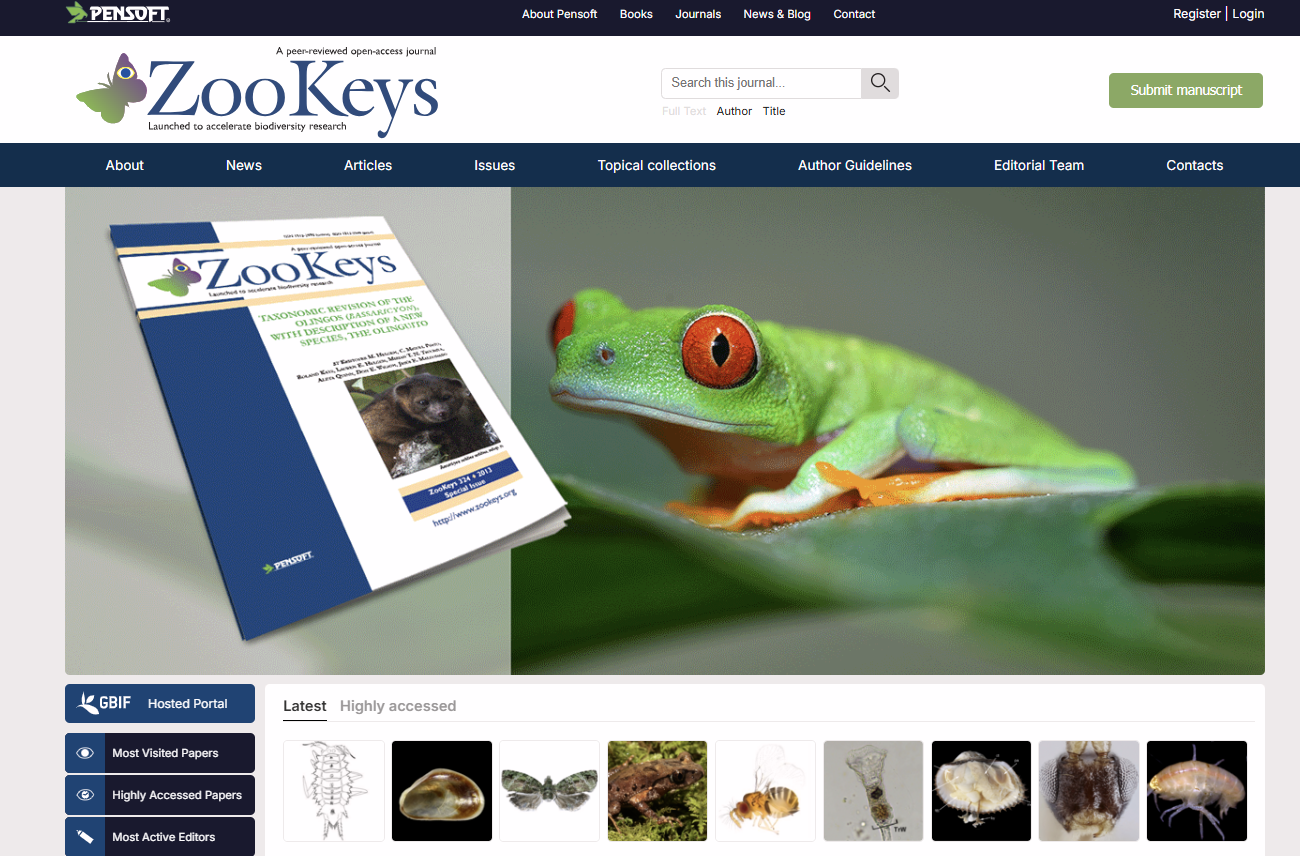
At Pensoft, open access has never been an add-on. Founded in 1992 by scientists for scientists, we launched our first journal, ZooKeys, as fully open access in 2008, and it has been open from its very first issue. After all, it has always been our thinking that research can only serve the common good when everyone can read it, use it and build on it. This is why from the very start, we wanted ZooKeys to speed up research and free the exchange of information in taxonomy.
That principle has shaped every journal we have incepted since from PhytoKeys and MycoKeys to Biodiversity Data Journal to more recently launched Natural History Collections and Museomics and Individual-Based Ecology.
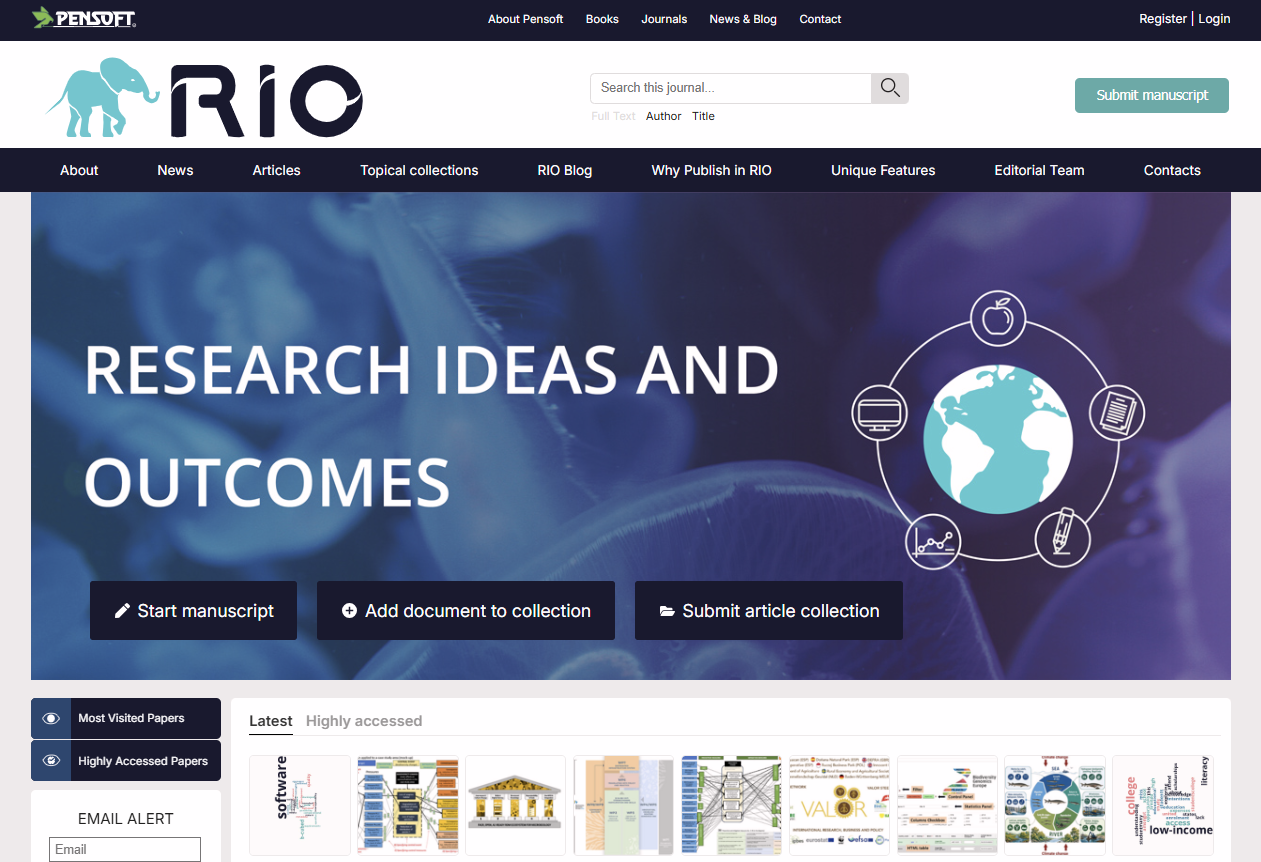
In 2025, together with long-term collaborators from the open-science community, we founded the quite revolutionary and unique journal Research Ideas and Outcomes (RIO) with the aim to catalyse the culture change in research communication by publishing ideas, project proposals, data/software management plans and various other outcomes that would typically be lost for the scientific community. The recognition for RIO’s approach to scholarly communication came only half a year later when SPARC went on to name an Open Science Innovator.
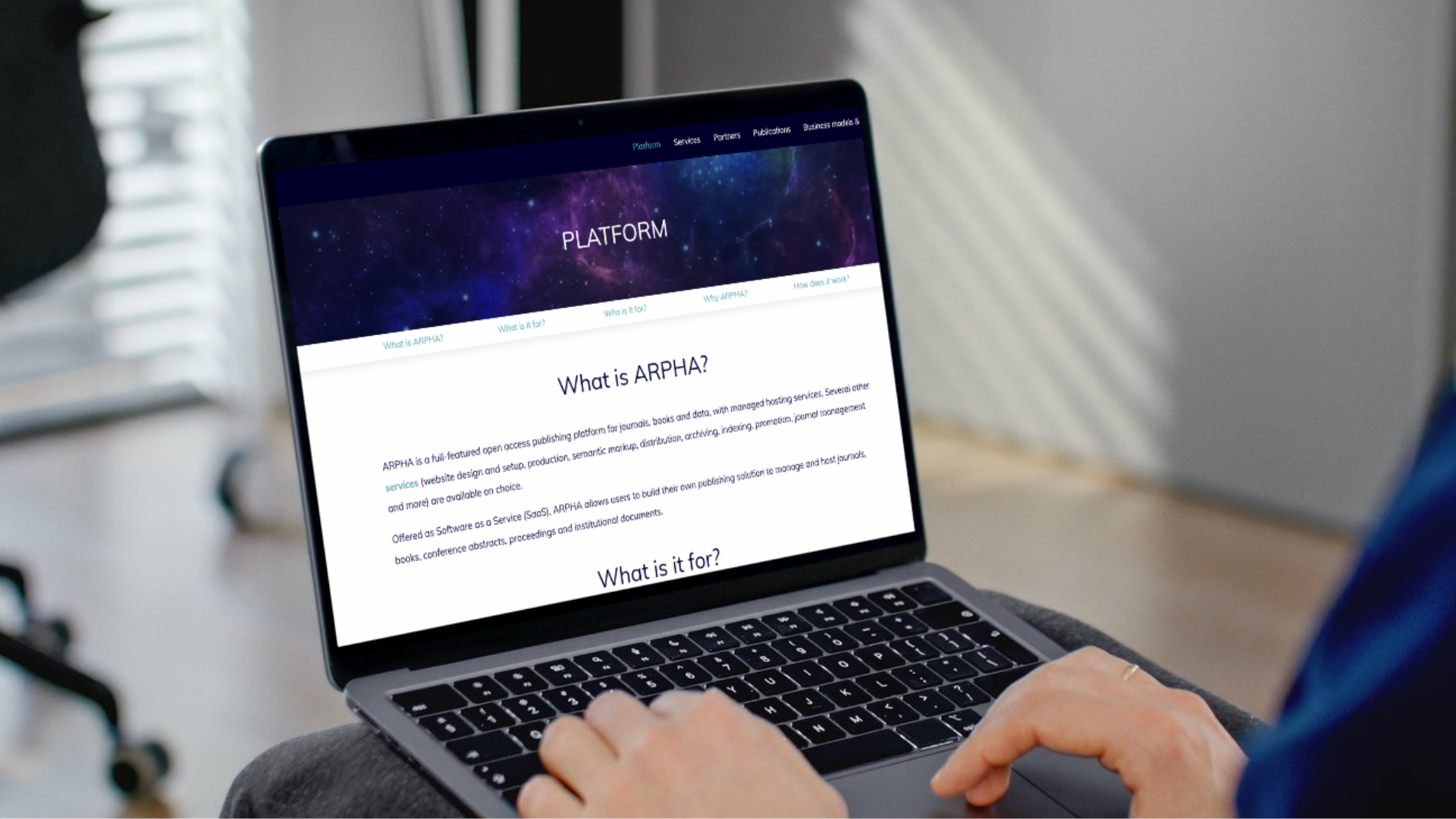
Throughout our existence as a publisher all of our journals have been 100% open access. Hosted on our own ARPHA Publishing Platform and operating under CC BY license, all scholarly titles in our portfolio make sure that every article can be read, shared and reused freely while authors retain the copyright to their work.
Yet, open should also mean fair. Our article processing charges are among the most competitive in the field, and we are transparent about what they cover: we were among the first publishers to share our pricing and services through Plan S’s Journal Comparison Service, and publicly provide our Open Access and APC Policies in full compliance with the Plan S requirements. We also work with international consortia to further reduce financial frictions and administrative burden for researchers and their institutions. As of this year, for instance, we’ve partnered up with Bibsam Consortium to advance open scholarly publishing across Sweden.
A streamlined process
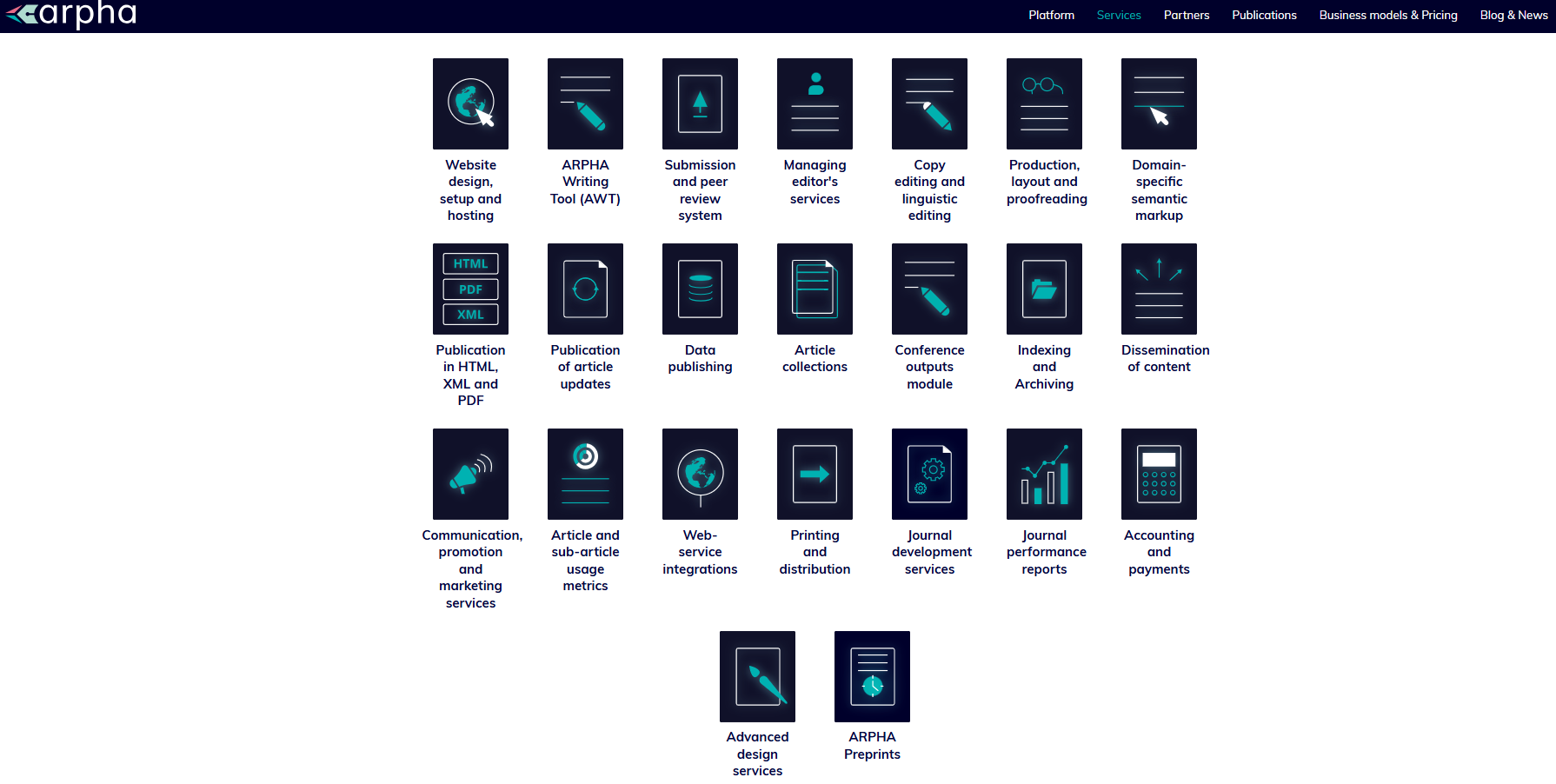
Our proprietary ARPHA Publishing Platform offers a full-featured, end-to-end open access publishing and hosting solution, with a suite of connected services built around it.
The ARPHA suite
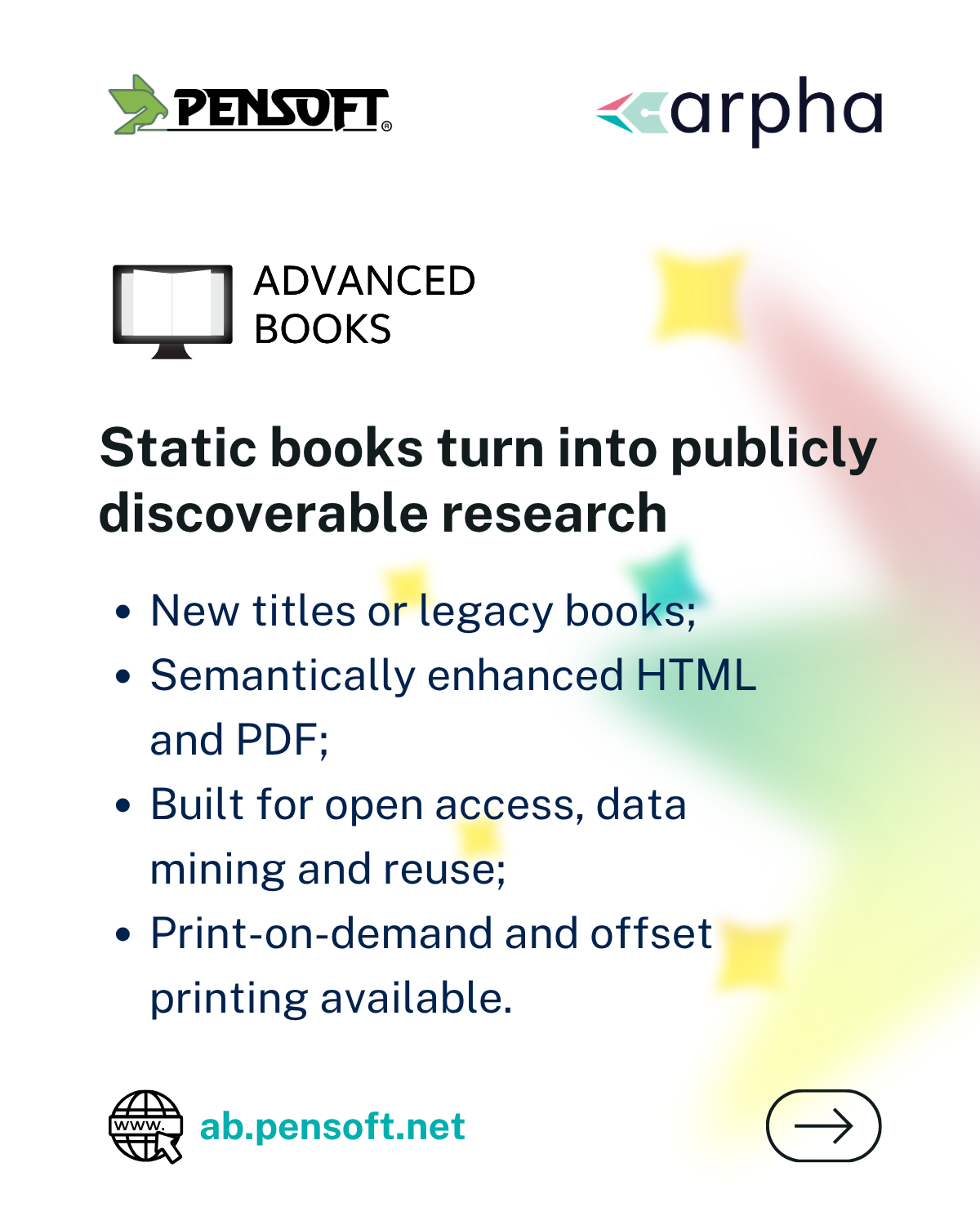
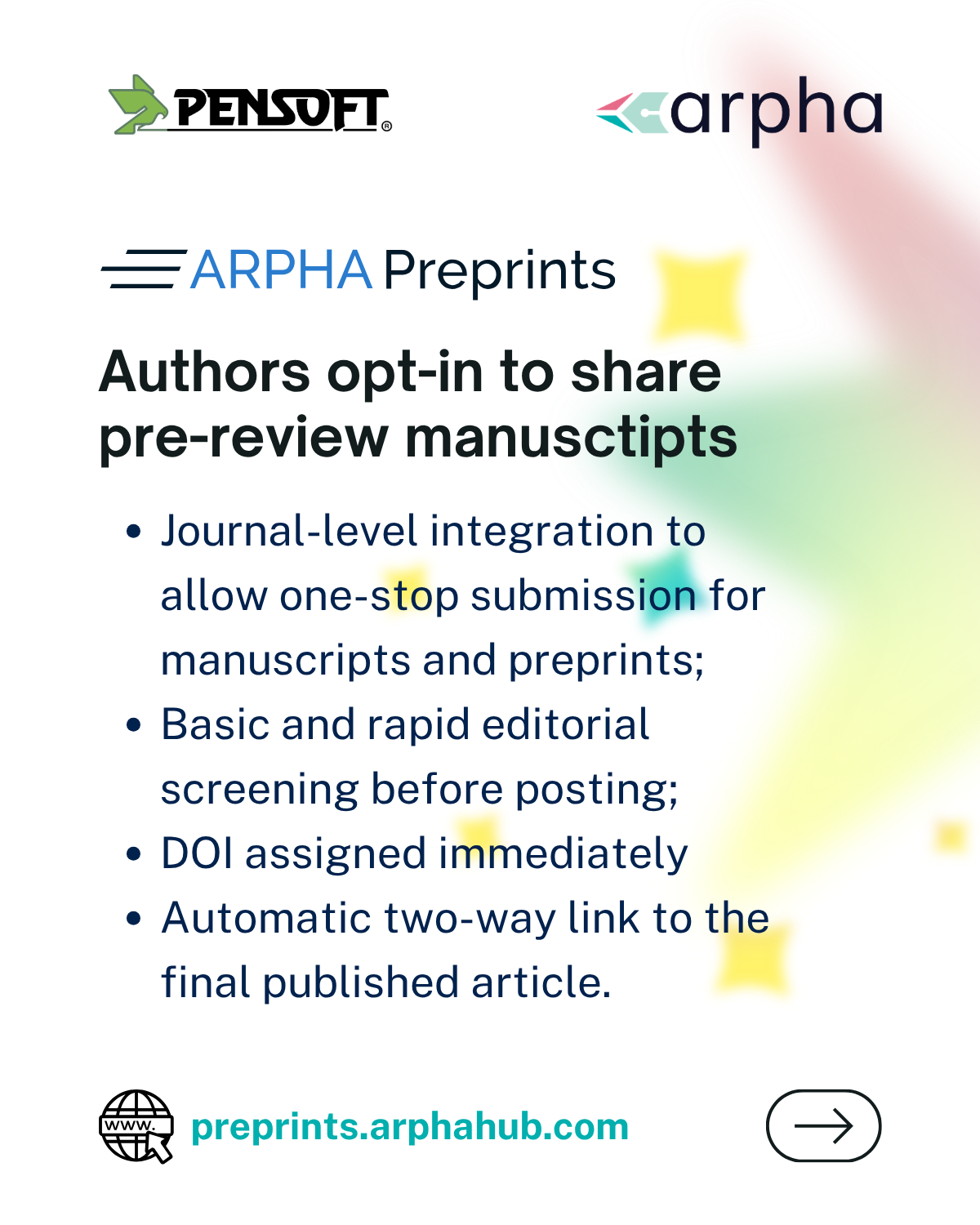
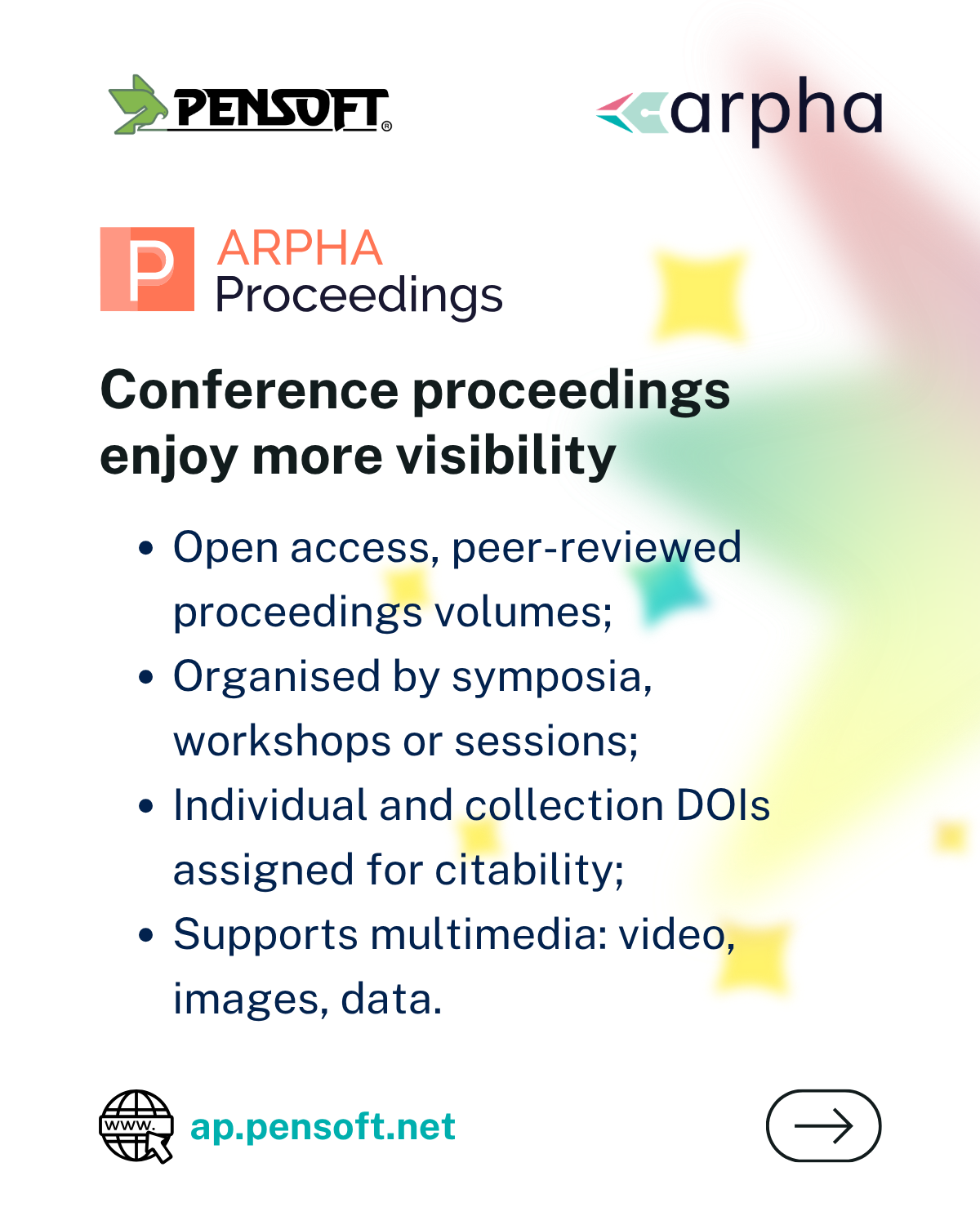
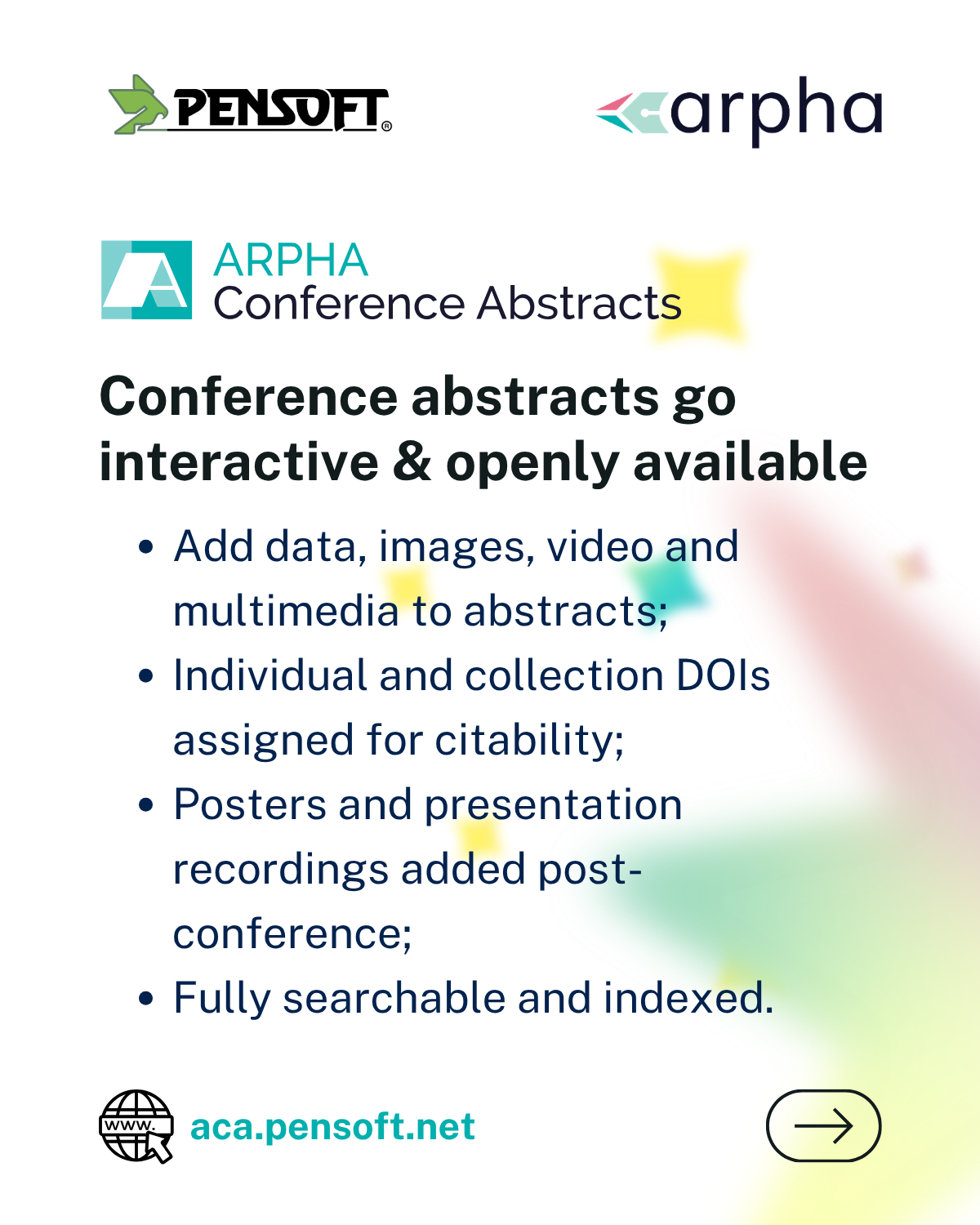
Apart from about 100 open-access scholarly journals, ARPHA powers the ARPHA Preprints platform, which seamlessly integrates with journals to let authors make their manuscripts publicly available upon submission; the platform also provides high-quality and technologically advanced open-access publication for conference outputs through ARPHA Proceedings and ARPHA Conference Abstracts. Through Advanced Books, authors and researchers can bring whole open access books to readers in semantically enhanced HTML and PDF formats.
ORPHO – the next-gen tool for scientific writing
Most recently, we launched ORPHO, our next-generation collaborative workspace for scientific writing. Within ORPHO, researchers and authors can enrich their manuscripts semantically, so that their research, as well as underlying data remains FAIR (Findable, Accessible, Interoperable, and Reusable) and AI-ready.
Together, these tools streamline the publication of text and semantically rich data, making openness a natural part of the research workflow rather than an extra step.
Also, along with Plazi, we run the Biodiversity Literature Repository on Zenodo, which gives articles, figures and taxonomic treatments their own DOIs and releases them under CC0, so the data inside publications can be found, cited and reused by platforms such as GBIF.
This is what a publisher built by scientists can offer: a model that treats knowledge as something to be shared, prices that stay open and transparent, and infrastructure that makes research easier to find, reuse and trust.
Throughout our existence as a scholarly publisher and technology provider, Pensoft has always considered it our responsibility to ensure that valuable research outputs are shared efficiently with the world. This gives everyone, everywhere, the opportunity to make sense of and use this knowledge, while giving full credit to the scientists behind it. This is how, in our vision, scientific work and knowledge can achieve optimal impact on society and future research.
comments Iva Boyadzhieva, Head of Journal development and PR at Pensoft.
Reclaiming knowledge as a common good
As this year’s Open Access Week puts it:
“Momentum is growing for approaches to treat knowledge as a common good and not a commodity to be mined.” – Open Access Week 2026
We believe that momentum is real, and we have seen it grow ever since the first issue of ZooKeys. At Pensoft we are proud to say that we have championed open access in publishing, building the tools, workflows and partnerships that make it work in practice, and we will keep doing so alongside the institutions, funders, editors and researchers who share this commitment.
Explore our journals and services at pensoft.net