Pensoft and ARPHA join forces with Reviewer Credits to enhance peer review transparency and recognition

Pensoft, the independent academic publishing company known for its innovative open access publishing tools, workflows, and technologically advanced platforms for text and data publishing, is pleased to announce a new partnership with Reviewer Credits, the Berlin-based network for peer reviewers and publishing integrity hub. The collaboration also encompasses ARPHA, Pensoft’s publishing platform that supports the entire scholarly publishing workflow with cutting-edge semantic tagging, collaborative manuscript authoring, and transparent peer review.

Reviewers who create a free account on Reviewer Credits will automatically record their peer review contributions, which will be certified via the platform and earn rewards and recognition within the scholarly community. While a reviewer can register any of their peer reviews on the platform, reviews for journals partnering with Reviewer Credits earn additional redeemable credits.

“Our partnership with Reviewer Credits is important for recognising and rewarding the contribution of our reviewers,” said Prof. Lyubomir Penev, Founder and CEO of Pensoft. “Good reviewers are essential for ensuring the publication of quality science. In the past, their role has been overlooked, and collaborations like this are important steps towards changing that.”

“This partnership between Reviewer Credits and Pensoft/ARPHA represents a significant step forward in recognizing and rewarding the vital contributions of peer reviewers, enhancing transparency, and strengthening the integrity of scholarly publishing for the entire research community” said Sven Fund, Managing Director at Reviewer Credits, “This collaborative approach not only incentivizes reviewers by formally documenting their efforts and providing tangible recognition, but also democratizes participation in peer review—empowering researchers at every career stage to contribute meaningfully, build networks, and advance standards of transparency and accountability within the global research community.”

About Reviewer Credits: Reviewer Credits is the global network that recognizes and rewards the vital contribution peer reviewers make to scientific publishing. The Berlin-based sciencetech company collaborates with more than 220 international publishing houses and around 1,800 academic journals and is home to over 43,000 reviewers. Around 300,000 reviews have already been uploaded to the Reviewer Credits platform. For more details, see www.reviewercredits.com.

Pensoft and the Vietnam Academy of Science and Technology forge new scholarly partnership

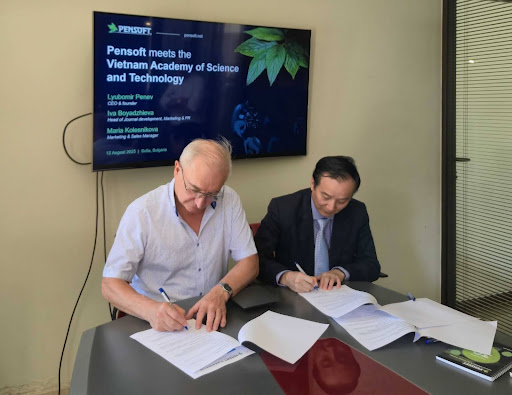
In August, Pensoft had the honour of welcoming colleagues from the Vietnam Academy of Science and Technology (VAST) to the headquarters of the open-access scholarly publisher and technology provider in Sofia, Bulgaria. The visit was marked by engaging discussions on scholarly publishing, future innovations, current challenges in academia and potential collaborations.

The highlight of the meeting was the formal signing of a Memorandum of Understanding (MoU) between Prof. Dr. Lyubomir Penev, Pensoft’s CEO and founder, and Prof. Dr. Thai Hoang, Vice Chairman of the Scientific Council of Materials Science at VAST and the Editor‑in‑Chief of the Vietnam Journal of Science and Technology.

“This Memorandum of Understanding marks an important step towards fostering international collaboration in scholarly publishing. By combining the expertise and know-how of Pensoft and VAST, we aim to make research more accessible and innovative for communities worldwide,”

commented Prof. Dr. Lyubomir Penev.

“I am very happy to visit Bulgaria and collaborate with Pensoft Publishers. Here, we know Pensoft and the ARPHA publishing platform for their diverse publishing solutions designed for scientific papers, monographs, academic books and more, as well as their professional and efficient work. All this makes them quite prestigious for us. Starting from this Memorandum of Understanding, next, we will explore ways to use the ARPHA publishing platform for the publication of Vietnam’s scientific journals, books and other research outputs.”

Prof. Dr. Thai Hoang said.

Over the course of the visit, the group engaged in an enriching dialogue. Guests from VAST offered an in-depth look at their publication outlets and shared insights into the Vietnamese scholarly publishing landscape, as well as the nation’s rich cultural heritage and natural wonders. 

In turn, Pensoft offered a comprehensive overview of the company’s journey of over three decades, starting from the launch of the first Pensoft journals and proceeding to the continuous development of several innovative publication platforms and solutions, including the full-featured end-to-end publishing platform ARPHA. Today, there are over 80 open-access peer-reviewed journals, including both Pensoft-launched titles, and many owned and run by research institutions, universities and learned societies from around the globe.

The visit continued beyond the office with the publisher’s management inviting their guests to a several-day trip around the country that covered the cultural and historic hubs of Plovdiv and Koprivshtitsa.

By the end of the visit, both parties agreed that their meeting in Bulgaria underscores their shared vision: to advance open, innovative, and accessible scholarly communication. With the MoU in place, both sides look forward to transforming this mutual understanding into concrete collaborative initiatives.

*

With perfect timing, shortly after the visit, one of the VAST delegates: biologist Prof. Dr. Quang Manh Vu (also affiliated with the Hoa Binh University, Hanoi, Vietnam), in collaboration with his Bulgarian and Vietnamese colleagues: Dr. Ivailo Dedov (Bulgarian Academy of Sciences) and Dr. Tuan Trieu Anh (Hung Vuong University, Viet Tri City, Vietnam) published a study in Pensoft’s inaugural and flagship journal in zoological systematics: ZooKeys. The research paper lists species of slugs and semi-slugs of the superfamily Helicarionoidea the team collected in North Vietnam in 2023. Amongst the collected specimens, the scientists discovered a new-to-science species of semi-slug they named after Pensoft’s Prof. Dr. Lyubomir Penev, who is himself a biologist and taxonomist by background. 

“When I found out I had a new species, I had no hesitation on the name: Ostracolethe penevi. I had been looking forward to naming a curious species after my friend Prof. Lyubomir Penev, a man who made the world look up to Bulgarian science, and someone who has helped me a lot through the years,”

comments Dr. Ivailo Dedov in a news announcement.

“This newly described species deserves a name that reflects the generosity of nature, the advancement of science, and the enduring friendship between Vietnam and Bulgaria,”

added Prof. Dr. Quang Manh Vu.

***

Additional information:

Vietnam Academy of Science and Technology (VAST)

Founded on 20 May 1975, VAST is Vietnam’s largest multidisciplinary research organization, with branches in Hanoi, Ho Chi Minh City, Haiphong, Nha Trang, Dalat, and Hue. Its mission spans basic and applied research, the development of high technology, human resource training, and providing scientific advice to the government on pressing national issues. 

VAST is known for achieving high output in international peer-reviewed journals; in 2023, more than 2,200 works were published, with nearly 80% in international outlets. The Academy is responsible for several cutting-edge initiatives, including satellite R&D through the Vietnam National Space Center, strategic technology fields aligned with the Fourth Industrial Revolution (e.g. AI, new materials, semiconductors), and large-scale environmental and biodiversity monitoring across the country. Looking forward, VAST has set ambitious goals, including mastering key advanced technologies, increasing technology transfer, enhancing publication impact, strengthening partnerships at home and abroad, and cultivating world-class scientific talent.

Pensoft

Founded in 1992 “by scientists, for scientists”, the academic open-access publishing company is well known worldwide for its novel cutting-edge publishing tools, workflows and methods for text and data publishing of journals, books and conference materials. Back in 2010, Pensoft became the first scientific publisher to introduce semantic enrichments in scholarly publications. Through its Research and Technical Development department, the company is involved in various research and technology projects.

ARPHA Publishing Platform

ARPHA is a full-featured, end-to-end publishing platform for open-access journals, books, conference materials and preprints. ARPHA offers flexible operating and business models, and a wide-range of automated and human-provided services. The ARPHA team places a special focus on its scholarly communication solutions designed to leverage the visibility and outreach of academic output, while prompting inclusivity and engagement.

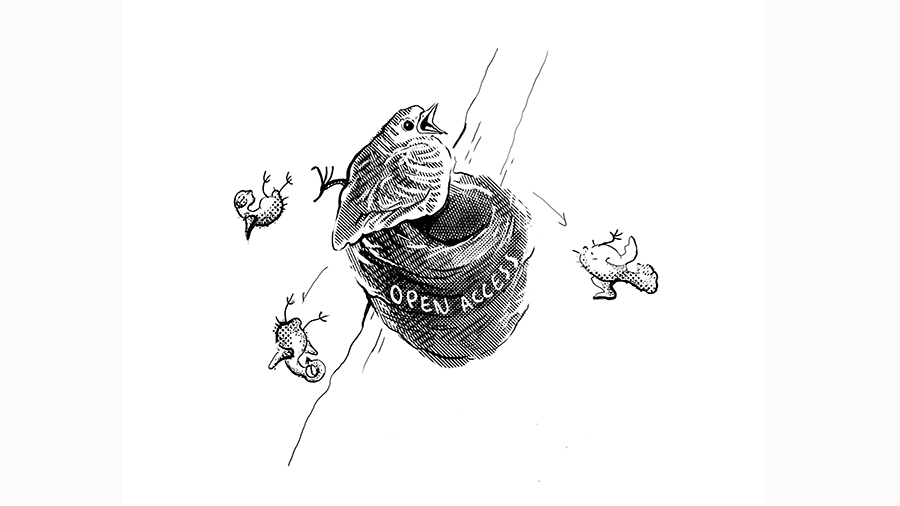
Cuckoo in the nest: challenges for smaller journals and publishers in the push towards Diamond Open Access

Contrary to the popular expression, diamonds do not shine. Instead, they reflect, refract and disperse light to the fascination of the onlooker. 

Similarly, even though Diamond Open Access (OA) offers a stellar publication and dissemination route for both readers and authors, some of the biggest actors in the scholarly publishing industry have been trying to deflect the concept behind it. While they might be moving from reader-facing charges, they seem to be billing libraries, institutions and consortia the same money they would have received in subscription fees. 

National library consortia are paying for read-and-publish / publish-and-read ‘transformative agreements’ (also known as ‘transitional agreements’ or ‘big deals’), which include clauses for “non-APC” quotas of Open Access publishing for authors based in their country’s institutions. As a result, authors need to only submit their work to journals cited in these agreements, if they wish to avoid APC payments.

Meanwhile, these Transformation Agreements (TAs) are raising increasing concerns about their capability to achieve their very purpose: assisting scientific publishers in flipping their journals from closed- to open-access models in line with the objectives of the global Open Access 2020 Initiative. Back in 2016, the initiative signed by over 150 scholarly organisations posited a deadline for the majority of today’s scholarly journals to transfer from subscription to OA by 2020. While it is obvious that as of mid-2024 this transition is far from complete, a recent report issued by Jisc, estimates that based on 2018-2022 data, “it would take at least 70 years for the big five publishers to flip their TA titles to OA”. Citing “an erosion in confidence that TAs will achieve a transition within an acceptable timescale”, the report also highlights pressing issues concerning transparency on how “OA publishing charges are costed” and how and when the surveyed publishers will achieve their task.

Impact on scholars

The above-mentioned approaches to ostensibly free-of-charge scholarly publishing are indeed taking a great burden off the shoulders of many scientists, as long as they are working in top research institutions in certain countries.

In the meantime, independent researchers and smaller or underfunded institutions – typically located in countries that have not signed such expensive agreements at national or library consortia levels – are left out of the equation. If they wish to publish in the very same flashy journals, they need to pay fees in the range of several thousands of dollars either out of their research grants, or their own pockets. The “barriers to access” seem to have simply transformed into ”barriers to publication”.

There are also production costs. After all, quality publication of human knowledge in the vast digital world, which is increasingly powered by smart computer algorithms and Artificial Intelligence, surely costs some money, doesn’t it? Publication platforms comprising continuously evolving workflows and third-party integrations, impeccable user experience, diligent customer support, and far-reaching dissemination and communication, all require specialised staff and equipment. The question is how much does it cost to make science effectively public? The immediate answer is that taxpayers currently pay corporate publishers prices several times as high as actual publication costs.

Impact on smaller journals, societies and publishers   

In the past, smaller publishers predominantly launched as open-access academic outlets. After all, they were either run by scientists who saw paywalls as the unthinkable evil that hinders the world’s progress, or they simply realised that their primary audience could not afford to pay to learn about their field. Further, it is the same altruistic and understanding backstory of society and smaller institution-led journals – in addition to their historical legacy and independence from commercial entities – that make them particularly cherished and respected in academia.

The issue here is that, these days, scientific publications and journals abound, which makes it practically impossible for one’s work to reach another researcher, let alone non-specialist audiences, including policy makers, without a lot of dedicated effort. Even if there was a single huge publicly available centralised source for all research outcomes out there, it would be practically impossible for one – expert or not – to navigate the deluge of data and statements without sophisticated tools, infrastructure and workflows capable of discerning what is actually useful.

To ensure scientific output is practically findable, accessible, interoperable and reusable (FAIR), you need much more than a URL that resolves at no additional charge. Instead, a journal needs to provide optimal discoverability and visibility for its content, so that publications are capable of reaching their intended audience via existing search engines and portals. 

This can only be achieved through professional publishing platforms (e.g. peer review, publication, hosting, third-party service integrations), tools (e.g. metadata import/export; semantic tagging) and services (e.g. application to indexing databases; in-house editorial services; copy-editing, customer support; science communication), which will inevitably increase the costs of the publication process.

Here comes the tough call for most smaller institutions and journals: whether to seek the services of multiple professional providers and then introduce APCs to cover the expenditure OR to opt for in-house editorial services and open-source infrastructure, but compromise the quality of service, including the discoverability and reach of the content with which their authors entrust them.

Yet, this is a choice that only needs to be made by small- to mid-sized, OA-born publishers and journal owners, since large commercial, originally subscription publishers are covered through deals and agreements, as long as a research paper is submitted by a research team with the right affiliation. The situation begs the question: who is actually being charged?

Impact on equity and sustainability in academia

Suffice to say, the scientific community has gone a long way to prompt public and worldwide access to the latest research at a greater than ever speed and scale. However, there is still a gaping chasm in academia when it comes to inclusivity and equity in scholarly publishing and dissemination of knowledge. Despite the ongoing work and progress coordinated by international funders of research and policy-makers, a vast part of the world continues to be singled out due to a mismatch in funding and unhealthy commercialisation that paves the way to mono-/oligopolies.

Arguably, academia is threatened by its own good intentions and a new status quo, where it is only researchers working at well-funded research institutions that get to publish their work in visible and discoverable journals.

Our way forward

While our team at Pensoft realises there is no easy way to high-quality, open and equitable scholarly publishing, we are firm supporters of an environment governed by transparency, inclusivity and democracy, where researchers are not “limited in their choice of publication channels due to financial capacities rather than quality criteria”, as put by the Council of the European Union in their “Conclusions on high-quality, transparent, open and equitable scholarly publishingissued last year.

If scholarly publishers and technology providers remain true to their purpose of being a vehicle for scientific knowledge between the individual scientist and the world, we can collectively contribute to a healthy diversity of continuously developing tools and workflows for researchers, journal owners, learned societies and scientific funders to cater for their own users and audiences in the ever-evolving modern world.

As such, we have accepted it as our mission to provide affordable, compromise-free Diamond OA, empowering smaller journals to deliver top-quality services to their authors, editors and readers. Alternatively, our end-to-end publishing platform ARPHA also offers several Gold OA and custom-made workflows designed to support particular groups of authors, as they balance affordability, functionality, reliability, transparency and long-term sustainability. In both cases, our client journals enjoy a complete set of highly automated and human-provided services packaged in a way that fits their wants and needs.

Above all, our approach is based on working individually with journal owners, societies and publishers to create their own custom operational and business model, and achieve long-term sustainability for their scholarly titles.

To ensure our utter transparency and trustworthiness for our clients, we actively support and adopt international best practices and standards in scholarly publishing, including cOAlition S’s Plan S requirements regarding full transparency of costs and prices, and the Journal Comparison Service.

***

Get in touch with the Pensoft and ARPHA teams at info@arphahub.com

Find more on the ARPHA platform website. You can also follow ARPHA on Twitter and Linkedin.

The International Biogeography Society relaunches flagship journal Frontiers of Biogeography on ARPHA Platform

The International Biogeography Society (TIBS) has relaunched its flagship open-access scientific journal, Frontiers of Biogeography (FoB), on the ARPHA platform, where it will be co-published with Pensoft Publishers.

This collaboration underscores the society’s commitment to maintaining high-quality, high-visibility and low-cost open-access publishing for the biogeographical community.

“This switch of our journal to a cutting-edge platform, and its committed team of editors, should continue to raise the journal’s visibility and impact,”

comments Prof. Dr. Susanne Renner, TIBS President.

Established by TIBS in 2009, Frontiers of Biogeography serves as an independent forum for research dissemination, and publishes studies on all geographical variations of life at all levels of organisation. The journal adheres to rigorous academic standards, reflecting the mission of TIBS to promote and advance public understanding of biogeographical sciences. 

The journal’s editorial leadership includes Prof. Robert J. Whittaker (University of Oxford, United Kingdom), Dr. Janet Franklin (San Diego State University, USA) and Prof. Mark J. Costello (Nord University, Norway), all esteemed figures in the field.

Frontiers of Biogeography was launched on the ARPHA Platform on the 1st of July 2024. The platform is now open for new submissions and offers a robust review and publication process. Articles and supplementary materials published on ARPHA will be distributed under the Creative Commons Attribution Licence (CC BY 4.0), ensuring wide accessibility and reuse. All previously published issues on the e-Scholarship platform will remain freely accessible, ensuring the continuity of knowledge dissemination.

Frontiers of Biogeography has recently been selected for inclusion in the Web of Science™. Beginning with volume 14(1), articles will be indexed in Emerging Sources Citation Index, Zoological Record, Biological Abstracts, and BIOSIS Previews, significantly enhancing the journal’s visibility.

Furthermore, the journal’s latest Scopus CiteScore of 4.3 places it in the Q1 category for Ecology and Ecology, Evolution, Behaviour and Systematics, and elevates it from Q3 to Q2 in the Global and Planetary Change category.

I am looking forward to working with the new platform and to the start of a new partnership with our colleagues at Pensoft Publishers. This arrangement underlines the commitment of The International Biogeography Society to the growth and success of Frontiers of Biogeography as a service to our members and the broader scientific community,”

stated Prof. Dr. Robert J. Whittaker, Editor-in-Chief.

In these days of sometimes exorbitant costs to pay publication charges by some of the big publishers, TIBS and Pensoft are joining forces to make it possible for all authors to be able to publish their work at reasonable costs while maintaining the high scholarly standards of peer-review and editorial management which are the foundation of good science,”

added Prof. Dr. Mark J. Costello, Co-Editor-in-Chief.

“We are excited to welcome Frontiers of Biogeography to the ARPHA Platform and look forward to a successful, open-access future. This partnership aligns with our mission to support scientific research through innovative publishing solutions,”

said Prof. Dr. Lyubomir Penev, CEO and founder of Pensoft Publishers.

***

Visit the Frontiers of Biogeography’s new website at https://biogeography.pensoft.net/. Use the Email alert field on the homepage to follow the latest publications, news, and highlights from Frontiers of Biogeography.

You can also follow the journal on X (formerly Twitter) at @newbiogeo.

Keep up to date with the latest from TIBS by following them on X (@Biogeography) and joining the society’s Facebook group.

ARPHA’s and Pensoft’s statement on the European Union’s Conclusions on OA scholarly publishing

On behalf of ARPHA Platform and Pensoft Publishers, we express our support for the Conclusions on high-quality, transparent, open and equitable scholarly publishing, recently published by the Council of the European Union. We do share all concerns articulated in the document that highlight major inequities and outstanding issues in the scholarly publishing environment.

In our opinion, it is of utmost importance to promptly address the existing issues in the publishing system, where healthy competition can thrive and contribute to a reality safe from potential mono-/oligopolies and corporate capture.

We firmly believe that only an industry that leaves room for variously-scaled pioneers and startups is capable of leading a long-awaited shift to a high-quality, transparent, open and equitable scholarly publishing landscape aligning with the principles of FAIRness.

Yet, we shall acknowledge that the industry has so far failed to eradicate the most fundamental flaw of the past. In the beginning, the main aim of the Open Access (OA) movement was removing the barrier to access to publicly funded scientific knowledge and scrapping costly subscription fees.

Recently, however, the industry’s biggest players merely replaced it with a barrier to publication by introducing costly Article Processing Charges (APCs) and “big deals” signed between top commercial publishers and academic institutions or national library consortia. 

As a result, small and middle-sized open-access publishers, which have, ironically, been the ones to lead the change and transition to OA by default and oppose the large commercial publishers’ agenda, were effectively pushed out of the scene. Further, we are currently witnessing a situation where OA funds are mostly going to the ones who used to oppose OA.

So, we strongly support measures that ensure an inclusive and FAIR competition, which could in turn prompt quality, sustainability and reasonable pricing in scholarly publishing. In our opinion, an environment like this would actually foster equality and equity amongst all publishers, either small, large, non-profit, commercial, institutional or society-based. 

One of the main points of the conclusions is a recommendation for a general use of the Diamond OA model, where no charges apply to either researchers or readers. While we fully support the Diamond OA model, we wish to stress on the fact that considerable concerns about the sustainability of existing Diamond OA models remain.

On the one hand, there are OA agreements (also known as read-and-publish, publish-and-read, transformative agreements etc.), typically signed between top publishers and top research institutions/consortia. This OA model is often mistakenly referred to as “Diamond OA”, since authors affiliated with those institutions are not concerned with providing the APC payment – either by paying themselves or applying for funding. Instead, the APCs are paid centrally. Most often, however, journals published by those publishers are still directly charging authors who are not members of the signed institutions with, in our opinion, excessive APCs. Even if those APCs are covered by a signed institution, these are still considerable funds that are being navigated away from actual research work. 

On the other hand, there are independent researchers, in addition to smaller or underfunded institutions, typically – yet far from exclusively – located in the developing world, who are effectively being discriminated against. 

In conclusion, this type of contracts are shutting away smaller actors from across academia just like they used to be under the subscription-based model. Hereby, we wish to express our full agreement with the Council of the European Union’s conclusion, that “it is essential to avoid situations where researchers are limited in their choice of publication channels due to financial capacities rather than quality criteria”.

There are also several alternative OA models designed to lessen the burden of publication costs for both individual researchers, libraries and journal owners. However, each comes with its own drawbacks. Here – we believe – is where the freedom of choice is perhaps most needed, in order to keep researchers’ and publishers’  best interests at heart. 

One of those alternatives is open-source publishing platforms, which – by design – are well-positioned to deliver actual Diamond OA for journals, while maintaining independence from commercial publishers. However, the operational model of this type of publishing and hosting platforms would most often only provide a basic infrastructure for editors to publish and preserve content. As a result, the model might require extra staff and know-how, while remaining prone to human errors. Additionally, a basic technological infrastructure could impede the FAIRness of the published output, which demands advanced and automated workflows to appropriately format, tag semantically and export scientific outputs promptly after publication.

Similarly, large funders and national consortia have put their own admirable efforts to step up and provide another option for authors of research and their institutions. Here, available funds are allocated to in-house Diamond OA publishing platforms that have originally been designed according to the policies and requirements of the respective funding programme or state. However, this type of support – while covering a large group of authors (e.g. based in a certain country, funded under a particular programme, and/or working in a specific research field) – still leaves many behind, including multinational or transdisciplinary teams. Additionally, due to the focus on ‘mass supply’, most of these OA publishing platforms have so far been unable to match their target user base with the appropriate scale of services and support.

What we have devised and developed at Pensoft with the aim to contribute to the pool of available choices is an OA publishing model, whose aim is to balance cost affordability, functionality, reliability, transparency and long-term sustainability. 

To do so, we work with journal owners, institutions and societies to create their own business and operational model for their journals that matches two key demands of the community: (1) free to read and free to publish OA model, and, (2) services and infrastructure suited for Diamond OA at a much lower cost, compared to those offered by major commercial publishers.

In our opinion, independent small publishers differentiate from both large commercial publishers and publicly funded providers by relying to a greater extent on innovative technology and close employee collaboration.

As a result, they are capable of delivering significantly more customisable solutions – including complete packages of automated and human-provided services – and, ultimately, achieving considerably lower-cost publishing solutions. Likewise, they might be better suited to provide much more flexible business models, so that libraries and journal owners can easily support (subsets of or all) authors to the best of their capabilities.

While we realise that there is no faultless way to high-quality, transparent, open and equitable scholarly publishing, we are firm supporters of an environment, where healthy competition prompts the continuous invention and evolution of tools and workflows

Our own motivation to invest in scholarly publishing technology and its continuous refinement and advancement, coupled with a number of in-house and manually provided services, which is reflected in our APC policies, aligns with the Council’s statement that “scientific practices for ensuring reproducibility, transparency, sharing, rigour and collaboration are important means of achieving a publishing system responsive to the challenges of democratic, modern and digitalised societies.”

Our thinking is that – much like in any other industry – what drives innovation and revolutionary technologies is competition. To remain healthy and even self-policing, however, this competition needs to embrace transparency, equity and inclusivity.

Last, but not least, researchers need to have the freedom to choose from plenty of options when deciding where and how to publish their work!

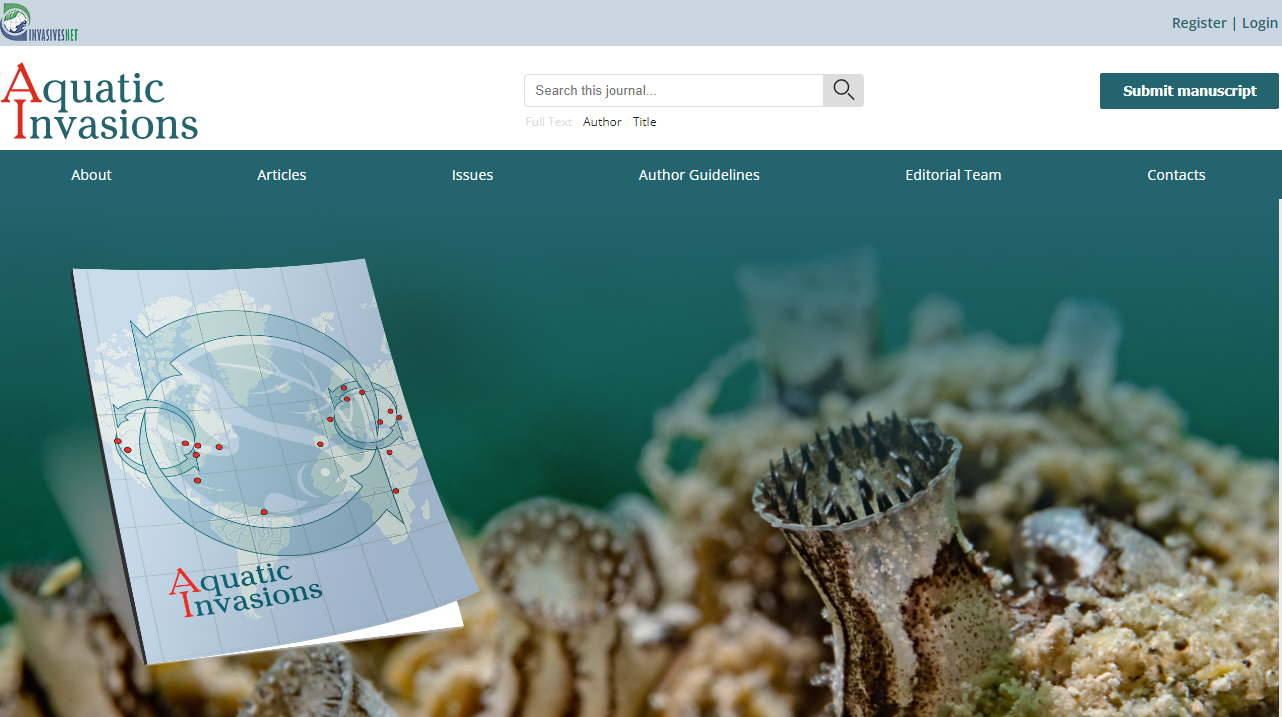
INVASIVESNET signs with Pensoft to move its official journal: Aquatic Invasions to ARPHA Platform

INVASIVESNET signs with Pensoft to move its official journal: Aquatic Invasions to ARPHA Platform

Aquatic Invasions is an open-access, peer-reviewed journal on the biological invasions in inland and coastal water ecosystems from around the world launched by the International Association for Open Knowledge on Invasive Alien Species (INVASIVESNET) & the Regional Euro-Asian Biological Invasions Centre (REABIC). 

The journal was established in 2006 as an initiative of the International Society of Limnology (SIL) Working Group on Aquatic Invasive Species (WGAIS) with start-up funding from the European Commission Sixth Framework Programme for Research and Technological Development Integrated Project ALARM to address the need for a dedicated platform to address the challenges of aquatic invasive species. 

Aquatic Invasions has been gradually building on its appeal within the field of aquatic invasive species research, as its impact has been on the rise. Its latest Scopus CiteScore stands at 4.3 and its Journal Impact Factor is 2.651. 

In early 2023, Aquatic Invasions moved to the ARPHA publishing platform to take advantage of its advanced tools and features, allowing the users to navigate throughout the website and enjoy the articles in either semantically enriched HTML or classic PDF format. ARPHA’s innovative and intuitive system streamlines the publication process, reducing the time and effort required to bring high-quality research to the scientific community.

In addition to providing a seamless publication experience, Aquatic Invasions will now benefit from enhanced visibility for its published articles. With advanced search capabilities and integration with major indexing services, including Web of Science, Scopus, and many others, articles published in Aquatic Invasions will be more easily discoverable and accessible to researchers around the world. 

Furthermore, the implementation of the new article- and sub-article level metrics will enable real-time tracking of various elements, providing valuable insights into their usage.

Aquatic Invasions accepts papers related to the introduction, establishment, spread, and impacts of non-native aquatic species in freshwater, estuarine, and marine environments. 

The journal also considers papers that provide new insights into the biology, ecology, and management of invasive species, as well as those that assess the ecological, economic, and social impacts of invasions.

«I am delighted to see Aquatic Invasions moving on to the ARPHA Platform. This will help the growth of our journal, facilitating the submission and production process.

Since its foundation, AI has been focused on biological invasions in aquatic environments, among the most vulnerable and threatened ecosystems by species introduction, to provide continuous updates for researchers but also stakeholders and managers, and promote the spread of its papers to all the sectors of society affected by this problem.

We want to improve our role in this sense, attracting more contributors and reaching more and more people, especially from that part of the world where the phenomenon and study of biological invasions in aquatic environments are increasing, such as Africa, Asia and South America. I am confident this new change will be positive for the journal!»

comments the Editor-in-Chief of the journal, Professor of University of Florence Dr Elena Tricarico.

«Aquatic Invasions was the first international fully open-access journal devoted to biological invasions. Currently, Aquatic Invasions, along its sister journals, BioInvasions Records and Management of Biological Invasions, is a core linking element of INVASIVESNET – the global professional Association of organisations and experts working in the area of biological invasions. Our strategic goal – to make our publication services free of charge for all authors in the long-term, and within INVASIVESNET, we are working on the development of the Open Access Publishing Fund and seeking for potential sponsors and other funding solutions.

Also, we are extremely optimistic that the movement of Aquatic Invasions to the ARPHA platform will improve our services for authors and facilitate free dissemination of data and knowledge on invasive species globally»,

comments the founder and Managing Editor of the journal, Director of REABIC, Dr Vadim Panov.

«We are thrilled to announce our partnership with another journal focused on the important topic of biological invasions here at Pensoft. With our extensive experience in publishing and disseminating research on zoology and biodiversity, I am confident that this journal has found a perfect home within the ARPHA journals family»,

comments Prof. Lyubomir Penev, CEO and founder of Pensoft and ARPHA.

The first papers of 2023 are already available online on the new website of Aquatic Invasions

Among the seven articles published, there are four papers on marine and three papers on inland water invasions across 4 continents. The studies are covering non-native ascidians in southern California; invasive forams along the coasts of Normandy; invasive sun coral spreading along the Brazilian coasts; invasive pufferfish in the Eastern Mediterranean; invasive New Zeland mudsnail in the Greater Yellowstone Area (U.S.A.); Australian red-claw crayfish in Thailand and non-native species that invaded Poyang Lake Basin (China) after 2000.

***

Additional information

About INVASIVESNET:

The International Association for Open Knowledge on Invasive Alien Species (INVASIVESNET) is a global network of scientists and researchers who collaborate to improve knowledge sharing and management related to invasive alien species. INVASIVESNET is committed to promoting the use of open data and knowledge to advance research, management, and policy related to invasive alien species. The organization aims to facilitate the exchange of information and ideas among its members and other stakeholders to promote effective invasive alien species management strategies and enhance global biosecurity.

About REABIC:

The Regional Euro-Asian Biological Invasions Centre (REABIC) is an international organisation that focuses on research, management, and prevention of biological invasions, particularly in the Euro-Asian region. REABIC was established in 2003 and is based in Helsinki, Finland. The organisation brings together scientists, experts, and stakeholders from various fields to develop and implement strategies for preventing and managing the negative impacts of invasive species on biodiversity, ecosystems, and human well-being. 

About ARPHA:

ARPHA is the first end-to-end, narrative- and data-integrated publishing solution that supports the full life cycle of a manuscript, from authoring to reviewing, publishing and dissemination. ARPHA provides accomplished and streamlined production workflows that can be customized according to the journal’s needs. The platform enables a variety of publishing models through a number of options for branding, production and revenue models to choose from.

About Pensoft:

Pensoft is an independent, open-access publisher and technology provider, best known for its biodiversity journals, including ZooKeys, Biodiversity Data Journal, Phytokeys, Mycokeys, One Ecosystem, Metabarcoding and Metagenomics and many others. 

Over the past 30 years, Pensoft has built a reputation for its innovations in the field, after launching ZooKeys: the very first digital-first scientific journal in zoology and the first to introduce semantic enrichments and hyperlinks within a biodiversity article. 

To date, the company has continuously been working on various tools and workflows designed to facilitate biodiversity data findability, accessibility, discoverability and interoperability. The latest large projects, led by Pensoft include the OpenBiodiv knowledge graph and the Horizon 2020 project BiCIKL.

Contacts: 

Prof. Lyubomir Penev, founder and CEO at ARPHA and Pensoft
Email: l.penev@pensoft.net

Dr Elena Tricarico, Editor-in-Chief of Aquatic Invasions
Email: elena.tricarico@unifi.it 

Dr Vadim Panov, Managing Editor of Aquatic Invasions and Director at REABIC
Email: vepanov@gmail.com

Pensoft joins Advisory Panel to further develop the Journal Comparison Service by cOAlition S

Back in December, we announced that Pensoft joined 27 other publishers in sharing prices and services via the Journal Comparison Service developed by cOAlition S, in order to boost transparency in scholarly publishing.

Now, we are up to another challenge: we have joined the Advisory Panel appointed by cOAlition S to help further the improvement and development of this important service. The Advisory Panel consists of twelve members (six publishers and six end-users) representing different stakeholders in the scholarly communication ecosystem.

Journal Comparison Service (JSC) is an initiative by cOAlition S aimed to improve transparency and communication regarding publishing costs between publishers and institutions. 

It serves to provide the libraries with all the information they need to make informed decisions about whether the fees charged by a particular journal are reasonable and commensurate with the services delivered. 

In their turn, the publishers can use it to demonstrate their dedication to fostering an open business culture and to bring awareness of the value of their services. 

To facilitate this process, the publishers are advised to submit information about their prices and publishing policies on an annual basis using the JCS Frameworks format. 

An Advisory Panel will review the Frameworks and offer suggestions on how to improve them, aiming to make the data collected as valuable as possible to all involved parties. Additionally, the Panel will actively promote the use of JCS among stakeholders.

The panel will meet twice a year, and the first meeting has already been scheduled for May 2023.

We are delighted that we have been able to establish such a high-quality Advisory Panel, representing all the key stakeholders.

The primary function of the Panel will make recommendations on how the data collection frameworks might be further developed to ensure that the price and service data is as useful as possible for those who procure publishing services, whilst remaining deliverable by the publishers who are asked to provide these data,

commented Robert Kiley, Head of Strategy at cOAlition S.

Additional information:

About JCS:

Journal Comparison Service is a secure, free-of-charge service that enables libraries, library consortia, and funders to better understand if the fees they pay are commensurate with the publication services delivered. Publishers provide information in a standard format, including information about the publication frequency, the peer review process, times from submission to acceptance, the range of list prices for APCs and subscriptions and more.

About cOAlition S:

On 4 September 2018, a group of national research funding organisations, with the support of the European Commission and the European Research Council (ERC), announced the launch of cOAlition S, an initiative to make full and immediate Open Access to research publications a reality. It is built around Plan S, which consists of one target and 10 principles

Pensoft among the first 27 publishers to share prices & services via the Journal Comparison Service by Plan S

In support of transparency and openness in scholarly publishing and academia, the scientific publisher and technology provider Pensoft joined the Journal Comparison Service (JCS) initiative by cOAlition S, an alliance of national funders and charitable bodies working to increase the volume of free-to-read research. 

As a result, all journals published by Pensoft – each using the publisher’s self-developed ARPHA Platform – provide extensive and transparent information about their costs and services in line with the Plan S principles.

The JCS was launched to aid libraries and library consortia – the ones negotiating and participating in Open Access agreements with publishers – by providing them with everything they need to know in order to determine whether the prices charged by a certain journal are fair and corresponding to the quality of the service. 

According to cOAlition S, an increasing number of libraries and library consortia from Europe, Africa, North America, and Australia have registered with the JCS over the past year since the launch of the portal in September 2021.

While access to the JCS is only open to librarians, individual researchers may also make use of the data provided by the participating publishers and their journals. 

This is possible through an integration with the Journal Checker Tool, where researchers can simply enter the name of the journal of interest, their funder and affiliation (if applicable) to check whether the scholarly outlet complies with the Open Access policy of the author’s funder. A full list of all academic titles that provide data to the JCS is also publicly available. By being on the list means a journal and its publisher do not only support cOAlition S, but they also demonstrate that they stand for openness and transparency in scholarly publishing.

“We are delighted that Pensoft, along with a number of other publishers, have shared their price and service data through the Journal Comparison Service. Not only are such publishers demonstrating their commitment to open business models and cultures but are also helping to build understanding and trust within the research community.”

said Robert Kiley, Head of Strategy at cOAlition S. 

***

Journals using the ARPHA Platform as a white-label publishing solution to publish their journal(s) under their own label should note that it is the responsibility of the journal owner publisher to submit journal data to the JCS. This means that it is only journals published on ARPHA and associated with Pensoft that have been automatically featured in the JCS.

However, the ARPHA team is ready to assist journals using the platform’s white-label publishing to provide details to cOAlition S and the JCS.

***

About cOAlition S:

On 4 September 2018, a group of national research funding organisations, with the support of the European Commission and the European Research Council (ERC), announced the launch of cOAlition S, an initiative to make full and immediate Open Access to research publications a reality. It is built around Plan S, which consists of one target and 10 principles. Read more on the cOAlition S website.

About Plan S:

Plan S is an initiative for Open Access publishing that was launched in September 2018. The plan is supported by cOAlition S, an international consortium of research funding and performing organisations. Plan S requires that, from 2021, scientific publications that result from research funded by public grants must be published in compliant Open Access journals or platforms. Read more on the cOAlition S website.

Pensoft welcomes SNSB’s paleontology and geobiology journal Zitteliana to its portfolio

The first papers of the journal of the Bavarian State Collection of Palaeontology and Geology in Munich since the move to Pensoft’s publishing platform are now online

The scholarly publisher and technology provider Pensoft welcomes the latest addition to its diverse portfolio of scientific outlets – the open-access, peer-reviewed journal Zitteliana, which publishes research in the fields of paleontology and geobiology.

Zitteliana is a journal of the Bavarian State Collection of Palaeontology and Geology Munich, which is part of the State Natural History Collection of Bavaria (SNSB), a research institution for natural history comprising five state collections.

Published both online and in print, the journal contains original articles, short contributions and reviews on all aspects of palaeontology and geobiology, welcoming research on all regions of the Earth and all periods of geologic time. The journal invites both modern and traditional research outputs, including palaeobiology, geobiology, palaeogenomics, biodiversity, stratigraphy, sedimentology, regional geology, systematics, phylogeny, and cross-disciplinary studies of these areas.

Since its launch in 1961, the journal has changed its name several times (i.e. Mitteilungen der Bayerischen Staatssammlung fuer Palaeontologie und historische Geologie, Zitteliana A (Abhandlungen) and Zitteliana B (Mitteilungen)), and has extended both scope and thematic range to cover global research from all areas of palaeontology and geobiology.

“This year, Zittelliana is celebrating its 60th anniversary in brand new gear. The move to the innovative scholarly publisher Pensoft shows how tradition can work hand in hand with innovation and modernity. We are very excited about this relaunch and very much look forward to transforming Zitteliana into an internationally leading journal in Paleontology and Geobiology together with Pensoft,” the journal’s Editor-in-Chief, Professor Gert Woerheide adds.

After moving to Pensoft’s scholarly publishing platform ARPHA, and with a brand-new, user-friendly website, Zitteliana now takes full advantage of ARPHA’s signature fast-track, end-to-end publishing system, which significantly improves user experience for authors, reviewers and editors alike. The collaboration-focused platform supports manuscripts in all steps of the publishing process – submission, peer review, editing, publication, dissemination and archiving, all within its online environment. To the benefit of readers, published articles are then made available in PDF, machine-readable JATS XML formats, and semantically enriched HTML, which makes them much easier to discover, access, cite and reuse.

In addition, ARPHA Platform offers a long list of high-tech features and human-provided services such as advanced data publishing, linked data tables, semantic markup and enhancements, automated export of sub-article elements and data to aggregators, sub-article-level usage metrics, and web-service integrations with more than 40 world-class indexing and archiving databases.

The journal’s first papers published with Pensoft are already publicly available. One of the studies, authored by Norbert Wannenmacher, Volker Dietze, Matthias Franz of the state office for geology, resources and mining at Freiburg’s regional council, and Guenter Schweigert of the Stuttgart State Museum of Natural History, describes three new species of fossil species from south-western Germany.

Zitteliana is the latest in a series of biodiversity-themed journals to join the Pensoft family – earlier this year the ichthyology journal Acta Ichthyologica et Piscatoria signed with the scholarly publisher and moved on to ARPHA Platform.

###

Follow Zitteliana on Facebook and Twitter.Additional information: About Pensoft:

Pensoft is an independent academic publishing company, well-known worldwide for its innovations in the field of semantic publishing, as well as for its cutting-edge publishing tools and workflows. In 2013, Pensoft launched the first ever end to end XML-based authoring, reviewing and publishing workflow, as demonstrated by the Pensoft Writing Tool (PWT) and the Biodiversity Data Journal (BDJ), now upgraded to the ARPHA Publishing Platform. Flagship titles include: Research Ideas and Outcomes (RIO), One Ecosystem, ZooKeys, Biodiversity Data Journal, PhytoKeys, MycoKeys and many more.About ARPHA:

ARPHA is the first end-to-end, narrative- and data-integrated publishing solution that supports the full life cycle of a manuscript, from authoring to reviewing, publishing and dissemination. ARPHA provides accomplished and streamlined production workflows that can be customized according to the journal’s needs. The platform enables a variety of publishing models through a number of options for branding, production and revenue models to choose from.

Contacts:

Prof. Dr. Gert Woerheide, Editor-in-Chief of Zitteliana
woerheide@snsb.de

Lyubomir Penev, founder and CEO at Pensoft and ARPHA
l.penev@pensoft.net

RIO shifts gears to serve as project-driven knowledge hub

Research Ideas and Outcomes (RIO Journal) upgrades its unique concept to appeal to scientific projects, conference organisers and research institutions

Over the last few years, we’ve been increasingly observing how major funders of research around the world, including the likes of the European Commission, Wellcome, U.S. National Institutes of Health (NIH), Deutsche Forschungsgemeinschaft (DFG) and the Japan Society for the Promotion of Science (JSPS) recognise the research cycle as a continuum, rather than scattered standalone conclusions and reports. 

Hence, as a forward-looking, open science-driven journal Research Ideas and Outcomes (RIO) took it as its own responsibility to encourage scientific project teams, conference organisers and research institutions to bring together unconventional research outputs (e.g. grant proposals, data management plans, project deliverables, policy briefs, conference materials) as well as traditional (e.g. research or review papers, monographs, etc.), including such published elsewhere. To do so, RIO now provides the platform ready to be used as a research knowledge hub, where published outcomes are preserved permanently and easier to share, disseminate, reference and reuse.

Hence, RIO stepped up its game by turning permanent article collections into a one-stop source of diverse research items, where project coordinators, conference organisers or research institutions can not only publish early, interim and conclusive research items as they emerge within a research project, a series of events or the continuous scientific efforts at their lab, but also link relevant publications (i.e. preprints, articles or other documents, published elsewhere) available elsewhere through their metadata. As a result, they will receive a one-stop source under their own branding for every piece of scientific contribution ready to present to funding bodies or prospective collaborators and future research teams.

A permanent topical collection in RIO Journal may include a diverse range of both traditional and unconventional research outputs, as well as links to publications from outside the journal (see What can I publish on the journal’s website). 

Apart from bringing contextually linked research outcomes together, thus prompting findability, readership and citability en masse, RIO’s approach to collections ensures further accessibility by not only having RIO-published articles available in traditional PDF, semantically enriched HTML and minable XML format. The open-science journal has now made it possible for users to add to their collections preprints from ARPHA Preprints, as well as author-formatted PDFs (e.g. project deliverables, reports, policy briefs, etc.) and linked metadata to documents published elsewhere. Thanks to the integration of the journal with the general-purpose open-access repository Zenodo, all items in a collection are archived, and additionally indexed, disseminated and cited.

By focusing on article and preprint collections coming out from a research project, institution or conference, RIO provides a quite specific and unique combination of benefits to all actors of the research process: scientists, project coordinators, funders and institutions: 

  1. Project, institution or conference branding and promotion.
  2. One-stop point for outputs of a research project, institution or conference.
  3. Free publication of author-formatted project outputs (i.e. grant proposals, deliverables, reports, policy briefs, conference materials and others).
  4. Inclusivity through adding articles, preprints and other documents published elsewhere as easy as entering the DOI number of the document.
  5. Credit and recognition for the Collection and Guest editors, who take care to organise and manage the article collection.
  6. Easier discoverability and usability of topically related studies to benefit both authors and readers.
  7. Increased visibility of related papers in a collection, even when these might otherwise not have much exposure.
  8. Simultaneous citation of multiple articles related to a certain subject.
  9. Citation and referencing of the whole collection as a complete entity.
  10.  DOI and citation details for collections and individual articles.

Furthermore, RIO Journal maps all publications to the Sustainable Development Goals  (SDGs), in order to emphasise the real-world impact of each published contribution, by displaying the corresponding badge within the article list. 

Last, but not least, both collections and individual publications in RIO enjoy the variety of default and on-demand science communication services, provided by Pensoft.  

How do project coordinators, funders and institutions benefit from a collection in RIO?

At the time a grant proposal is submitted to a research funder for evaluation, the team behind the proposed project has already put in considerable efforts, resulting in a unique idea with the potential to make a great stride towards the resolution of an outstanding problem in science, if only given the chance. However, too many of these ideas are bound to remain locked away in the archives of those funders, not because they are lacking in scientific value, but due to limited funds.

So, with its launch back in 2015, RIO Journal made it possible to publish and shed light on grant proposals and research ideas in general, similar early research outputs regardless of whether they are eventually funded or not, a novelty in scholarly publishing which earned RIO the SPARC Innovator Award Winner in 2016. To date, the journal has already published 75 grant proposals

Then, imagine what a contribution to science it would make to bring together the whole continuum of knowledge and scientific work all the way from the grant proposal to data  and software management plans, workshop reports, policy briefs and all interim and final deliverables produced within the span of the project!

On the other hand, funders are increasingly evaluating a prospective project’s impact based on its communication strategy. So, why not publish a grant proposal at the time of the submission of your proposal, in order to prove to the funding body that your project is serious about optimising its outreach to both the public and academia? Furthermore, by having an academic journal host any subsequent project deliverable, as a coordinator, you can rest assured that the communication activities of your project remain consistent and efficient.

In an excellent example of a project collection, the EU-funded ICEDIG (Innovation and Consolidation for Large Scale Digitisation of Natural Heritage), led by several major natural history institutions, including the Natural History Museum of London, Naturalis Biodiversity Center (the Netherlands), the French National Museum of Natural History and Helsinki University, brought together policy briefs, project reports, research articles and review papers, in order to provide a fantastic overview of their own research continuum. As a result, future researchers and various stakeholders can easily piece together the key components within the project, in order to learn from, recreate or even build on the experience of ICEDIG.

Explore the ICEDIG Project Outcomes collection on RIO’s website.

Similarly, conference organisers can make use of their own branded collections to overcome the ephemerality of presented research by collating virtually all valuable conference outputs, including abstracts, posters, presentations, datasets and full-text conference talks. For further convenience, a collection can be divided into subcollections, in order to organise the contribution by type or symposium. What particularly appeals to conference participants is the ARPHA Writing Tool, an intuitive collaborative online environment, which practically guides the user through each step: authoring, submission and pre-submission review, within a set of pre-designed, yet flexible templates available for each type of a conference output, thus sparing them the hassle to familiarise themselves with specific and perplexing formatting requirements

For institutions, RIO offers the opportunity to continuously provide evidence of the scholarly impact of their organisation. To better serve the needs of different labs or research teams, an institution can easily organise their outputs into various subcollections, and also customise their own article types, as well as the available usage tracking systems. Furthermore, by making use of the available pre-paid plans, institutions can support their researchers by covering fully or partially the publication charges at a discounted rate.

***

Find more information regarding the submission and review process, policies and pricing, visit RIO Journal’s website.

Follow RIO Journal on Twitter and Facebook.