Pensoft, the independent academic publishing company known for its innovative open access publishing tools, workflows, and technologically advanced platforms for text and data publishing, is pleased to announce a new partnership with Reviewer Credits, the Berlin-based network for peer reviewers and publishing integrity hub. The collaboration also encompasses ARPHA, Pensoft’s publishing platform that supports the entire scholarly publishing workflow with cutting-edge semantic tagging, collaborative manuscript authoring, and transparent peer review.
Reviewers who create a free account on Reviewer Credits will automatically record their peer review contributions, which will be certified via the platform and earn rewards and recognition within the scholarly community. While a reviewer can register any of their peer reviews on the platform, reviews for journals partnering with Reviewer Credits earn additional redeemable credits.
“Our partnership with Reviewer Credits is important for recognising and rewarding the contribution of our reviewers,” said Prof. Lyubomir Penev, Founder and CEO of Pensoft. “Good reviewers are essential for ensuring the publication of quality science. In the past, their role has been overlooked, and collaborations like this are important steps towards changing that.”
“This partnership between Reviewer Credits and Pensoft/ARPHA represents a significant step forward in recognizing and rewarding the vital contributions of peer reviewers, enhancing transparency, and strengthening the integrity of scholarly publishing for the entire research community” said Sven Fund, Managing Director at Reviewer Credits, “This collaborative approach not only incentivizes reviewers by formally documenting their efforts and providing tangible recognition, but also democratizes participation in peer review—empowering researchers at every career stage to contribute meaningfully, build networks, and advance standards of transparency and accountability within the global research community.”
About Reviewer Credits: Reviewer Credits is the global network that recognizes and rewards the vital contribution peer reviewers make to scientific publishing. The Berlin-based sciencetech company collaborates with more than 220 international publishing houses and around 1,800 academic journals and is home to over 43,000 reviewers. Around 300,000 reviews have already been uploaded to the Reviewer Credits platform. For more details, see www.reviewercredits.com.
The Annals of the Natural History Museum Vienna (ANHMW) has launched its first issue since transitioning to the ARPHA scholarly publishing platform and entering a co-publishing partnership with Pensoft.
The open-access, peer-reviewed journal publishes original research relating to the museum’s scientific collections and ongoing projects, covering anthropology, biosciences, earth sciences, genetics, prehistory, and the museum’s history.
Established in 1836 as the Annalen des Wiener Museums der Naturgeschichte, the journal is one of Europe’s oldest periodicals, maintaining a longstanding tradition of scientific publishing. Over the years, the journal experienced various iterations and name changes and, in 1980, it was divided into three series. Now, following the transition to Pensoft, these series have been reunited under one title.
ANHMW operates as a diamond open-access journal, allowing authors to publish freely thanks to the generous support of the Natural History Museum Vienna. Co-published by Pensoft and the museum, all articles are available in multiple formats including HTML, JATS XML, and high-resolution full-colour PDF.
Content is enhanced semantically and converted into Linked Open Data and OpenBiodiv Biodiversity knowledge graphs. To meet nomenclatural standards for electronic publication, all articles will be indexed and archived in repositories such as Zenodo, CLOCKSS, Portico, and more, with nomenclatural acts registered in ZooBank.
The joint Editors-in-Chief, Dr Anna Weinmann, Mag Andrea Krapf, and Dr Nesrine Akkari, expressed enthusiasm for the journal’s digital transformation. Andrea Krapf commented, “I am very proud to accompany such a venerable and traditional journal as the Annalen des Naturhistorischen Museums in Wien on its journey into the digital future under its new English title, Annals of the Natural History Museum Vienna. In Pensoft, we have found a reliable partner to publish the journal under a modern diamond open access model, making it thus more attractive to the scientific community and the general public.”
Dr Nesrine Akkari said, “Since joining the editorial team of the Annalen des Naturhistorischen Museums in Wien as the editor-in-chief of Serie B in 2018, I have witnessed continuous attempts to modernise the journal’s editorial workflow and publications. The idea of moving to Pensoft as a co-publisher was discussed and I am delighted that our managers support it.
“As both a scientist and an editor, I recognise the importance of the Annals as part of the museum’s legacy, while I also recognize the many advantages of the collaboration with Pensoft. I believe that this change marks a new era for the Annals and that, by combining modernity and tradition, our journal will continue to thrive.”
Prof Lyubomir Penev, CEO and Founder of Pensoft, welcomed the partnership: “We are thrilled to welcome the Annals of the Natural History Museum Vienna into the Pensoft family of next-generation scientific journals. ARPHA’s publishing solutions will allow the journal to modernise and find new audiences.”
The first issue is now available on the ANHMW’s new website, including an editorial by the Editors-in-Chief reflecting on the past and future of this historic journal.
In August, Pensoft had the honour of welcoming colleagues from the Vietnam Academy of Science and Technology (VAST) to the headquarters of the open-access scholarly publisher and technology provider in Sofia, Bulgaria. The visit was marked by engaging discussions on scholarly publishing, future innovations, current challenges in academia and potential collaborations.
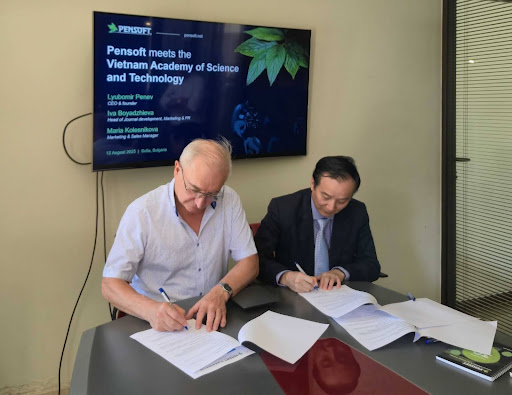
The highlight of the meeting was the formal signing of a Memorandum of Understanding (MoU) between Prof. Dr. Lyubomir Penev, Pensoft’s CEO and founder, and Prof. Dr. Thai Hoang, Vice Chairman of the Scientific Council of Materials Science at VAST and the Editor‑in‑Chief of the Vietnam Journal of Science and Technology.
“This Memorandum of Understanding marks an important step towards fostering international collaboration in scholarly publishing. By combining the expertise and know-how of Pensoft and VAST, we aim to make research more accessible and innovative for communities worldwide,”
commented Prof. Dr. Lyubomir Penev.
“I am very happy to visit Bulgaria and collaborate with Pensoft Publishers. Here, we know Pensoft and the ARPHA publishing platform for their diverse publishing solutions designed for scientific papers, monographs, academic books and more, as well as their professional and efficient work. All this makes them quite prestigious for us. Starting from this Memorandum of Understanding, next, we will explore ways to use the ARPHA publishing platform for the publication of Vietnam’s scientific journals, books and other research outputs.”
Prof. Dr. Thai Hoang said.
Over the course of the visit, the group engaged in an enriching dialogue. Guests from VAST offered an in-depth look at their publication outlets and shared insights into the Vietnamese scholarly publishing landscape, as well as the nation’s rich cultural heritage and natural wonders.
In turn, Pensoft offered a comprehensive overview of the company’s journey of over three decades, starting from the launch of the first Pensoft journals and proceeding to the continuous development of several innovative publication platforms and solutions, including the full-featured end-to-end publishing platform ARPHA. Today, there are over 80 open-access peer-reviewed journals, including both Pensoft-launched titles, and many owned and run by research institutions, universities and learned societies from around the globe.
The visit continued beyond the office with the publisher’s management inviting their guests to a several-day trip around the country that covered the cultural and historic hubs of Plovdiv and Koprivshtitsa.
By the end of the visit, both parties agreed that their meeting in Bulgaria underscores their shared vision: to advance open, innovative, and accessible scholarly communication. With the MoU in place, both sides look forward to transforming this mutual understanding into concrete collaborative initiatives.
*
With perfect timing, shortly after the visit, one of the VAST delegates: biologist Prof. Dr. Quang Manh Vu (also affiliated with the Hoa Binh University, Hanoi, Vietnam), in collaboration with his Bulgarian and Vietnamese colleagues: Dr. Ivailo Dedov (Bulgarian Academy of Sciences) and Dr. Tuan Trieu Anh (Hung Vuong University, Viet Tri City, Vietnam) published a study in Pensoft’s inaugural and flagship journal in zoological systematics: ZooKeys. The research paper lists species of slugs and semi-slugs of the superfamily Helicarionoidea the team collected in North Vietnam in 2023. Amongst the collected specimens, the scientists discovered a new-to-science species of semi-slug they named after Pensoft’s Prof. Dr. Lyubomir Penev, who is himself a biologist and taxonomist by background.
“When I found out I had a new species, I had no hesitation on the name: Ostracolethe penevi. I had been looking forward to naming a curious species after my friend Prof. Lyubomir Penev, a man who made the world look up to Bulgarian science, and someone who has helped me a lot through the years,”
“This newly described species deserves a name that reflects the generosity of nature, the advancement of science, and the enduring friendship between Vietnam and Bulgaria,”
added Prof. Dr. Quang Manh Vu.
***
Additional information:
Vietnam Academy of Science and Technology (VAST)
Founded on 20 May 1975, VAST is Vietnam’s largest multidisciplinary research organization, with branches in Hanoi, Ho Chi Minh City, Haiphong, Nha Trang, Dalat, and Hue. Its mission spans basic and applied research, the development of high technology, human resource training, and providing scientific advice to the government on pressing national issues.
VAST is known for achieving high output in international peer-reviewed journals; in 2023, more than 2,200 works were published, with nearly 80% in international outlets. The Academy is responsible for several cutting-edge initiatives, including satellite R&D through the Vietnam National Space Center, strategic technology fields aligned with the Fourth Industrial Revolution (e.g. AI, new materials, semiconductors), and large-scale environmental and biodiversity monitoring across the country. Looking forward, VAST has set ambitious goals, including mastering key advanced technologies, increasing technology transfer, enhancing publication impact, strengthening partnerships at home and abroad, and cultivating world-class scientific talent.
Pensoft
Founded in 1992 “by scientists, for scientists”, the academic open-access publishing company is well known worldwide for its novel cutting-edge publishing tools, workflows and methods for text and data publishing of journals, books and conference materials. Back in 2010, Pensoft became the first scientific publisher to introduce semantic enrichments in scholarly publications. Through its Research and Technical Development department, the company is involved in various research and technology projects.
ARPHA Publishing Platform
ARPHA is a full-featured, end-to-end publishing platform for open-access journals, books, conference materials and preprints. ARPHA offers flexible operating and business models, and a wide-range of automated and human-provided services. The ARPHA team places a special focus on its scholarly communication solutions designed to leverage the visibility and outreach of academic output, while prompting inclusivity and engagement.
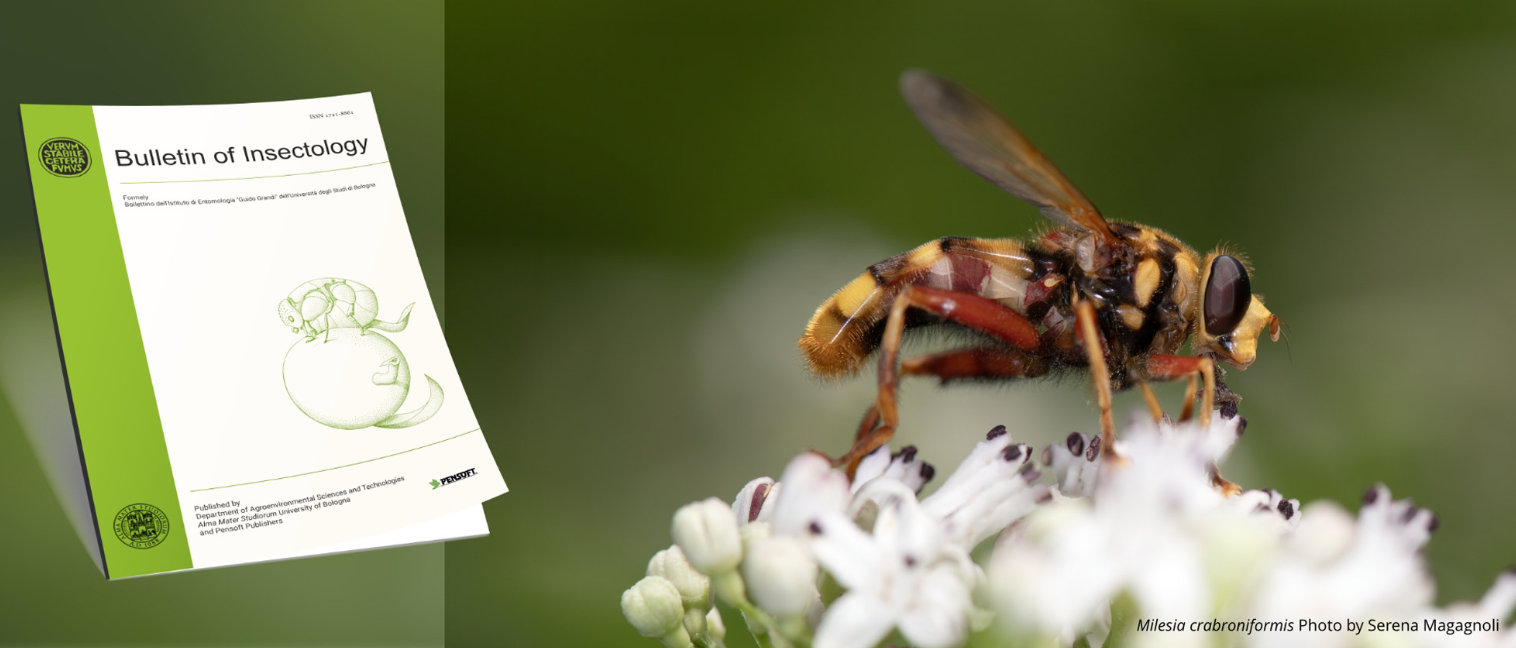
With a Journal Impact Factor of 0.9 and a Scopus CiteScore of 2.2, Bulletin of Insectology is a gold open-access, peer-reviewed scientific journal publishing original research articles, reviews, and short communications in the field of entomology. It is now jointly published by the Department of Agroenvironmental Sciences and Technologies, Alma Mater Studiorum – Università di Bologna and Pensoft.
Formerly known as Bollettino dell’Istituto di Entomologia “G. Grandi”, the journal has been continuously published since 1928. Over the decades, it has developed under the supervision of eminent entomologists such as Prof. G. Grandi, Prof. M. M. Principi, and Prof. E. Mellini.
Today, the journal continues to cover a broad range of topics related to insect science, including physiology, ecology, behaviour, pest management, and the role of insects in ecosystems. A particular emphasis is placed on integrated pest management (IPM), biological control, pollinator health, the side effects of pesticides on beneficial arthropods, and environmentally sustainable approaches to insect control in agriculture.
Among the first articles to appear since the journal’s transition to ARPHA are:
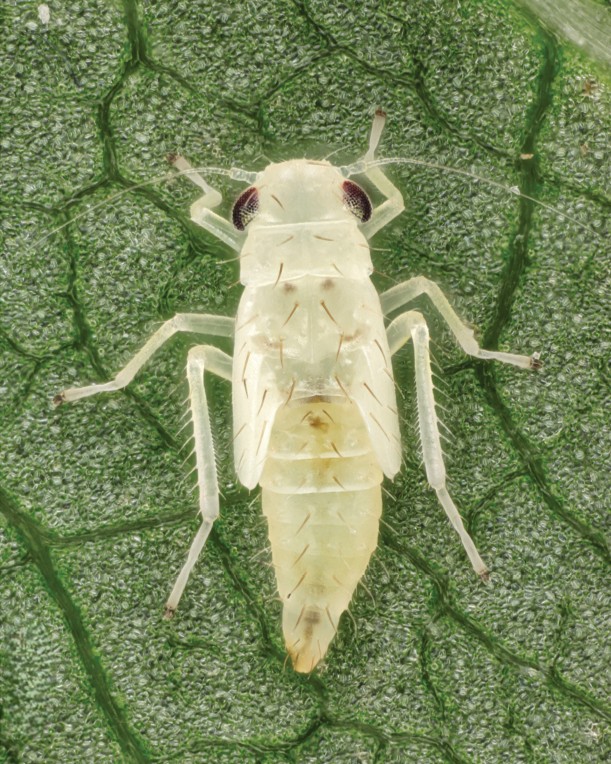
First record from Italy of the Japanese grape leafhopper Arboridiakakogawana. Credit: De Luigi et al.
“Bulletin of Insectology is an exciting addition to ARPHA’s family of next-generation scientific journals,” said Lyubomir Penev, CEO and founder of Pensoft, the company behind the ARPHA platform. “By utilising ARPHA’s publishing solutions, the journal can disseminate important entomological research and continue to grow.”
The move to ARPHA introduces modern publishing features, such as integrated submission and peer review workflows, enhanced discoverability through multiple indexing services, and improved accessibility for authors and readers alike.
With its first ARPHA-published articles now online, Bulletin of Insectology continues its near century-long tradition of advancing research in entomology. Head to the journal website here.
Scholarly publisher and technology provider Pensoft welcomes the latest addition to its diverse portfolio of scholarly outlets: the open-access, peer-reviewed journal Scientific Annals of the Danube Delta Institute (SADDI).
The official journal of the Danube Delta National Institute for Research and Developmentin Tulcea, Romania, SADDI publishes research in a variety of fields related to the Danube Delta and similar wetland ecosystems. Established in 1993, it offers a multidisciplinary platform for studies in the fields of ecology, biodiversity, environmental protection, hydrology, ichthyology, ornithology, limnology, and sustainable development related to wetlands and deltaic environments.
SADDI is led by Editor-in-Chief Iuliana-MihaelaTudor of the Danube Delta National Institute for Research and Development.
As a diamond open-access journal, SADDI will be free to read and publish and invites researchers and scientists to submit their manuscripts.
In joining Pensoft, SADDI will get access to improved publishing infrastructure and benefit from increased visibility and discoverability for its published research, making use of Pensoft’s full-featured platform ARPHA, an end-to-end publishing solution that makes it easy for both humans and machines to access, cite, and reuse research.
At the 32nd International Symposium “Deltas and Wetlands” in Tulcea, which will take place on 12–17 May, Pensoft’s CEO Prof. Lyubomir Penev will give a talk how the newly revamped SADDI has changed now that it is powered by the ARPHA publishing platform, and will also discuss how scholarly publishing can help advance Danube conservation.
“The Pensoft team is excited to cooperate with the Danube Delta National Institute for Research and Development as we support SADDI’s growth and development. We appreciate this new partnership and look forward to seeing the journal thrive using our advanced publishing services,” Prof. Penev said ahead of the event.
Published on Pensoft’s ARPHA platform on behalf of the AASP, SKINdeep features original articles, state-of-the-art reviews, and perspectives offering insights into the mechanisms of skin diseases and their therapeutic relevance. The open-access journal is led by three Editors-in-Chief: Prof. Peter Wolf of the Medical University of Graz, Prof. Johann W. Bauer of the Paracelsus Medical University in Salzburg, and Prof. Georg Stingl of the Medical University of Vienna.
“Within the international scientific community, Austria enjoys an excellent reputation in the field of clinical and experimental dermatovenereology. On this basis, it was possible to assemble a remarkable cohort of deputy and associate editors as well as expert advisors from Austria and abroad who will secure high scientific quality of the journal and, together with a dedicated editorial office and publishing house (AASP), can guarantee a very rapid publication of manuscripts, individually or assembled to special topics,” the three Editors-in-Chief said.
By embracing ARPHA’s end-to-end scholarly publishing platform, SKINdeep will benefit from a comprehensive suite of services designed to streamline every stage of the publishing process, from manuscript submission to article publication, indexation, dissemination, and archiving, ensuring a seamless workflow for authors, reviewers, and editors alike.
“We are excited about this partnership and firmly believe SKINdeep will be an impactful and globally accessible academic outlet for publishing high-quality research in dermatology,” said Prof. Lyubomir Penev, CEO and founder at ARPHA and Pensoft.SKINdeep journal is the second journal published by the Austrian Academy of Sciences Press to utilise ARPHA’s services, after Biosystematics and Ecology moved to ARPHA in 2021.
This change, approved by the SIVS plenary assembly in November 2024, reflects the journal’s mission to encompass a broader spectrum of research articles and better represent the dynamic and interdisciplinary field of vegetation science.
In addition to the name change, the journal has implemented a refreshed Editorial Board, new Topical Collections, and initiatives to support young researchers. Gianmaria Bonari is welcomed as the journal’s new Editor-in-Chief, succeeding the esteemed Daniela Gigante, who served in the role from January 2019 to February 2024.
The new journal name.
For members of the SISV, new publication fee discounts have been introduced. These initiatives aim to foster inclusive participation in vegetation science, particularly for students and researchers with limited financial resources.
A complete publication fee waiver is now available for young member researchers who have conducted their research without external funding, while those with partial external funding can benefit from a 10% APC discount.
Acronym of the new journal name.
Finally, a new social media team of Giovanni Rivieccio and Michele Mugnai will be managing the journal’s Facebook and Bluesky pages, bringing fresh ideas and dynamic content.
An Editorial published on the new journal website provides more information on the changes made, including short bios of the new Editorial Board members and descriptions of the new Topical Collections.
Statement from the Editor-in-Chief Gianmaria Bonari:
“It is a privilege to lead Vegetation Ecology and Diversity as we embark on this transformative journey. Our new name signifies our dedication to embracing the full breadth of vegetation science. With the introduction of new Topical Collections and initiatives to support young researchers, we aim to foster a collaborative and inclusive environment for vegetation scientists. I encourage researchers to engage with our journal and contribute to advancing the open-access society-owned journal Vegetation Ecology and Diversity.”
Statement from the President of the Italian Society of Vegetation Science (SISV), Simonetta Bagella:
“The rebranding of our journal to Vegetation Ecology and Diversity marks a significant milestone for the SISV. This change, approved by our members, aligns with our mission to expand the journal’s scope and enhance its international impact. We are particularly proud of the new initiatives to support young researchers, including publication fee waivers and discounts, which underscore our dedication to inclusivity and the advancement of emerging scientists in vegetation science. We also express our gratitude to Daniela Gigante for her leadership and warmly welcome Gianmaria Bonari as he guides the journal into this exciting new era.”
The International Mycological Association (IMA)has partnered with Pensoft to transition its flagship journal IMA Fungus to the ARPHA publishing platform after the open-access scientific publisher and technology provider won the bid by the IMA’s Executive Committee, following the expiration of their contract with BioMed Central (BMC, part of Springer-Nature). Already accepting manuscripts on its new website, the first publications in IMA Fungus since the transfer are expected in January 2025.
The move comes in a series of milestones for the prestigious journal in 2024, which also saw the appointment of its new Editor-in-Chief, Prof. Dr. Marc Stadler of the Helmholtz Centre for Infection Research, who has recently started his presidency at the IMA Council.
Committed to advancing mycological research and ensuring free access to high-quality, peer-reviewed scientific content, while representing the interest of mycology and mycologists worldwide, IMA’s Executive Board is confident that the new collaboration will further improve and streamline the publication process at IMA Fungus, and build up on its reputation in the field.
ARPHA platform’s intuitive and integrated end-to-end publishing workflow is designed to simplify the publication process for authors, reviewers, and editors. From submission to publication, automated full-text export to scientific databases and permanent hosting, all steps will be consolidated within a single, user-friendly interface, resulting in faster review cycles and more efficient communication between all parties involved. In addition to its signature publishing technology, Pensoft is providing IMA Fungus with various human-provided services, including help desk, design, science communication, marketing and journal development support.
Today, IMA Fungus boasts an impressive Scopus CiteScore and Journal Impact Factor, standing at 11.0 and 5.2 respectively. It ranks 6th in the Mycology category on Web of Science.
Since day one, IMA Fungus has been mandated as the only journal in which formal proposals relating to the rules on the naming of fungi or protected lists of names are to be published under the International Code of Nomenclature for algae, fungi and plants. Its scope covers all areas of mycology of interest to the wider mycological community, from basic to applied research.
“I am happy that we could get some of the most experienced editors to join us to the new publisher. Likewise, I am glad that many proficient young scientists from around the world, including most of the recent winners of the IMA Young Mycologist Award, joined our interdisciplinary editor panel.”
Prof. Dr. Marc Stadler, commenting on the latest news about IMA Fungus.
“It is a great honour to welcome IMA Fungus to the ARPHA family. We look forward to working with the International Mycological Association and helping to further advance their prestigious journal.”
Prof. Dr. Lyubomir Penev, Pensoft’s founder and CEO.
To learn more about IMA Fungus or submit your manuscript, visit the journal’s newly launched website. Previous issues of the journal are available here.
To stay up-to-date with its new publication, sign up for its Email Alert newsletter from the journal’s homepage, and follow it on X and Facebook.
***
About Pensoft:
Pensoft is an independent, open-access scholarly publisher and technology provider, best known for its 40+ biodiversity journals, including ZooKeys, Biodiversity Data Journal, PhytoKeys, MycoKeys, One Ecosystem and Metabarcoding and Metagenomics. Ever since becoming the first publisher to introduce semantic enrichments and hyperlinks within a scientific article in the field of biodiversity in 2010, Pensoft has been working on various tools and workflows designed to facilitate data findability, accessibility, discoverability and interoperability.
About ARPHA:
ARPHA is a full-featured, open-access publishing platform for scholarly journals, books, data and conference outputs, developed by the scientific publisher and technology developer Pensoft. Clients are provided with a software solution as well as a range of relevant human-provided services. Standing for Authoring, Reviewing, Publishing, Hosting and Archiving, ARPHA offers a wide range of tailorable services to publishers, societies, university presses, conference organisers and other academic institutions to provide them with a full-featured and all-rounded publishing experience, thereby saving them the extra efforts and unnecessary hassle of dealing with multiple vendors and service providers.
About the International Mycological Association:
The International Mycological Association, founded in 1971, represents the interests of over 30,000 mycologists worldwide. It is a non-for-profit organisation, the purpose of which is the encouragement of mycology in all its branches. This implies that the IMA should strive to promote mycology in its widest sense.
IMA Fungus is the flagship journal of the International Mycological Association. Papers on any aspect of mycology are considered, and published on-line with final pagination after proofs are corrected; taxonomic novelties are then effectively and validly published under the International Code of Nomenclature for algae, fungi, and plants. The journal strongly supports good practice policies, and requires voucher specimens or cultures to be deposited in a public collection with an online database, DNA sequences in GenBank, alignments in TreeBASE, and validating information on new scientific names, including typifications, to be accessioned in MycoBank.
MycoBank is the online repository and nomenclatural registry provided in collaboration between the International Mycological Association and the Westerdijk Fungal Biodiversity Institute. It provides a free service to the mycological and scientific society by databasing mycological nomenclatural novelties (new names and combinations) and associated data, such as descriptions, illustrations and DNA barcodes. Nomenclatural novelties are each allocated a unique MycoBank number to be cited in the publication where the nomenclatural novelty is introduced, to conform with the requirements of the International Code of Nomenclature for algae, fungi and plants.
Scholarly publisher and technology provider Pensoft has launchedIndividual-based Ecology (IBE), a new peer-reviewed, diamond open-access journal established to promote an individual-based perspective in ecology.
IBE aims to bridge the gap between individual-level responses and broader ecological patterns. In the face of global challenges, the journal is looking to contribute to both a better understanding and new sets of predictions of how ecological systems will respond to anthropogenic change. It aims to support the development of appropriate mitigation and restoration measures by focusing on the entities that actually and directly respond to change, i.e. individual organisms.
The journal embraces basic and applied, theoretical and empirical research in terrestrial and aquatic ecology. It welcomes contributions that incorporate data or novel insights about individual organisms and their interactions that are relevant to explaining system-level dynamics. IBE will publish a wide range of articles, including empirical, experimental, and modeling studies, as well as reviews, perspectives, and methodological papers.
As a diamond open-access journal, IBE is currently free to publish and free to read, ensuring that all published research is freely accessible to the global community.
The journal will utilise Pensoft’s innovative ARPHA platform, known for its robust support of academic publishing and efficient dissemination of research. Thanks to its fast-track publishing solution, the new journal offers a seamless, end-to-end publishing experience, encompassing all stages between manuscript submission and article publication, indexation, dissemination and permanent archiving. The publishing services provided by ARPHA also include a variety of human-provided services and integrations with third-party providers, intended to maximise the reach and usability of scholarly knowledge published in IBE.
IBE will be led by four editors-in-chief: Prof. Dr. Volker Grimm and Prof. Dr. Karin Frank of Helmholtz Center for Environmental Research – UFZ, Prof. Dr. Mark E. Hauber of The City University of New York, and Prof. Dr. Florian Jeltsch of the University of Potsdam.
A banner of IBE presented at the German Ecological Society’s 53rd annual conference
„We are excited to launch Individual-based Ecology, a new, promising journal that will contribute to a better understanding of ecological systems and how we interact with them,” said Prof Lyubomir Penev, founder and CEO of ARPHA and Pensoft.
“The time has come to establish individual-based ecology as an important complement to all other branches of ecology, both because we need it to fully understand and predict the response of ecological systems to change, and because empirical and modelling approaches have reached a level where the collection and use of individual-based data has become possible,” says Prof Volker Grimm, one of the editors-in-chief.
“It is exciting to be able to launch a journal that embraces ecological principles at the level of individuals across any and all lineages of life on our planet”, notes Prof. Mark E. Hauber, also an editor-in-chief.
“This new journal will promote nothing less than a paradigm shift in ecological thinking from averaging approaches to a science focused on the fundamental agents of change, i.e. individual organisms. Systematically recognising the importance of individual variation in ecological systems will transform our fundamental understanding of how biodiversity and its components emerge from individual responses and interactions, and how the emerging levels of organisation will respond to changing environments,” said Prof Florian Jeltsch from the editorial team.
IBE joins a number of open-access ecology journals published by Pensoft.For more information on the journal’s focus and scope and guidelines to authors, visit IBE’s website and follow it on Facebook and X.
The journal aims to serve as a leading platform for scholarly research, discussion, and innovation in the field of natural history collections worldwide and will be published by Pensoft Publishers.
By promoting the exchange of knowledge between museum professionals, researchers, educators, and enthusiasts, the publication aims to foster a deeper understanding and appreciation of natural history and its significance in society.
Natural History Collections and Museomics promoted by Pensoft at the 2024 International Congress of Entomology in Kyoto, Japan.
Natural History Collections and Museomics (NHCM) encourages interdisciplinary approaches and collaborations across fields such as taxonomy, conservation, education, ethics, and museum studies. The editorial team welcomes original research articles, reviews, case studies, methods, letters and perspectives addressing a wide range of topics related to natural history institutions and collections.
The journal is supported by CETAF (Consortium of European Taxonomic Facilities), Europe’s leading voice for taxonomy and systematic biology. The support of this European network of scientific institutions ensures a robust and collaborative foundation for the journal’s academic endeavours.
By utilising a Diamond Open Access model, the journal allows free access to published content without any fees for authors or readers. This approach ensures that important research can reach the widest possible audience, promoting inclusivity and global collaboration in the field.
A strong Editorial Board is already in place, co-chaired by two distinguished scholars in the field.
Dr Franco Andreone: Serving as the zoology curator at the Museo Regionale di Scienze Naturali in Turin, Italy, Dr Andreone is a renowned herpetologist with a profound impact on amphibian taxonomy, roles of natural history museums and conservation, particularly in Italy and Madagascar. His experience as a former Chair of the IUCN SSC Amphibian Specialist Group – Madagascar and his current role as a special advisor underscore his life-longdedication to preserving biodiversity.
Prof Shuqiang Li: A prominent Chinese arachnologist, Prof Li brings his vast expertise in zoological systematics to the journal. Among many accomplishments, he led the construction of 29 natural history museums for the Chinese Academy of Sciences, one of which is an 8,800 square metre collection building to preserve more than 10 million specimens and another a 6,600 square metre public museum in the Zoological Institute in Beijing. As leading taxonomist and the Editor-in-Chief of Zoological Systematics, Professor Li has described more than 2,000 new species. His work on how Tethyan changes shaped diversification is most notable. His research has also revealed the origin of spider webs based multi-omics analyses.
The Board expects the team of subject (associate) editors to soon expand further, as they have been actively recruiting colleagues from diverse professional and geographical backgrounds. Experts in fields within the scope of the new journal are also invited to apply to join the NHCM team as either editors or reviewers. Conveniently, the respective application forms are made accessible from the journal website’s homepage.
“The journal Natural History Collections and Museomics will serve as a perfectforum and place to publish cutting-edge research.
“Natural history collections are gargantuan resources and tools to discover and preserve global diversity. We need to treat them as immense treasures to discover and describe new species and understand Earth’s marvels.”
Dr Franco Andreone and Prof Shuqiang Li, Editors-in-Chief.
“We are thrilled to launch Natural History Collections and Museomics on the ARPHA Platform. The importance of natural history collections cannot be overstated and we look forward to publishing valuable research to a wide audience.”
Prof Dr Lyubomir Penev, CEO and founder of Pensoft Publishers.
Submissions to the journal are now open. Researchers, scholars, and practitioners are invited to contribute articles to Natural History Collections and Museomics.
For more information and submission guidelines, please visit the Natural History Collections and Museomics website.
You can also follow the journal on X and Facebook.
About ARPHA Platform:
ARPHA is a full-featured, end-to-end publishing platform for journals, books, conference materials and preprints. ARPHA offers flexible operating and business models, and a wide-range of automated and human-provided services. The ARPHA team places a special focus on its scholarly communication solutions designed to leverage the visibility and outreach of academic output, while promoting inclusivity and engagement.
About Pensoft:
Pensoft is an independent, open-access publisher and technology provider, best known for its biodiversity journals, including ZooKeys, Biodiversity Data Journal, Phytokeys, Mycokeys, One Ecosystem, Metabarcoding and Metagenomics and many others. Over the past 30 years, Pensoft has built a reputation for its innovations in the field, after launching ZooKeys: the very first digital-first scientific journal in zoology and the first to introduce semantic enrichments and hyperlinks within a biodiversity article. To date, the company has continuously been working on various tools and workflows designed to facilitate biodiversity data findability, accessibility, discoverability and interoperability.