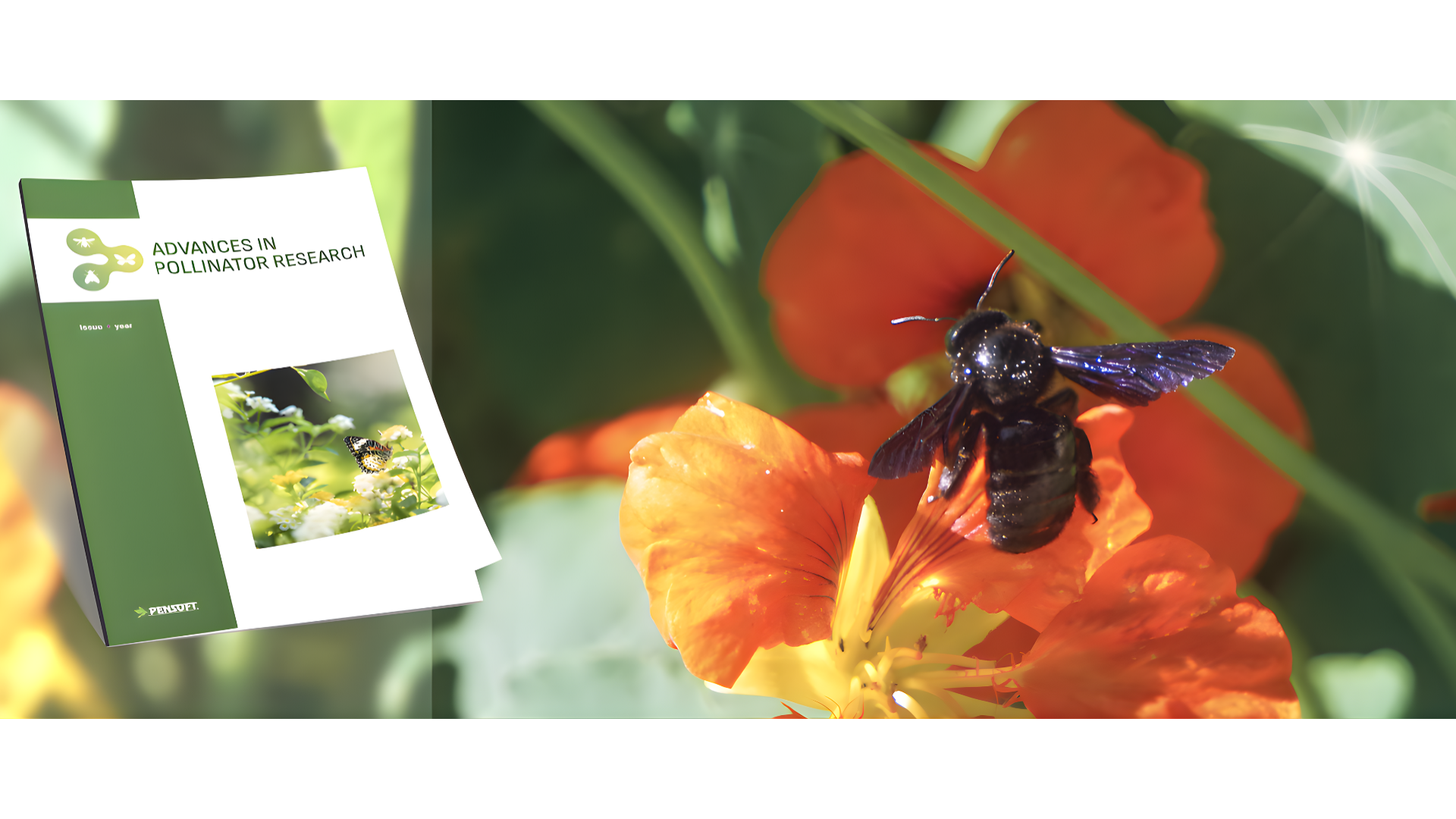
In collaboration with the European Union pollinator projects community, scholarly publisher and technology provider Pensoft launchedAdvances in Pollinator Research, a new multidisciplinary, community-driven peer-reviewed journal set to transform how pollinator science is shared and translated into real-world action.
Advances in Pollinator Research(APR) is designed as an innovative platform for the full spectrum of pollinator science, from pollination ecology and pollinator-plant interactions to molecular ecology, conservation and more. A core mission of the journal is to champion research from underrepresented regions, taxa, and ecological contexts.
As a diamond open-access journal, APR is currently free to publish and free to read, ensuring that all published research is openly accessible to the global community. The first editorial of the journal is available here.
In response to the global crisis of pollinator decline, APR moves beyond traditional data silos. It is the first comprehensive platform to unify the biological, environmental, socio-economic, and governance dimensions of pollinator health.
It embraces transdisciplinary collaboration and research between scientists, industry, and society with the aim of finding and amplifying solutions to real-world problems.
APR journal with key information.
Furthermore, the journal welcomes research on conventional approaches while highly encouraging publications that apply innovative methods, such as automated monitoring systems, AI-assisted analytics, molecular and genomic tools, as well as large-scale network initiatives and open databases that advance FAIR (Findable, Accessible, Interoperable, and Reusable) data dissemination across regions and taxa.
The journal will utilise Pensoft’s innovative ARPHA platform, known for its robust support of academic publishing and efficient dissemination of research. Thanks to this one-stop publishing solution, the new journal offers a seamless, end-to-end publishing experience, encompassing all stages between manuscript submission and article publication, indexation, dissemination and permanent archiving.
Figure illustrating the scope and publishing process of the APR journal, showing the diversity of pollinators, the multitude of stressors affecting them, and the various stakeholders interacting with them. Credit to Beaurepaire et al., 2026
The publishing services provided by ARPHA also include a variety of human-provided services and support and integrations with third-party providers, intended to maximise the reach and usability of scholarly knowledge published in Advances in Pollinator Research.
“We are excited to launch Advances in Pollinator Research. This ambitious journal is set to drive more innovative and interdisciplinary approaches within the field of pollinator science,”
– says Prof. Lyubomir Penev, founder and CEO of ARPHA and Pensoft
“With Advances in Pollinator Research, we aim to build an integrative and inclusive home for pollinator science that dissolves disciplinary and geographic silos and connects knowledge from genes to landscapes. Beyond a journal, APR is envisioned as a participatory forum where researchers, practitioners, and communities worldwide co-produce knowledge and accelerate solutions for pollinator health,”
– comments Dr. Straub
“We are truly delighted to launch this new transdisciplinary journal focusing on pollinators. Through this effort, we aim to bring our diverse research community together and provide a dynamic platform for scientists and stakeholders to exchange knowledge, ultimately deepening our understanding of and commitment to protecting these precious and fascinating species,”
– adds Dr. Beaurepaire
Advances in Pollinator Research joins a number of open-access entomology journals published by Pensoft.
For more information on the journal’s focus and scope and guidelines to authors, visit APR’s website, subscribe to the journal’s newsletter and follow it on BlueSky and Facebook.
Berlin (Germany) and Sofia (Bulgaria), 10th February, 2026 – ResearchGate, the professional network for researchers, and Pensoft Publishers, an independent open access publisher and provider of high-quality scholarly publishing services, today announced an expansion of their Journal Home partnership. Building on an earlier collaboration announced in 2023, the list now expands to 40 journals, covering the majority of Pensoft’s and partners’ journals using the publisher’s ARPHA Publishing Platform.
With most of Pensoft’s eligible partner journals choosing to participate, the expansion reflects strong demand for greater exposure and engagement opportunities, particularly among smaller and developing journals in niche research areas. Through Journal Home, partner publishers can reach more relevant audiences, improve discoverability, and connect more effectively with researchers worldwide.
Participating Pensoft journals will also benefit from:
Increased usage and readership, with full-text open access journal content seamlessly surfaced to highly relevant researcher communities across the ResearchGate platform.
Stronger engagement from new and returning authors, connecting partner journals, including specialist and emerging titles, with targeted researchers and potential authors throughout the research lifecycle.
Dedicated Journal Profiles and prominent placement of Pensoft journals to enhance visibility and branding, boosting recognition of partner journals with researcher communities around the world.
Improved author experience, with the automatic addition of published articles to author profiles, clearer insight into reader engagement, and greater opportunities for meaningful collaboration.
“Journal Home allows us to provide our partner journals with improved visibility and stronger connections with global researcher communities. Many of these journals serve highly specialised fields, and Journal Home helps make sure their articles reach the right researchers, who will benefit from them most.”
– Lyubomir Penev, CEO and founder of Pensoft Publishers
“We’re pleased to expand our Journal Home partnership with Pensoft to support an increasing number of partner journals. By bringing these journals onto the platform, smaller and emerging titles can expand their reach, attract high-quality submissions, and connect with the most relevant researcher communities at key moments in their research journey.”
– Robyn Mugridge, Head of Partnership Development at ResearchGate
For more information about Pensoft Publishers, please visit www.pensoft.net.
About ResearchGate
ResearchGate is the professional network for researchers. Over 25 million researchers use researchgate.net to share and discover research, build their networks, and advance their careers. Based in Berlin, ResearchGate was founded in 2008. Its mission is to connect the world of science and make research open to all.
About Pensoft Publishers
Pensoft is an independent, open-access scholarly publisher and technology provider, best known for its 40+ biodiversity journals, including ZooKeys, Biodiversity Data Journal, PhytoKeys, MycoKeys, One Ecosystem, and Metabarcoding and Metagenomics. Ever since becoming the first to introduce semantic enrichments and hyperlinks within a scientific article in the field of biodiversity in 2010, Pensoft has been working on various tools and workflows designed to facilitate data findability, accessibility, discoverability and interoperability.
Pensoft and the University of Zurich have signed an Open Access agreement that covers 65 peer-reviewed scholarly journals published by Pensoft or using the open-access publisher’s signature platform ARPHA. The agreement allows researchers at the University of Zurich and four affiliated hospitals to publish without individual Article Processing Charges (APCs). This partnership supports open science, making research freely available and adhering to the FAIR principles.
Pensoft and the University of Zurichhave signed a comprehensive Open Access (OA) agreement, starting a partnership that enables researchers at participating institutions to publish their findings in Pensoft’s peer-reviewed journals without incurring individual Article Processing Charges (APCs).
Under this new framework, publishing costs for corresponding authors affiliated with the respective institutions are 100% covered by a centralised institutional deposit secured by the University of Zurich. By removing financial barriers, the agreement encourages scientists to disseminate their work to both the academic community and the wider public, making research immediately and freely available upon publication.
This initiative ensures that research is shared under open licences in strict accordance with the FAIR principles—making data Findable, Accessible, Interoperable, and Reusable.
“We are excited to start this partnership with the University of Zurich and sign an agreement that reflects our strong commitment to inclusive and equitable open science. By supporting researcher-driven publishing, we continue to foster a sustainable environment for high-impact scientific communication.”
– Prof. Lyubomir Penev, CEO of Pensoft.
“We are pleased to extend our portfolio of gold open access journals, in which our researchers can publish their findings without paying individual APCs. We thereby strengthen our commitment to open research information.”
– University Library Zurich
Are you affiliated with a research institution operating with OA agreements? Is your institution interested in helping resident researchers navigate the complex processes underpinning academic publishing and knowledge sharing? Reach out to <publishing@pensoft.net> to discuss a potential collaboration.
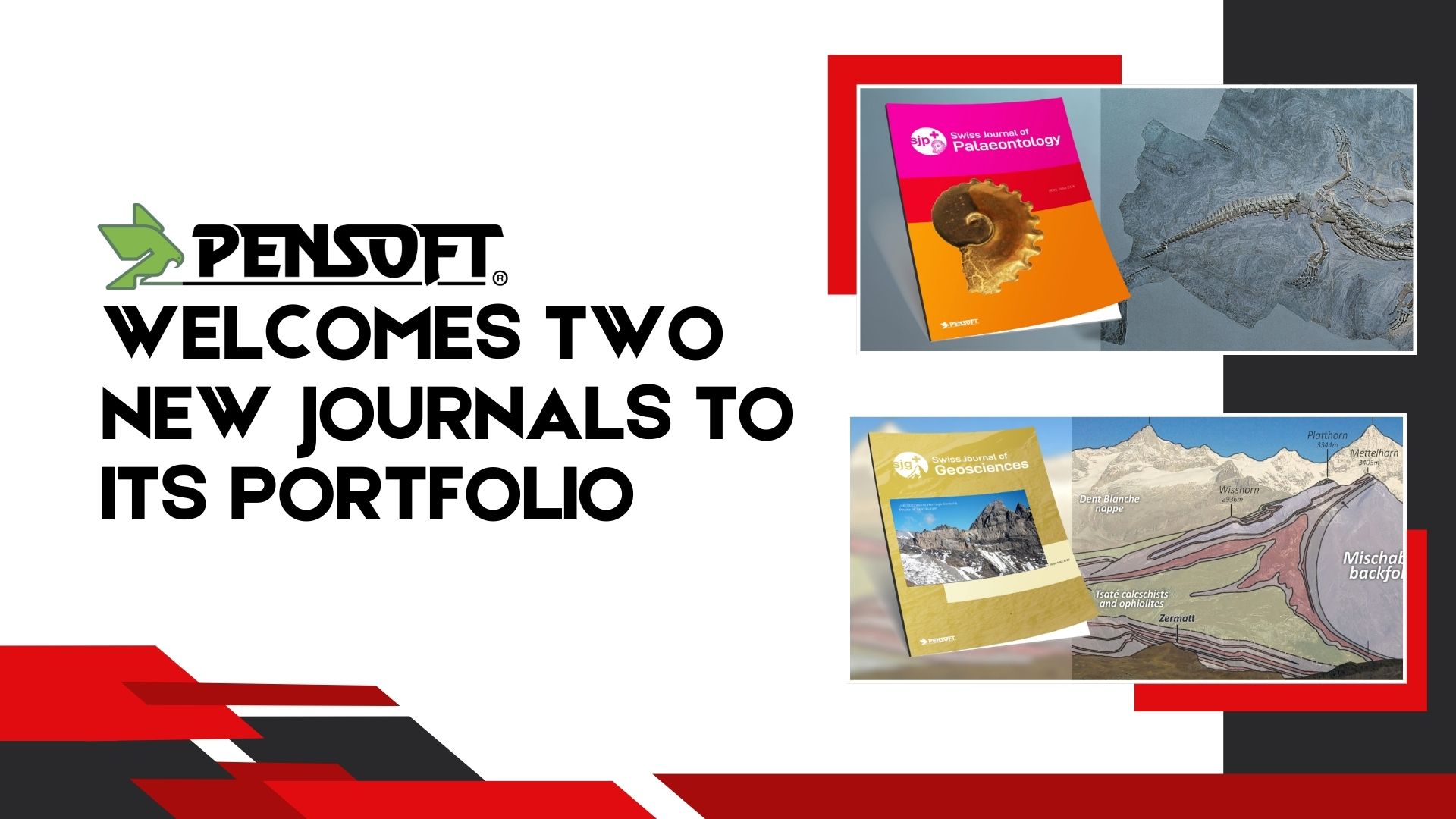
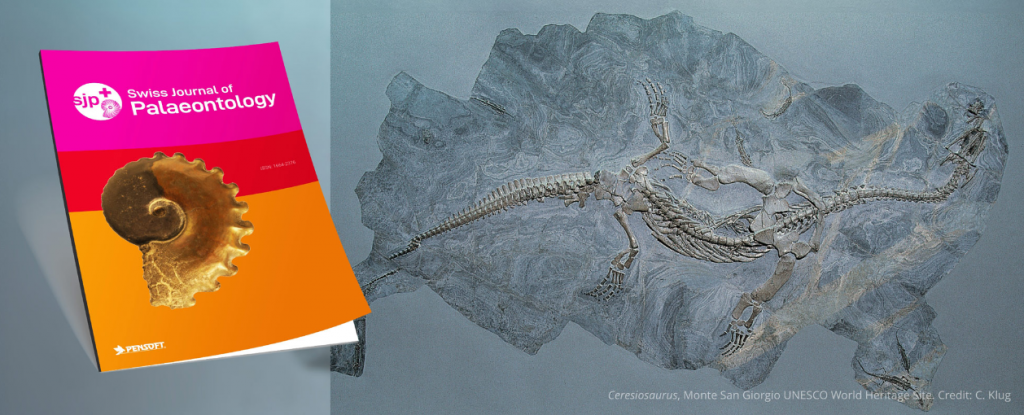
With deep historical roots and a commitment to high-quality peer-reviewed research, the two journals have officially transitioned to Pensoft’s advanced publishing platform, ARPHA, marking a new chapter in their Open Access journey.
Dr. Daniel Marty, associate lecturer at the University of Basel, will continue to lead both SJP and SJG as the Chief Editor.
The Swiss Journal of Palaeontology (SJP), published on behalf of the Swiss Academy of Sciences (SCNAT), dates back to 1874. The journal launched under the name “Schweizerische Paläontologische Abhandlungen (Mémoires Suisses de Paléontologie)”, focusing primarily on the publication of palaeontological monographs.
Subsequently, the journal’s stewardship transitioned formally to the SCNAT in 1940, leading to the establishment of the Kommission für die Schweizerischen Paläontologischen Abhandlungen (KSPA), which has since managed the journal’s dedicated funds. After decades of irregular publication with “Birkhäuser” (obtained by Springer in 1985), the journal was rebranded to its current name in 2011 and established as a scientific peer-reviewed journal.
More recently, in response to a 2020 decision, made by the Swiss National Science Foundation (SNSF) to cease supporting traditional ‘subscription model’ journals, the SJP transitioned to a fully Open Access model. In 2025, the SJP became officially affiliated with the Swiss Geological Society (SGS). With the previous publishing contract concluding in late 2025, KSPA and SGS have partnered with Pensoft Publishers “where processes are more streamlined to the needs of the SJP.”
The SJP continues to be a vital home for research spanning alpha taxonomy, systematics, palaeobiology, biostratigraphy, and conservation palaeontology, among many other specialized fields.
The first three publications from SJP are now available on the journal’s new website along with an editorial by the Editor-in-Chief. Additionally, you can use the email alert button on the homepage of SJP to subscribe for the journal newsletter.
The Swiss Journal of Geosciences (SJG) is the other journal with a rich history, published on behalf of the Swiss Geological Society and is a member of the Swiss Academy of Sciences. It was first published in 1888 as “Eclogae Geologicae Helvetiae”. From the 1920s until 2006, it was published in collaboration with Birkhäuser, eventually merging in 2006 with the Schweizerische Mineralogische und Petrographische Mitteilungen (SMPM, first published in 1921) and was then renamed to Swiss Journal of Geosciences. After the Swiss National Science Foundation (SNSF) decided to stop supporting traditional ‘subscription model’ journals, SJG transitioned to a fully Open Access format in 2020.
As of the beginning of 2026, the journal will be published by Pensoft “where processes are more streamlined to the needs of the SJG”. The journal continues to focus on original research of international interest regarding the evolution of the Tethys realm and the Alpine/Himalayan orogen, covering disciplines such as Tectonics, Geochemistry, and Orogenesis and many more.
The first three publications of SJG under this new partnership, along with an editorial by the Editor-in-Chief, are now available on the journal’s new website.
Now powered by Pensoft’s open-access scholarly publishing platfor
In joining Pensoft, both SJP and SJG will get access to improved publishing infrastructure and benefit from increased visibility and discoverability for their published research. The journal will use Pensoft’s self-developed platform, ARPHA – an end-to-end publishing solution that makes it easy for both people and machines to access, cite, and reuse research. With its design, ARPHA streamlines publishing workflows, providing a single online ecosystem for the entire editorial process, from manuscript submission to peer review, editing, publication, and archiving.
“The migration of SJG and SJP to Pensoft Publishers will permit both journals to grow in a sustainable way and that it will considerably increase their visibility and quality as they will benefit from streamlined and professional processes and services offered by Pensoft. This will be a big advantage for our authors.”
– Said the Swiss Geological Society and Dr. Daniel Marty, Editor-in-Chief of both Swiss journals.
“We are thrilled to welcome both the Swiss Journal of Palaeontology and Swiss Journal of Geosciences to the Pensoft family of next-generation scientific journals. We appreciate this new partnership and look forward to seeing the journal thrive using our advanced publishing services.”
– Said Prof Lyubomir Penev, CEO and Founder of Pensoft
Pensoft and the Bibsam Consortium have signed an Open Access agreement that covers 65 peer-reviewed scholarly journals published by Pensoft or using the open-access publisher’s signature platform ARPHA. The agreement covers almost 100 institutions, including Karolinska Institutet, Lund University, Uppsala University, and the Royal Swedish Academy of Sciences. Now, researchers affiliated with institutions in the Bibsam Consortium will benefit from a streamlined publication process where they will not be charged with any publication fees (APCs).
Pensoft and the Bibsam Consortium, operated by the National Library of Sweden, are pleased to announce the signing of a comprehensive Open Access (OA) agreement, marking a significant step in the transition towards a more transparent and open scholarly publishing landscape in Sweden.
Thanks to this move, researchers at participating institutions will be able to publish their findings in 65 journals published by Pensoft or using its advanced publishing platform ARPHA, including flagship titles such as ZooKeys, PhytoKeys, Biodiversity Data Journal, NeoBiota and IMA Fungus, without incurring individual article processing charges (APCs).
All authors affiliated with participating institutions can benefit from this agreement, with publishing costs 100% covered by an institutional deposit secured by the National Library of Sweden.
Unlike subscription-based systems, an OA framework ensures that scientific findings are immediately and freely available to the global community, supporting the global shift toward accessible science and adhering to the FAIR principles (Findable, Accessible, Interoperable, and Reusable).
OA agreements like this one reduce the financial burden on scientists and encourage them to share their work with both academia and the wider public, ultimately lowering barriers to sharing knowledge in a time when scientific input is key to resolving global challenges.
“We are excited to start this partnership with Bisbam and sign an agreement that reflects our strong commitment to open science. By supporting researcher-driven publishing, we continue to foster a sustainable environment for high-impact scientific communication.”
– Prof. Lyubomir Penev, CEO of Pensoft
“We are delighted to announce the addition of Pensoft Publishers to our portfolio of nationally funded agreements for 2026. This represents an important step towards achieving full open access to scientific publications in Sweden.”
– Niklas Willén, License Manager at Bibsam Consortium and National Library of Sweden
Are you affiliated with a research institution operating with OA agreements? Is your institution interested in helping resident researchers navigate the complex processes underpinning academic publishing and knowledge sharing? Reach out to <publishing@pensoft.net> to discuss a potential collaboration.
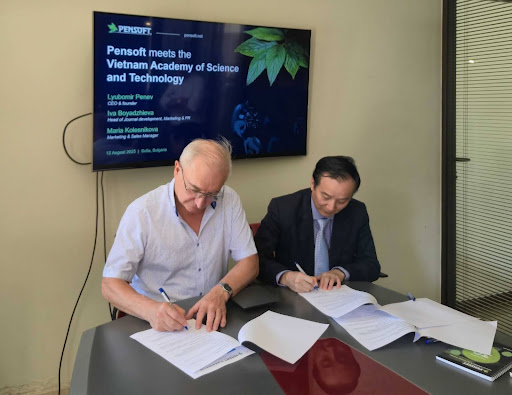
In August, Pensoft had the honour of welcoming colleagues from the Vietnam Academy of Science and Technology (VAST) to the headquarters of the open-access scholarly publisher and technology provider in Sofia, Bulgaria. The visit was marked by engaging discussions on scholarly publishing, future innovations, current challenges in academia and potential collaborations.
The highlight of the meeting was the formal signing of a Memorandum of Understanding (MoU) between Prof. Dr. Lyubomir Penev, Pensoft’s CEO and founder, and Prof. Dr. Thai Hoang, Vice Chairman of the Scientific Council of Materials Science at VAST and the Editor‑in‑Chief of the Vietnam Journal of Science and Technology.
“This Memorandum of Understanding marks an important step towards fostering international collaboration in scholarly publishing. By combining the expertise and know-how of Pensoft and VAST, we aim to make research more accessible and innovative for communities worldwide,”
commented Prof. Dr. Lyubomir Penev.
“I am very happy to visit Bulgaria and collaborate with Pensoft Publishers. Here, we know Pensoft and the ARPHA publishing platform for their diverse publishing solutions designed for scientific papers, monographs, academic books and more, as well as their professional and efficient work. All this makes them quite prestigious for us. Starting from this Memorandum of Understanding, next, we will explore ways to use the ARPHA publishing platform for the publication of Vietnam’s scientific journals, books and other research outputs.”
Prof. Dr. Thai Hoang said.
Over the course of the visit, the group engaged in an enriching dialogue. Guests from VAST offered an in-depth look at their publication outlets and shared insights into the Vietnamese scholarly publishing landscape, as well as the nation’s rich cultural heritage and natural wonders.
In turn, Pensoft offered a comprehensive overview of the company’s journey of over three decades, starting from the launch of the first Pensoft journals and proceeding to the continuous development of several innovative publication platforms and solutions, including the full-featured end-to-end publishing platform ARPHA. Today, there are over 80 open-access peer-reviewed journals, including both Pensoft-launched titles, and many owned and run by research institutions, universities and learned societies from around the globe.
The visit continued beyond the office with the publisher’s management inviting their guests to a several-day trip around the country that covered the cultural and historic hubs of Plovdiv and Koprivshtitsa.
By the end of the visit, both parties agreed that their meeting in Bulgaria underscores their shared vision: to advance open, innovative, and accessible scholarly communication. With the MoU in place, both sides look forward to transforming this mutual understanding into concrete collaborative initiatives.
*
With perfect timing, shortly after the visit, one of the VAST delegates: biologist Prof. Dr. Quang Manh Vu (also affiliated with the Hoa Binh University, Hanoi, Vietnam), in collaboration with his Bulgarian and Vietnamese colleagues: Dr. Ivailo Dedov (Bulgarian Academy of Sciences) and Dr. Tuan Trieu Anh (Hung Vuong University, Viet Tri City, Vietnam) published a study in Pensoft’s inaugural and flagship journal in zoological systematics: ZooKeys. The research paper lists species of slugs and semi-slugs of the superfamily Helicarionoidea the team collected in North Vietnam in 2023. Amongst the collected specimens, the scientists discovered a new-to-science species of semi-slug they named after Pensoft’s Prof. Dr. Lyubomir Penev, who is himself a biologist and taxonomist by background.
“When I found out I had a new species, I had no hesitation on the name: Ostracolethe penevi. I had been looking forward to naming a curious species after my friend Prof. Lyubomir Penev, a man who made the world look up to Bulgarian science, and someone who has helped me a lot through the years,”
“This newly described species deserves a name that reflects the generosity of nature, the advancement of science, and the enduring friendship between Vietnam and Bulgaria,”
added Prof. Dr. Quang Manh Vu.
***
Additional information:
Vietnam Academy of Science and Technology (VAST)
Founded on 20 May 1975, VAST is Vietnam’s largest multidisciplinary research organization, with branches in Hanoi, Ho Chi Minh City, Haiphong, Nha Trang, Dalat, and Hue. Its mission spans basic and applied research, the development of high technology, human resource training, and providing scientific advice to the government on pressing national issues.
VAST is known for achieving high output in international peer-reviewed journals; in 2023, more than 2,200 works were published, with nearly 80% in international outlets. The Academy is responsible for several cutting-edge initiatives, including satellite R&D through the Vietnam National Space Center, strategic technology fields aligned with the Fourth Industrial Revolution (e.g. AI, new materials, semiconductors), and large-scale environmental and biodiversity monitoring across the country. Looking forward, VAST has set ambitious goals, including mastering key advanced technologies, increasing technology transfer, enhancing publication impact, strengthening partnerships at home and abroad, and cultivating world-class scientific talent.
Pensoft
Founded in 1992 “by scientists, for scientists”, the academic open-access publishing company is well known worldwide for its novel cutting-edge publishing tools, workflows and methods for text and data publishing of journals, books and conference materials. Back in 2010, Pensoft became the first scientific publisher to introduce semantic enrichments in scholarly publications. Through its Research and Technical Development department, the company is involved in various research and technology projects.
ARPHA Publishing Platform
ARPHA is a full-featured, end-to-end publishing platform for open-access journals, books, conference materials and preprints. ARPHA offers flexible operating and business models, and a wide-range of automated and human-provided services. The ARPHA team places a special focus on its scholarly communication solutions designed to leverage the visibility and outreach of academic output, while prompting inclusivity and engagement.
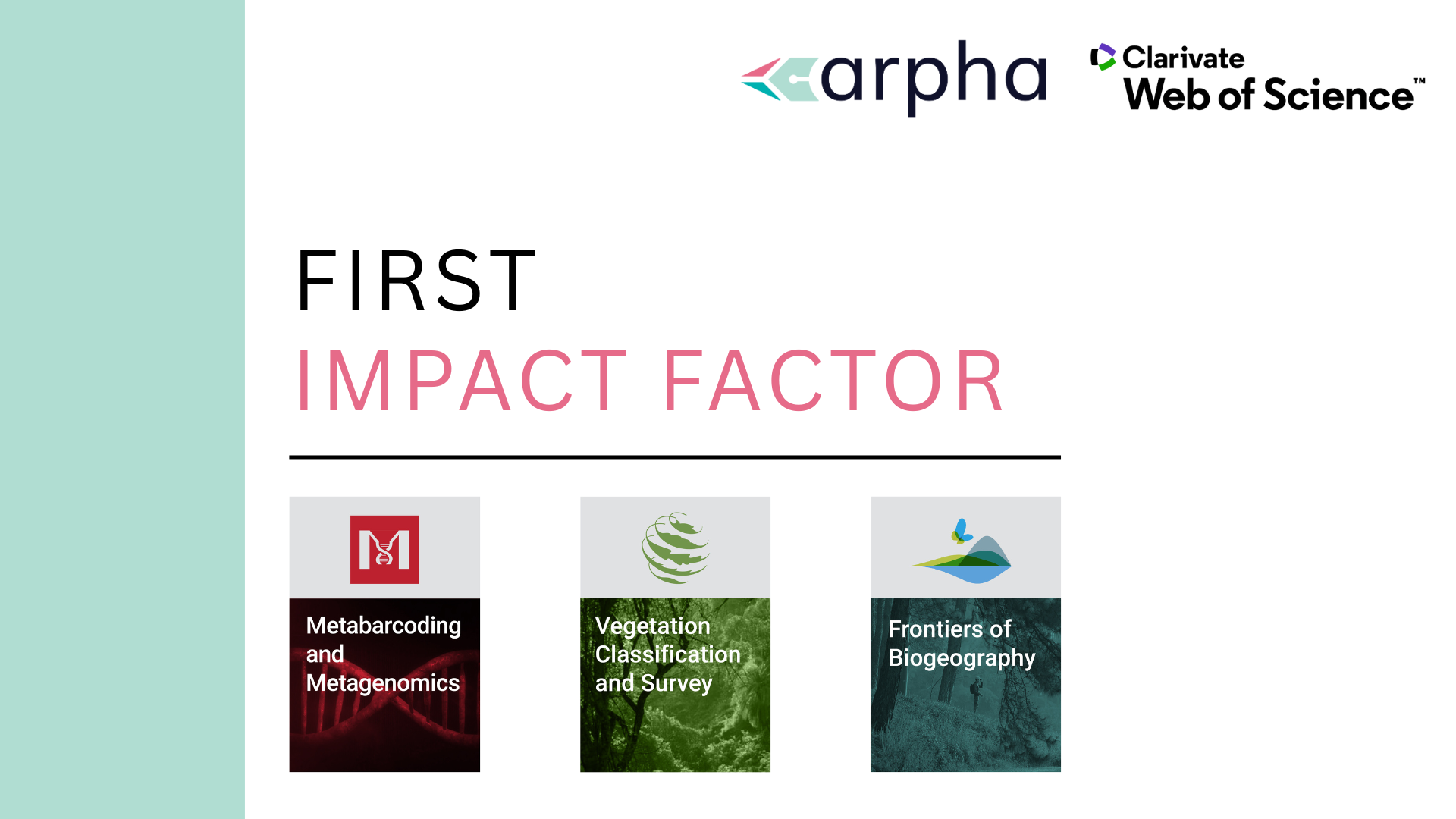
The latest Journal Citation Reports, released by Clarivate in June 2025, have granted three ARPHA-hosted, open-access journals their first Journal Impact Factors (JIF).
The metric reflects the number of times a journal’s content from 2022 and 2023 was cited in 2024. This total citation count is then divided by the number of “citable” articles (i.e., research and review articles) to estimate the JIF.
This achievement reflects the hard work of the editorial teams and authors at each of the journals, as well as the efforts of ARPHA’s dedicated, in-house indexing team, who help journals apply for important academic indexing databases, including Web of Scienceand Scopus. Indexation in such databases allows journals to become eligible for metrics like the JIF and CiteScore, which are often considered by researchers deciding where to publish their work.
ARPHA’s indexing service includes evaluation of a given journal’s current status against the requirements of prestigious databases, advice on how to meet these requirements, and overall assistance in the application process.
Want to know more? Learn about indexing and numerous other services, both automated and human-provided, offered by ARPHA here.
“The Impact Factor is an important metric for scientific metrics. And we know that not having one hinders especially early career researchers to submit their research to us earlier. Therefore, we are very happy that MBMG has received this important metric, and with a value of 3.1 we’re even more happy that this is a very competitive one.”
Florian Leese, MBMG Editor-in-Chief.
“We are delighted to see the journal receive its first Impact Factor. We expect that both Journal Impact Factor and CiteScore will further increase in 2026. “Thanks to all our editors, reviewers and authors who made this success possible and to IAVS for subsidizing the APCs of VCS during the first few years. We look forward to receiving more high-quality submissions in the fields of vegetation classification and ecoinformatics, the two strongholds of VCS.”
Jürgen Dengler, Idoia Biurrun and Wolfgang Willner, VCS Chief Editors.
“When The International Biogeography Society launched Frontiers of Biogeography under the editorship of Joaquín Hortal in 2009, we had a vision of it becoming an adaptable, independent, society-owned journal with a distinctive place in the journal publishing landscape. The attainment of our first Clarivate Journal Impact Factor is testimony to the hard work by our past and present editors and reviewers, and to the quality and interest level of the work that our community has entrusted to the journal for publication. “Working together with the team at Pensoft we are confident that we can continue to grow the journal as a favoured venue for Open Access publication of cutting-edge biogeographical research.”
Robert J. Whittaker, Frontiers of Biogeography Editor-in-Chief.
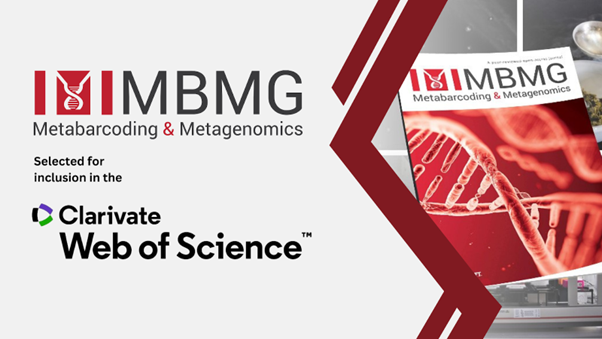
Metabarcoding & Metagenomics (MBMG) has been approved for inclusion in Clarivate’s Web of Science, one of the most renowned citation databases that indexes the world’s leading scholarly journals. This recognition underscores the journal’s growing influence in its field, and reflects its commitment to publishing high-quality, peer-reviewed research.
Since its launch in September 2017, the journal has been at the forefront of publishing papers on metabarcoding and metagenomics for both basic and applied studies. At the time of its inauguration it was seen as a particularly forward-looking and niche scholarly outlet because it was devised to address the need for an innovative journal in the rapidly developing fields of DNA-based environmental research, biodiversity monitoring and nature conservation. Going forward, MBMG’s inclusion in the Emerging Sources Citation Index (ESCI) at Web of Science will further enhance the visibility and accessibility of existing and future research.
Now that it has completed the Web of Science’s rigorous quality and integrity assessment, MBMG may receive its first Journal Impact Factor (JIF) as early as 2025. This is a testament to the dedication of the authors, reviewers, and editorial board members who have contributed to the journal’s success.
MBMG is indexed and archived in more than 60 databases, including Scopus, DOAJ, ResearchGate, Library of Congress, British Library, Baidu Scholar, CNKI, EBSCO, Unpaywall, CLOCKSS and Zenodo.
In June 2024, the journal received a Scopus CiteScore of 5.4, placing it in Q1 in five categories: Animal Science and Zoology; Insect Science; Plant Science; Ecology, Evolution, Behaviour and Systematics; and Nature and Landscape Conservation.
This inclusion in the Web of Science marks a new chapter in the journal’s mission to facilitate the production and dissemination of important research.
“The quality of research and the perception by the community our MBMG staff supports matter most. Being officially listed in Web of Science and having a Journal Impact Factor are criteria of high importance to many of our authors. Therefore, I‘m very happy about this new development.”
“From the very beginning, we were convinced that this niche is of high relevance and will be rapidly expanding. The inclusion of MBMG in the Web of Science will be of particular importance for our (young) authors, who are too often evaluated by IF-based criteria. At the same time, MBMG hopefully will face a further growing number of submissions.”
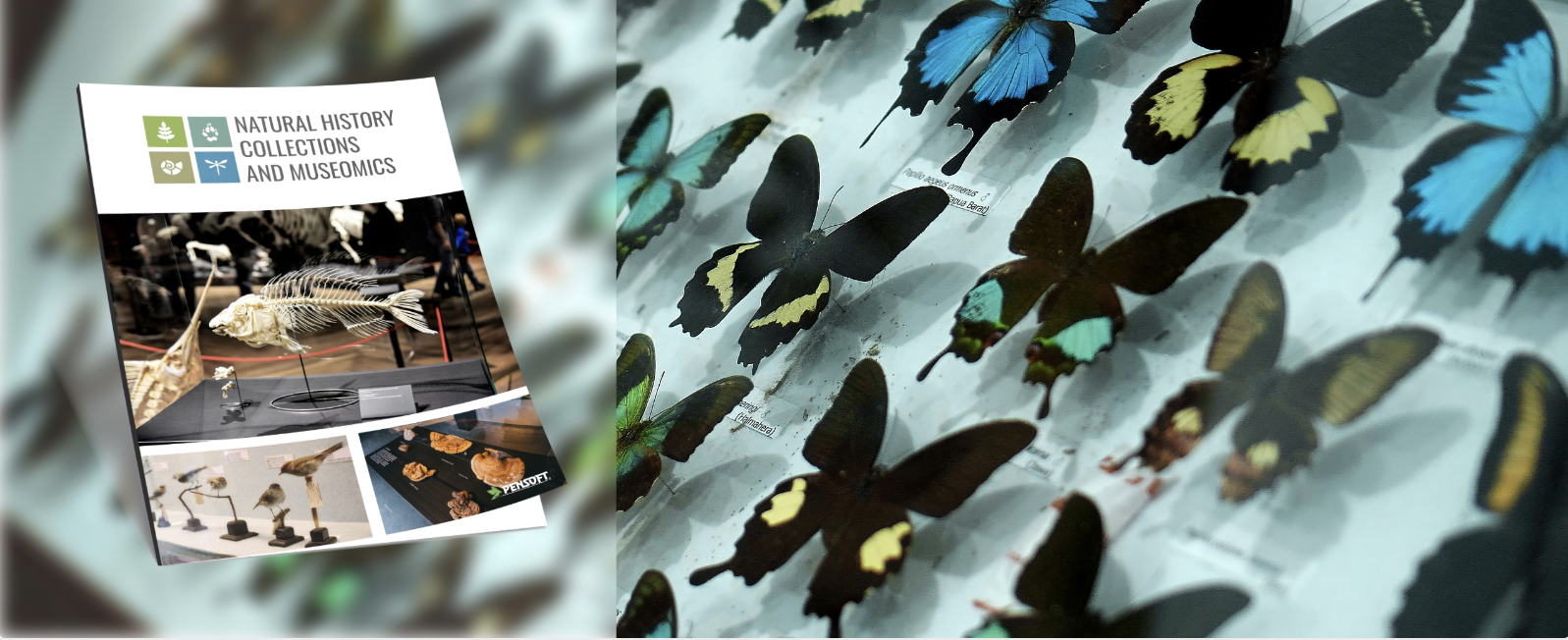
The journal aims to serve as a leading platform for scholarly research, discussion, and innovation in the field of natural history collections worldwide and will be published by Pensoft Publishers.
By promoting the exchange of knowledge between museum professionals, researchers, educators, and enthusiasts, the publication aims to foster a deeper understanding and appreciation of natural history and its significance in society.
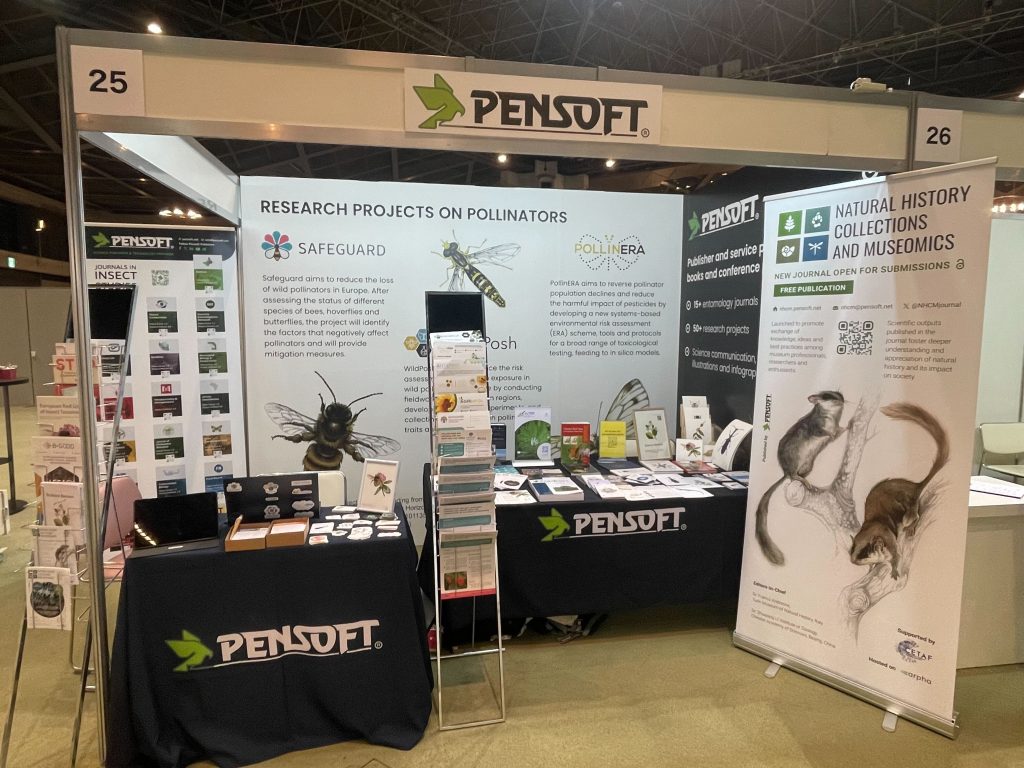
Natural History Collections and Museomics promoted by Pensoft at the 2024 International Congress of Entomology in Kyoto, Japan.
Natural History Collections and Museomics (NHCM) encourages interdisciplinary approaches and collaborations across fields such as taxonomy, conservation, education, ethics, and museum studies. The editorial team welcomes original research articles, reviews, case studies, methods, letters and perspectives addressing a wide range of topics related to natural history institutions and collections.
The journal is supported by CETAF (Consortium of European Taxonomic Facilities), Europe’s leading voice for taxonomy and systematic biology. The support of this European network of scientific institutions ensures a robust and collaborative foundation for the journal’s academic endeavours.
By utilising a Diamond Open Access model, the journal allows free access to published content without any fees for authors or readers. This approach ensures that important research can reach the widest possible audience, promoting inclusivity and global collaboration in the field.
A strong Editorial Board is already in place, co-chaired by two distinguished scholars in the field.
Dr Franco Andreone: Serving as the zoology curator at the Museo Regionale di Scienze Naturali in Turin, Italy, Dr Andreone is a renowned herpetologist with a profound impact on amphibian taxonomy, roles of natural history museums and conservation, particularly in Italy and Madagascar. His experience as a former Chair of the IUCN SSC Amphibian Specialist Group – Madagascar and his current role as a special advisor underscore his life-longdedication to preserving biodiversity.
Prof Shuqiang Li: A prominent Chinese arachnologist, Prof Li brings his vast expertise in zoological systematics to the journal. Among many accomplishments, he led the construction of 29 natural history museums for the Chinese Academy of Sciences, one of which is an 8,800 square metre collection building to preserve more than 10 million specimens and another a 6,600 square metre public museum in the Zoological Institute in Beijing. As leading taxonomist and the Editor-in-Chief of Zoological Systematics, Professor Li has described more than 2,000 new species. His work on how Tethyan changes shaped diversification is most notable. His research has also revealed the origin of spider webs based multi-omics analyses.
The Board expects the team of subject (associate) editors to soon expand further, as they have been actively recruiting colleagues from diverse professional and geographical backgrounds. Experts in fields within the scope of the new journal are also invited to apply to join the NHCM team as either editors or reviewers. Conveniently, the respective application forms are made accessible from the journal website’s homepage.
“The journal Natural History Collections and Museomics will serve as a perfectforum and place to publish cutting-edge research.
“Natural history collections are gargantuan resources and tools to discover and preserve global diversity. We need to treat them as immense treasures to discover and describe new species and understand Earth’s marvels.”
Dr Franco Andreone and Prof Shuqiang Li, Editors-in-Chief.
“We are thrilled to launch Natural History Collections and Museomics on the ARPHA Platform. The importance of natural history collections cannot be overstated and we look forward to publishing valuable research to a wide audience.”
Prof Dr Lyubomir Penev, CEO and founder of Pensoft Publishers.
Submissions to the journal are now open. Researchers, scholars, and practitioners are invited to contribute articles to Natural History Collections and Museomics.
For more information and submission guidelines, please visit the Natural History Collections and Museomics website.
You can also follow the journal on X and Facebook.
About ARPHA Platform:
ARPHA is a full-featured, end-to-end publishing platform for journals, books, conference materials and preprints. ARPHA offers flexible operating and business models, and a wide-range of automated and human-provided services. The ARPHA team places a special focus on its scholarly communication solutions designed to leverage the visibility and outreach of academic output, while promoting inclusivity and engagement.
About Pensoft:
Pensoft is an independent, open-access publisher and technology provider, best known for its biodiversity journals, including ZooKeys, Biodiversity Data Journal, Phytokeys, Mycokeys, One Ecosystem, Metabarcoding and Metagenomics and many others. Over the past 30 years, Pensoft has built a reputation for its innovations in the field, after launching ZooKeys: the very first digital-first scientific journal in zoology and the first to introduce semantic enrichments and hyperlinks within a biodiversity article. To date, the company has continuously been working on various tools and workflows designed to facilitate biodiversity data findability, accessibility, discoverability and interoperability.
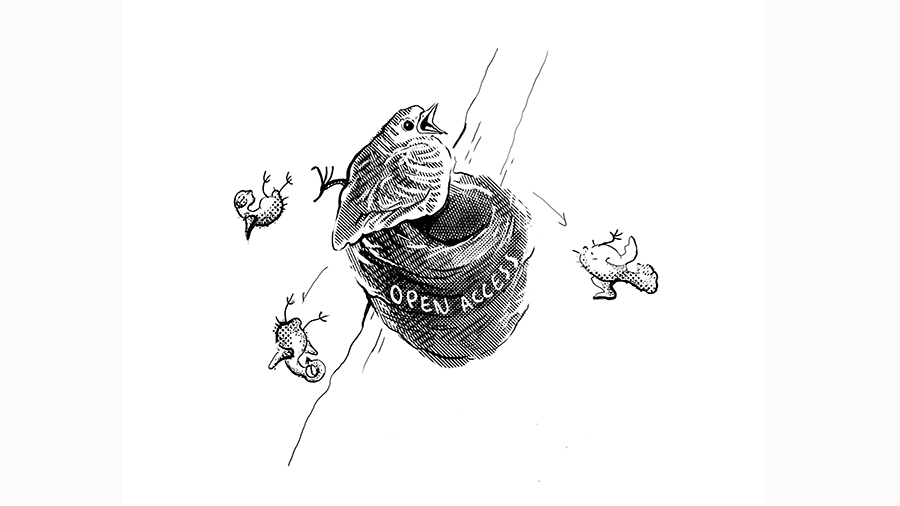
Contrary to the popular expression, diamonds do not shine. Instead, they reflect, refract and disperse light to the fascination of the onlooker.
Similarly, even though Diamond Open Access (OA) offers a stellar publication and dissemination route for both readers and authors, some of the biggest actors in the scholarly publishing industry have been trying to deflect the concept behind it. While they might be moving from reader-facing charges, they seem to be billing libraries, institutions and consortia the same money they would have received in subscription fees.
National library consortia are paying for read-and-publish / publish-and-read ‘transformative agreements’ (also known as ‘transitional agreements’ or ‘big deals’), which include clauses for “non-APC” quotas of Open Access publishing for authors based in their country’s institutions. As a result, authors need to only submit their work to journals cited in these agreements, if they wish to avoid APC payments.
Meanwhile, these Transformation Agreements (TAs) are raising increasing concerns about their capability to achieve their very purpose: assisting scientific publishers in flipping their journals from closed- to open-access models in line with the objectives of the global Open Access 2020 Initiative. Back in 2016, the initiative signed by over 150 scholarly organisations posited a deadline for the majority of today’s scholarly journals to transfer from subscription to OA by 2020. While it is obvious that as of mid-2024 this transition is far from complete, a recent report issued by Jisc, estimates that based on 2018-2022 data, “it would take at least 70 years for the big five publishers to flip their TA titles to OA”. Citing “an erosion in confidence that TAs will achieve a transition within an acceptable timescale”, the report also highlights pressing issues concerning transparency on how “OA publishing charges are costed” and how and when the surveyed publishers will achieve their task.
Impact on scholars
The above-mentioned approaches to ostensibly free-of-charge scholarly publishing are indeed taking a great burden off the shoulders of many scientists, as long as they are working in top research institutions in certain countries.
In the meantime, independent researchers and smaller or underfunded institutions – typically located in countries that have not signed such expensive agreements at national or library consortia levels – are left out of the equation. If they wish to publish in the very same flashy journals, they need to pay fees in the range of several thousands of dollars either out of their research grants, or their own pockets. The “barriers to access” seem to have simply transformed into ”barriers to publication”.
There are also production costs. After all, quality publication of human knowledge in the vast digital world, which is increasingly powered by smart computer algorithms and Artificial Intelligence, surely costs some money, doesn’t it? Publication platforms comprising continuously evolving workflows and third-party integrations, impeccable user experience, diligent customer support, and far-reaching dissemination and communication, all require specialised staff and equipment. The question is how much does it cost to make science effectively public? The immediate answer is that taxpayers currently pay corporate publishers prices several times as high as actual publication costs.
Impact on smaller journals, societies and publishers
In the past, smaller publishers predominantly launched as open-access academic outlets. After all, they were either run by scientists who saw paywalls as the unthinkable evil that hinders the world’s progress, or they simply realised that their primary audience could not afford to pay to learn about their field. Further, it is the same altruistic and understanding backstory of society and smaller institution-led journals – in addition to their historical legacy and independence from commercial entities – that make them particularly cherished and respected in academia.
The issue here is that, these days, scientific publications and journals abound, which makes it practically impossible for one’s work to reach another researcher, let alone non-specialist audiences, including policy makers, without a lot of dedicated effort. Even if there was a single huge publicly available centralised source for all research outcomes out there, it would be practically impossible for one – expert or not – to navigate the deluge of data and statements without sophisticated tools, infrastructure and workflows capable of discerning what is actually useful.
To ensure scientific output is practically findable, accessible, interoperable and reusable (FAIR), you need much more than a URL that resolves at no additional charge. Instead, a journal needs to provide optimal discoverability and visibility for its content, so that publications are capable of reaching their intended audience via existing search engines and portals.
This can only be achieved through professional publishing platforms (e.g. peer review, publication, hosting, third-party service integrations), tools (e.g. metadata import/export; semantic tagging) and services (e.g. application to indexing databases; in-house editorial services; copy-editing, customer support; science communication), which will inevitably increase the costs of the publication process.
Here comes the tough call for most smaller institutions and journals: whether to seek the services of multiple professional providers and then introduce APCs to cover the expenditure OR to opt for in-house editorial services and open-source infrastructure, but compromise the quality of service, including the discoverability and reach of the content with which their authors entrust them.
Yet, this is a choice that only needs to be made by small- to mid-sized, OA-born publishers and journal owners, since large commercial, originally subscription publishers are covered through deals and agreements, as long as a research paper is submitted by a research team with the right affiliation. The situation begs the question: who is actually being charged?
Impact on equity and sustainability in academia
Suffice to say, the scientific community has gone a long way to prompt public and worldwide access to the latest research at a greater than ever speed and scale. However, there is still a gaping chasm in academia when it comes to inclusivity and equity in scholarly publishing and dissemination of knowledge. Despite the ongoing work and progress coordinated by international funders of research and policy-makers, a vast part of the world continues to be singled out due to a mismatch in funding and unhealthy commercialisation that paves the way to mono-/oligopolies.
Arguably, academia is threatened by its own good intentions and a new status quo, where it is only researchers working at well-funded research institutions that get to publish their work in visible and discoverable journals.
Our way forward
While our team at Pensoft realises there is no easy way to high-quality, open and equitable scholarly publishing, we are firm supporters of an environment governed by transparency, inclusivity and democracy, where researchers are not “limited in their choice of publication channels due to financial capacities rather than quality criteria”, as put by the Council of the European Union in their “Conclusions on high-quality, transparent, open and equitable scholarly publishing” issued last year.
If scholarly publishers and technology providers remain true to their purpose of being a vehicle for scientific knowledge between the individual scientist and the world, we can collectively contribute to a healthy diversity of continuously developing tools and workflows for researchers, journal owners, learned societies and scientific funders to cater for their own users and audiences in the ever-evolving modern world.
As such, we have accepted it as our mission to provide affordable, compromise-free Diamond OA, empowering smaller journals to deliver top-quality services to their authors, editors and readers. Alternatively, our end-to-end publishing platform ARPHAalso offers several Gold OA and custom-made workflows designed to support particular groups of authors, as they balance affordability, functionality, reliability, transparency and long-term sustainability. In both cases, our client journals enjoy a complete set of highly automated and human-provided services packaged in a way that fits their wants and needs.
Above all, our approach is based on working individually with journal owners, societies and publishers to create their own custom operational and business model, and achieve long-term sustainability for their scholarly titles.
To ensure our utter transparency and trustworthiness for our clients, we actively support and adopt international best practices and standards in scholarly publishing, including cOAlition S’s Plan S requirements regarding full transparency of costs and prices, and the Journal Comparison Service.