
European Science Editing, the official journal of the European Association of Science Editors (EASE), has received its first Journal Impact Factor (JIF) from Clarivate’s Web of Science. Its 2025 JIF stands at 1.6, a key milestone for the journal and a recognition of its growing influence in the scholarly communication community.
Further, the journal ranks in Q2 in Library and Information Science in the Web of Science Core Collection (ESCI).
Prior to this JIF, European Science Editing had already demonstrated strong and growing recognition in Scopus, with its 2025 CiteScore reaching 3.0, up from 2.3 in 2024, ranking in Q2 for Communication and Q3 for Health Informatics.
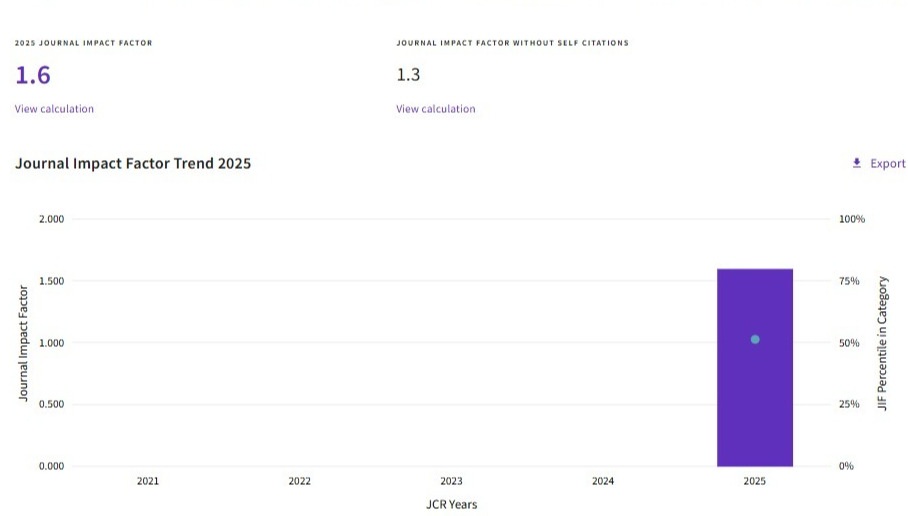
A key metric released by Clarivate, the 2025 Journal Impact Factor reflects the number of times content published in a specific journal during 2023 and 2024 was cited in 2025. This total citation count is then divided by the number of citable articles (i.e., research and review articles) to estimate the JIF.
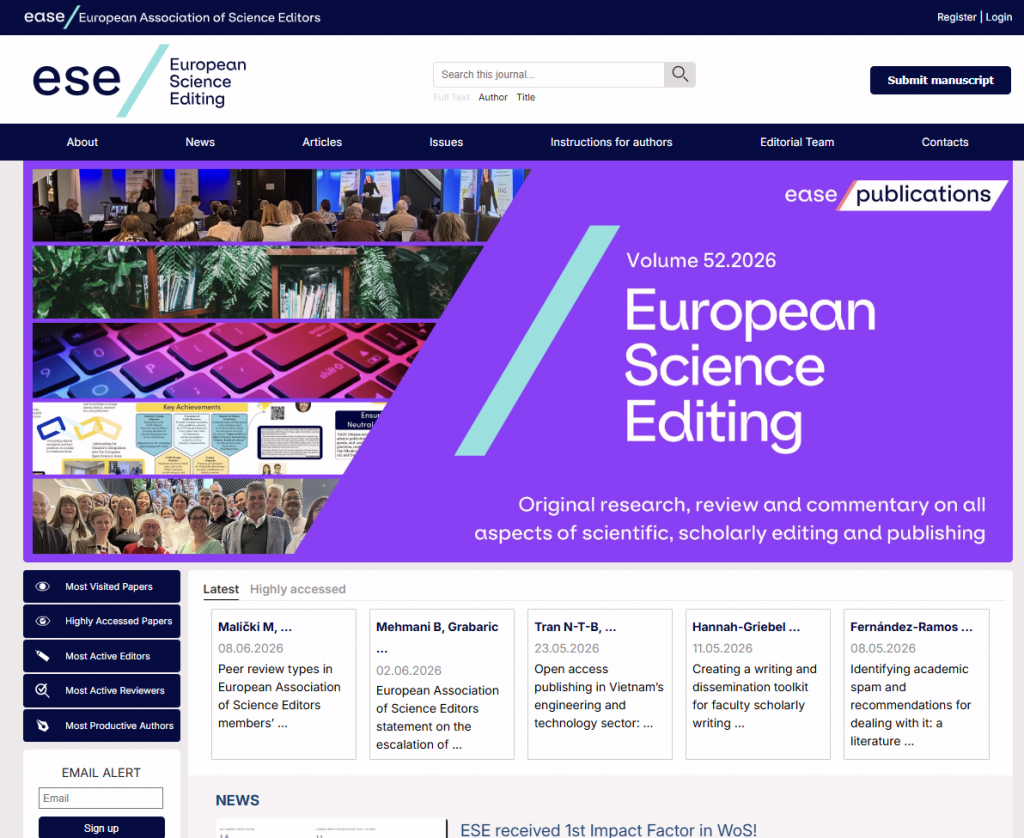
The journal’s history can be traced back to 1986 when it was published as a bulletin. Then, in 2003 European Science Editing was launched as a peer-reviewed journal published four times a year, dedicated to supporting research within the scope of the Association. In January 2020, the journal converted to Diamond Open Access with a rolling publication model on the ARPHA Platform, giving authors greater presence and impact across the membership and the wider scholarly publishing community.
The journal is powered by the ARPHA Platform, a one-stop publishing solution developed by Pensoft that offers a seamless, end-to-end publishing experience encompassing all stages from manuscript submission through to publication, indexation, dissemination, and permanent archiving.
ARPHA’s robust support for academic publishing also includes a variety of human-provided services and integrations with third-party providers, intended to maximise the reach and usability of scholarly knowledge published in European Science Editing.
On this success, the Editor-in-Chief, Ksenija Bazdaric of Rijeka University, reflects:
As Editor-in-Chief of the European Science Editing journal, I am delighted by this result. With the support of ARPHA, we have received our very first impact factor of 1.6. Our Diamond Open Access journal is celebrating this big milestone and its editors and advisory board will work further on raising the journal quality by producing relevant and interesting content for our readership.
Follow EASE on LinkedIn, Bluesky, Facebook and Instagram. You can also follow ARPHA on Bluesky and LinkedIn.